Débutant
Korean
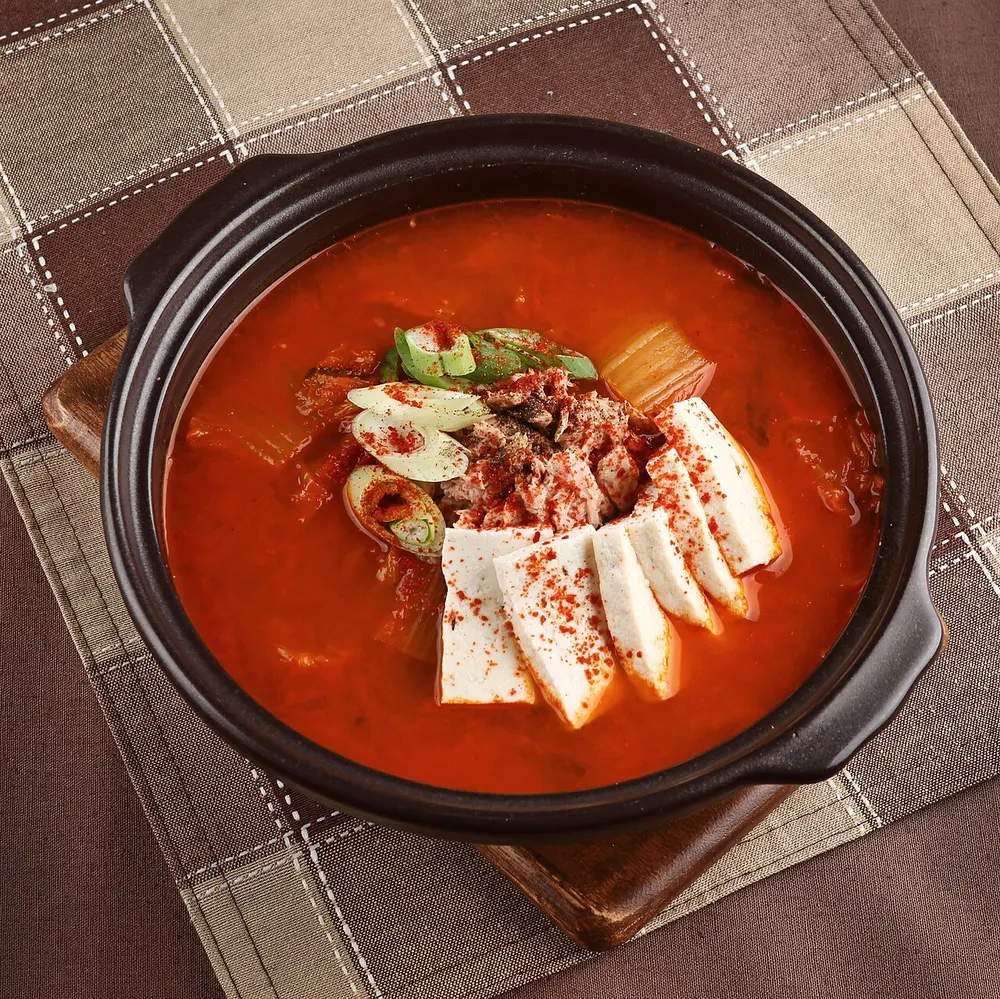
Kimchi Jjigae (Kimchi Stew)
Source: Traditionnel
30 min3420 kcal
Sans produits laitiers🌶️🌶️
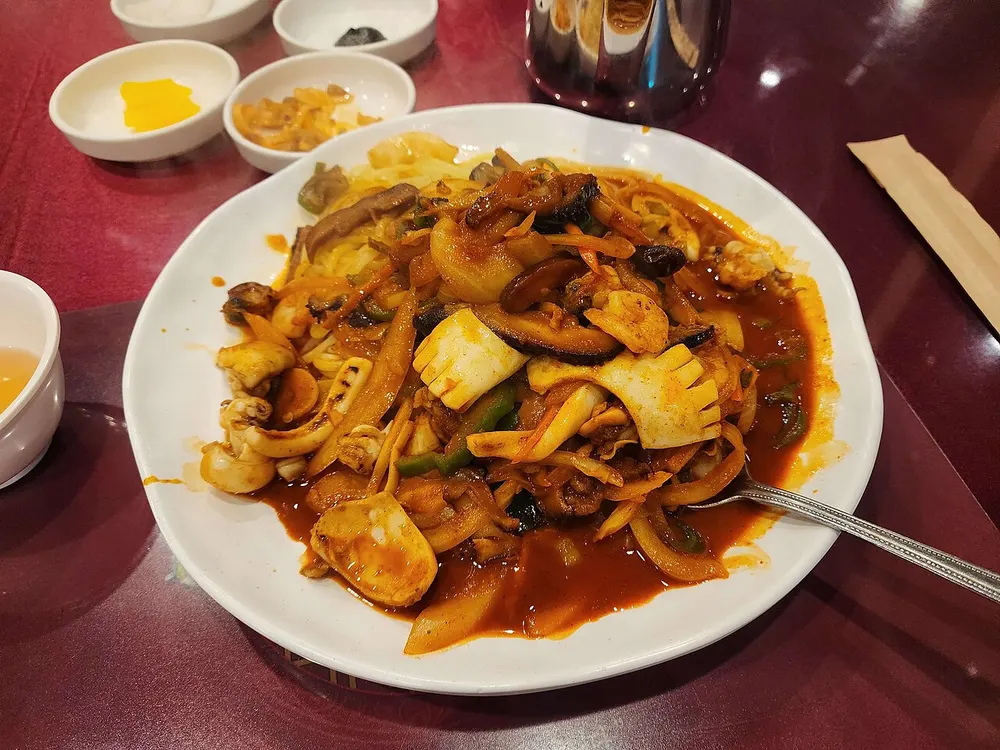
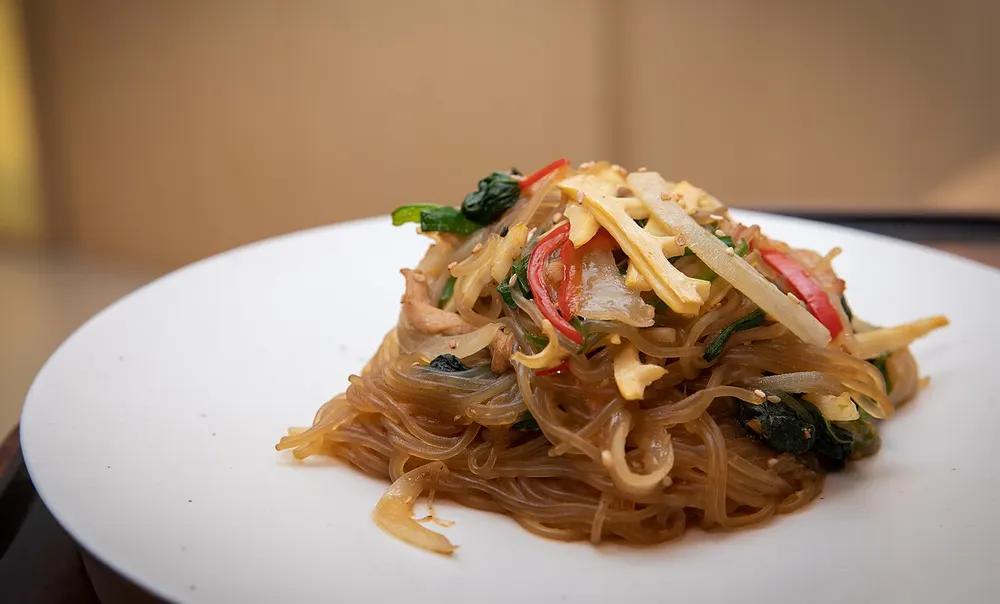
The stir-fried udon you buy at a Korean snack bar: the noodle block goes into the middle of the pan dry and the sauce is poured around the rim to steam it loose — then the heat goes up hard.
Source
Recette de 백종원 · 👨🍳 Chef · Paik Jong-won — chef & restaurateur, 백종원의 요리비책
Les noms des cuisiniers et créateurs figurent uniquement à titre de mention de source. More Recipes Please est indépendant et n'est ni affilié, ni approuvé, ni sponsorisé par eux.
Paik Jong-won (요리비책) — Published by Paik Jong-won on his own YouTube channel as '밖에서 사 먹는 맛! 볶음우동 만들어 보세요~', with the full gram/ml table, his numbered method and an official English translation in the description. Although udon is Japanese, this is the Korean snack-bar (분식) dish, and it is filed under Korea here on the same basis as jjajangmyeon. The distinctive moves are all his: scallion started in cold oil for 파기름, the pre-cooked noodle block set in the pan dry with the sauce poured around the rim to steam it apart, a hard high-heat finish, and homemade smoked-anchovy powder over the top — served with mayonnaise to dip.
Cuisinier: 백종원
Watch it being made · 3 videos
Julienne the onion and carrot. Slice the green onion and the jjokpa into thin rounds, keeping them separate.
Cut the cabbage into bite-size pieces about 1 cm thick.
Make the anchovy powder: remove the guts from the smoked anchovies, toast them in a dry pan over medium heat until brittle and fragrant, then blitz them in a blender.
💡 Dry pan — no oil. You are driving off the last moisture so the anchovies shatter in the blender instead of smearing into paste. This powder is what gives the dish the savoury hit of a snack-bar version.
Put the oil and the green onion into the pan together and let them heat up, then add the pork once the oil is hot and fragrant.
💡 Scallion into cold oil, heating together — this is 파기름, scallion oil. Given a slow start the daepa perfumes the whole pan; thrown into already-smoking oil it just scorches.
Fry the pork over medium-high heat until golden and cooked through — about 2–3 minutes.
Add the onion, carrot and cabbage and stir-fry until the onion turns glassy and the cabbage has just wilted but still snaps — about 2–3 minutes.
Mix the jin-ganjang, brown sugar, vinegar and water together in a bowl to make the sauce.
Push the vegetables aside, set the udon block in the middle of the pan, pour the sauce around the rim — not over the noodles — and let it simmer over medium heat.
💡 The noodles are never boiled in a separate pot — they arrive pre-cooked and are steamed loose right here. Sauce around the rim hits hot metal and turns to steam that works under the block; poured straight on top it would just wash the seasoning off and leave the middle cold and stuck.
As the noodles loosen, tease them apart gently with chopsticks or tongs — about 1–2 minutes.
💡 Gently. Udon is soft and pre-cooked; digging at a still-cold block snaps the strands into stubs. Give the steam a few more seconds and they separate on their own.
Once the noodles are fully separated, turn the heat to high and stir-fry hard for 1–2 minutes, tossing, until the sauce has cooked away and the noodles look glossy and start to catch on the pan.
💡 Do not skip this high-heat finish. Everything up to now was steaming, which leaves the noodles wet and pale — this last blast is what gives them the faint scorch and gloss of the version you buy.
Turn it onto a plate, dust generously with the smoked anchovy powder and scatter over the jjokpa.
Serve straight away with a dollop of mayonnaise on the side to dip.
Korean
Source: Traditionnel
Korean
Source: Cuisine maison
Korean
Source: Cuisine maison
Korean
Source: Traditionnel
Vous l'avez préparé ? Partagez une photo dans la Vitrine.
Partagez votre création →