Débutant
Korean
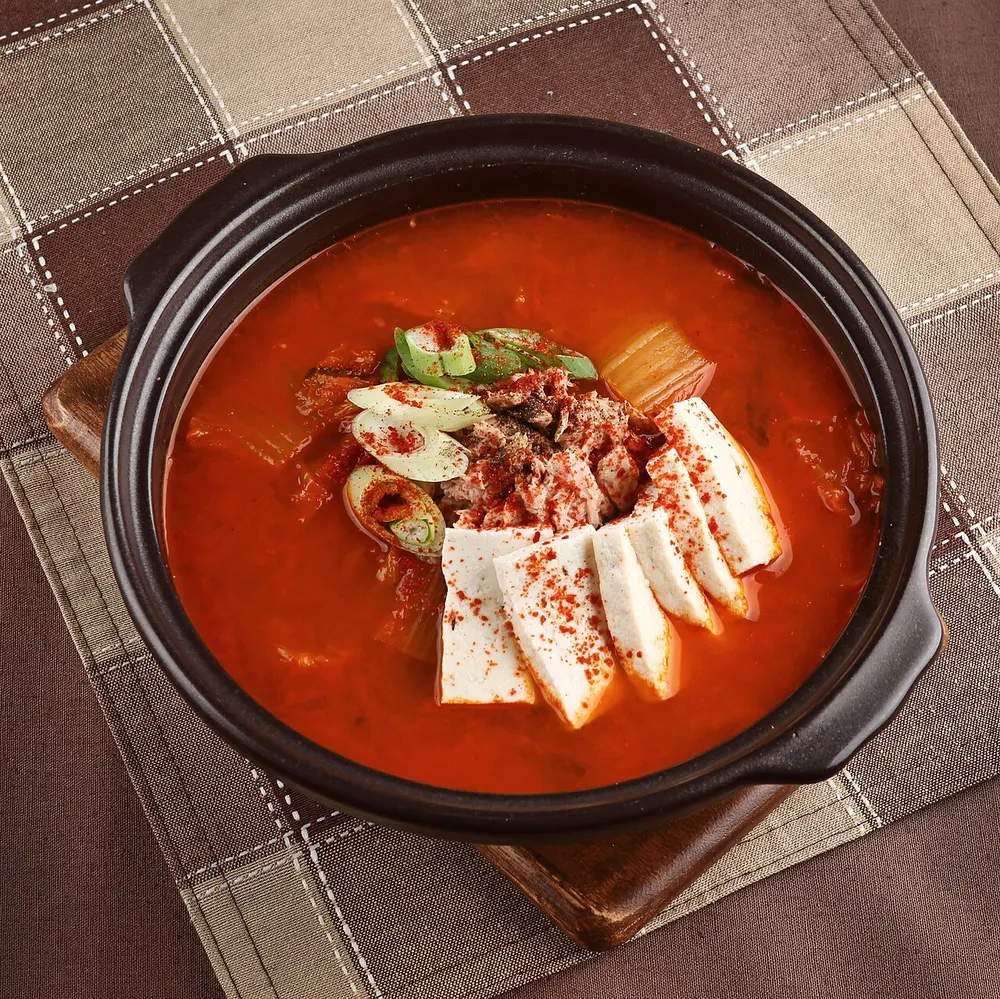
Kimchi Jjigae (Kimchi Stew)
Source: Traditionnel
30 min3420 kcal
Sans produits laitiers🌶️🌶️
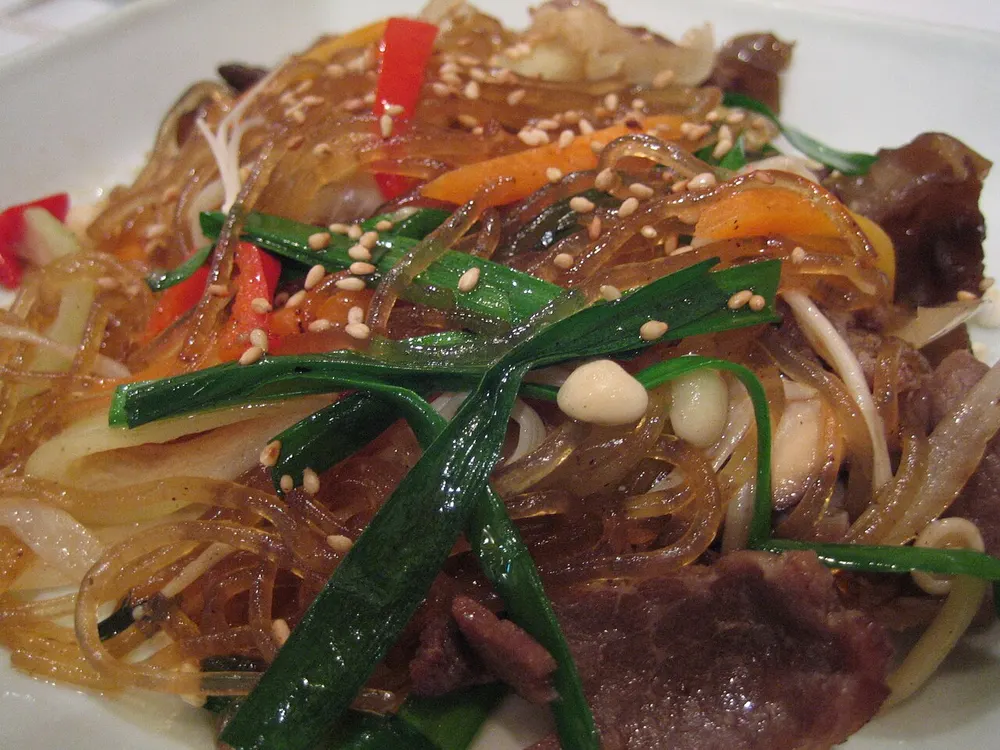
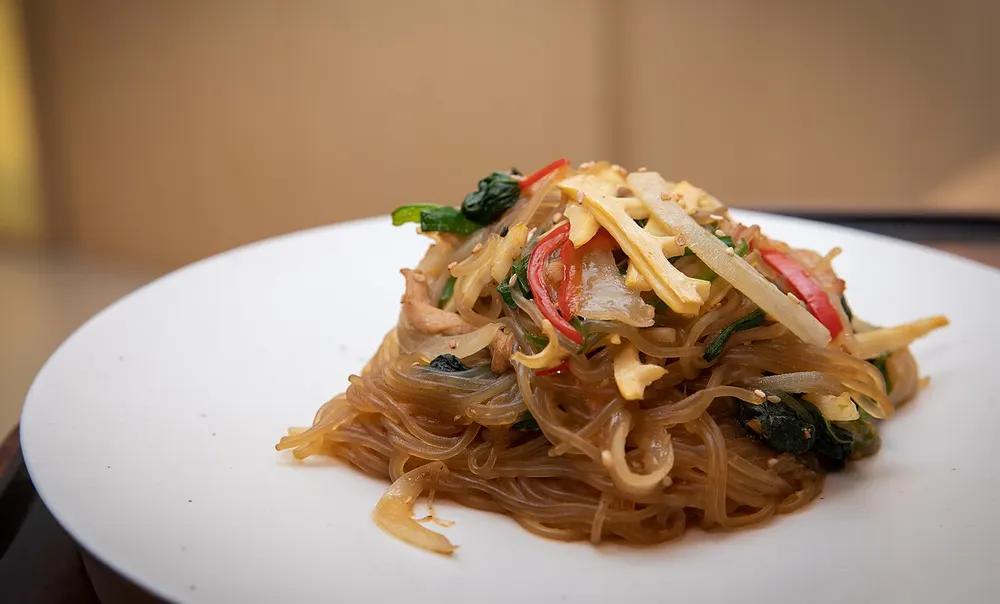
The party dish she says nobody turns down. Every single ingredient is stir-fried on its own and only meets the others in the mixing bowl — which is why each one keeps its colour, its bite and its own flavour.
Source
Recette de Maangchi (Emily Kim) · 📱 Influenceur · Korean-born American cooking YouTuber and author, called "YouTube's Korean Julia Child" by The New York Times
Les noms des cuisiniers et créateurs figurent uniquement à titre de mention de source. More Recipes Please est indépendant et n'est ni affilié, ni approuvé, ni sponsorisé par eux.
Maangchi (maangchi.com) — Published by Maangchi on her own site — first posted in 2007 and updated since — where she calls japchae the dish she recommends without hesitation for a potluck, because nobody turns it down. She is upfront that stir-frying every ingredient separately looks like a lot of work, and explains why she does it anyway: each one needs a different cooking time, and keeping their colour and freshness intact is what makes the finished plate look the way it does.
Cuisinier: Maangchi (Emily Kim)
Watch it being made · 3 videos
Soak the 2 dried shiitake in warm water for 2–3 hours, until completely soft and floppy. Squeeze them out and cut into thin strips.
Cut the 115g of beef into thin strips, roughly 6mm wide and 6cm long.
Put the beef and shiitake in a bowl and mix with 1 minced garlic clove, 1 tsp sugar, ¼ tsp black pepper, 2 tsp soy sauce and 1 tsp sesame oil. Cover and keep it in the fridge while you do everything else.
💡 Beef and mushroom marinate together on purpose — the shiitake soak up the same seasoning and end up tasting meaty rather than like a separate ingredient.
Make the jidan (egg garnish): separate the yolk from the white, pull off the stringy white chalaza, and beat the yolk with a pinch of salt.
Heat a nonstick pan and add 1 tsp vegetable oil, swirling to coat, then wipe the excess out with a kitchen towel so only a thin film is left. TURN OFF THE HEAT, pour in the yolk and tilt the pan so it spreads thin. Let it set on the pan's residual heat for about 1 minute, flip, and give it 1 minute more. Cool, then slice into thin strips.
💡 Off the heat, on purpose. Yolk browns almost instantly on a live flame and turns dull khaki; the pan's leftover heat is just enough to set it while keeping it a clean, bright yellow. That yellow is the whole point of the garnish.
Bring a large pot of water to a boil. Blanch the spinach for 30 seconds to 1 minute, then lift it out with a slotted spoon — leave the water boiling, you need it for the noodles.
Rinse the spinach in cold water to stop it cooking, squeeze out as much water as you can with your hands, cut it a few times, and season it with 1 tsp soy sauce and 1 tsp sesame oil. Put it into a large mixing bowl.
Put the 115g of dangmyeon into the boiling water, cover, and cook 1 minute. Stir with a wooden spoon so they don't stick, then cover and keep cooking another 7 minutes, until soft and chewy.
💡 Chewy, not soft — glass noodles keep softening in the residual heat and again in the bowl. Boil them until they are pleasant to eat right now and they will be mush by serving.
Strain the noodles and snip them a few times with kitchen scissors. Add them to the big bowl next to the spinach, then mix in 2 tsp sesame oil, 1 tsp soy sauce and 1 tsp sugar, by hand or with a wooden spoon.
💡 Season them now, while they are hot. This does two jobs at once: the noodles drink the seasoning in, and the oil coats them so they stop welding themselves into one lump while everything else cooks.
Heat a skillet over medium-high heat with 2 tsp vegetable oil. Add the onion, the green onion and a pinch of salt, and stir-fry about 2 minutes, until the onion looks slightly translucent. Transfer to the noodle bowl.
Heat the skillet again with 2 tsp oil. Add the white mushrooms and a pinch of salt and stir-fry 2 minutes, until softened and just a little juicy. Transfer to the bowl.
Heat the skillet with 1 tsp oil. Stir-fry the carrot for 20 seconds, add the red bell pepper strips and stir-fry another 20 seconds. Transfer to the bowl.
💡 Twenty seconds each, and that is not a typo. They are here for crunch and colour, and both are gone the moment they wilt. This is the step people over-cook out of habit.
Heat the skillet with 2 tsp oil and stir-fry the marinated beef and shiitake for a few minutes, until the beef is no longer pink and the mushrooms are soft and glossy. Transfer to the bowl.
Add the remaining minced garlic clove, 1 tbsp soy sauce, 1 tbsp sugar, ½ tsp black pepper and 2 tsp sesame oil to the loaded mixing bowl. Mix everything together with your hands.
Add the egg strips and 1 tbsp of sesame seeds, mix once more, and turn it out onto a large plate to serve.
💡 Fold the egg in last and gently — mix it in earlier and the strips shred into yellow confetti instead of staying as ribbons.
Korean
Source: Traditionnel
Korean
Source: Cuisine maison
Korean
Source: Cuisine maison
Korean
Source: Traditionnel
Vous l'avez préparé ? Partagez une photo dans la Vitrine.
Partagez votre création →