Débutant
Korean
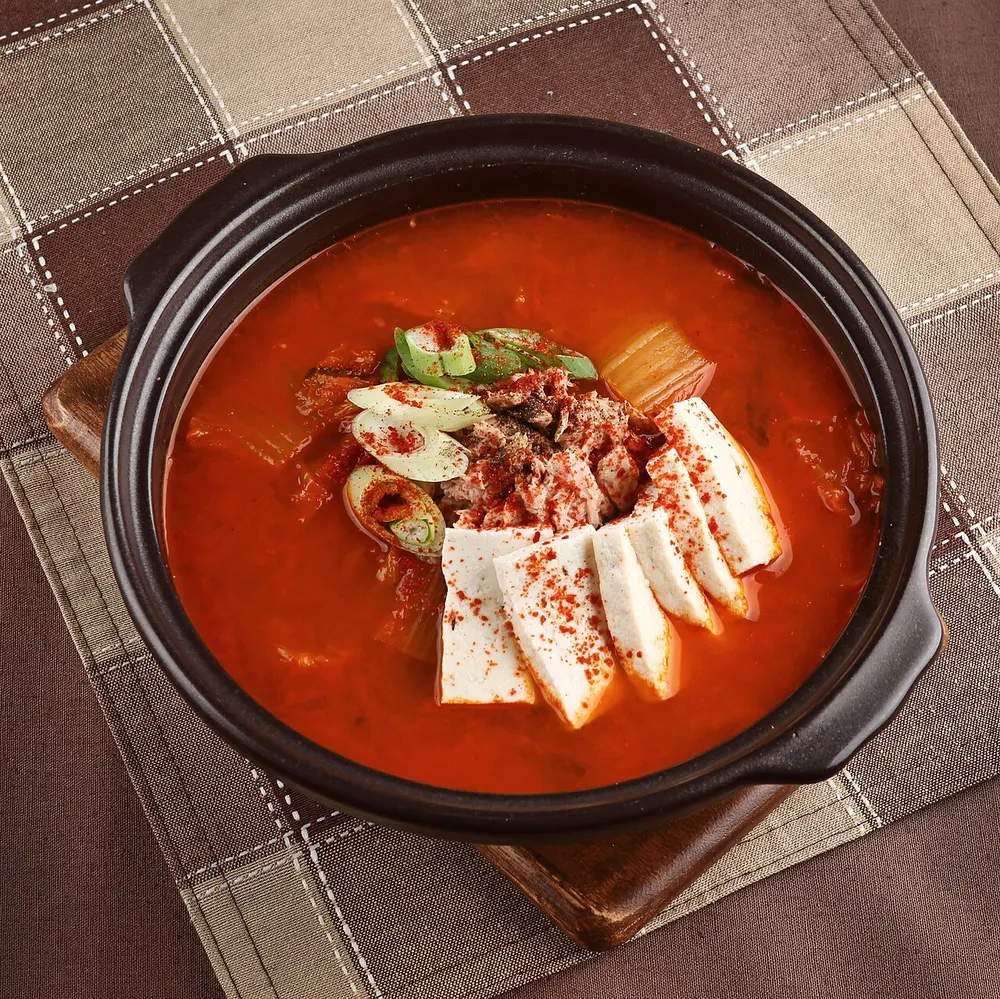
Kimchi Jjigae (Kimchi Stew)
Source: Traditionnel
30 min3420 kcal
Sans produits laitiers🌶️🌶️
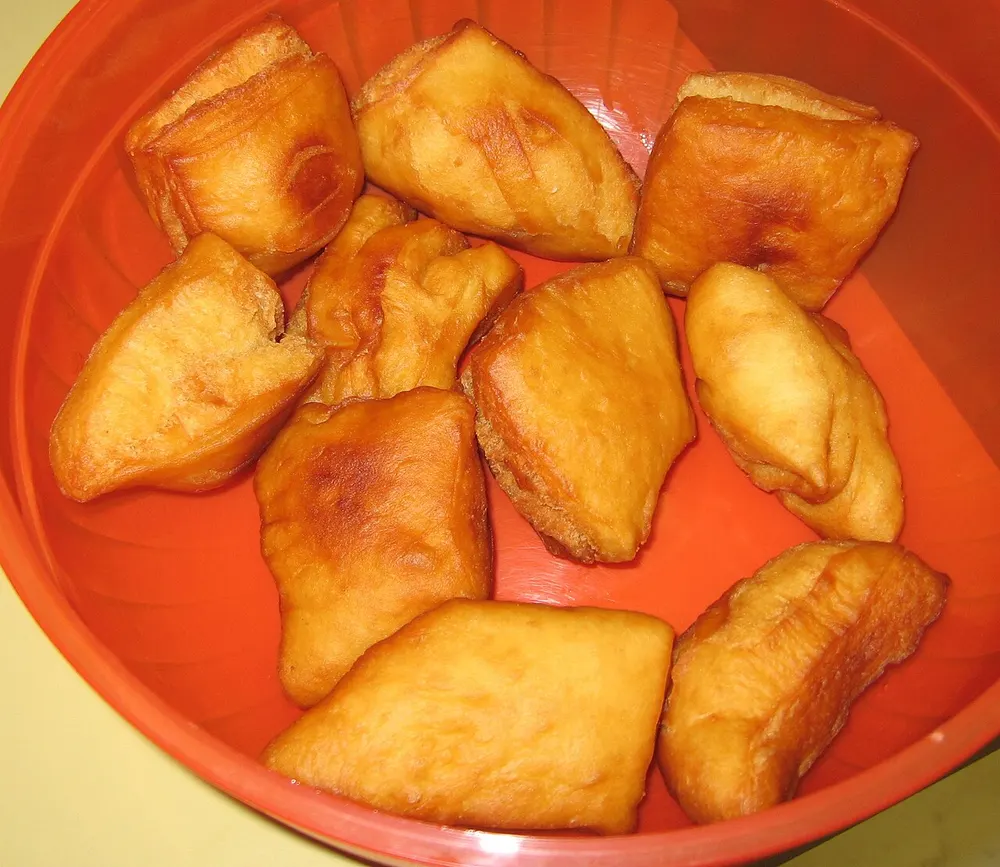
Little pillows of enriched dough fried until golden and hollow, piled high on the table for tea and set out for every guest and celebration. Soft inside, barely crisp outside, and gone in handfuls.
Source
Recette de Kazakh home kitchens · 🏺 Traditionnel · Everyday Kazakh cooking — city and village kitchens where the borrowed Silk Road dishes (manti, lagman) sit alongside fried dough and tea.
Kazakh · traditional bread — An ownerless traditional dish, so no cook is credited. The cited article (canonical title 'Boortsog', reached from Baursak / bauyrsaq) documents the fried dough of Central Asia, Idel-Ural, Mongolia and beyond, shaped into triangles or spheres and eaten with tea. The enriched milk-and-egg dough here is a common Kazakh style; a plainer water dough is also traditional. Quantities and method are this book's own.
Watch it being made · 3 videos
Warm the milk, stir in the yeast and sugar, and leave 5 minutes until foamy. Mix in the egg, flour, salt and softened butter and knead to a smooth, soft dough. Cover and let it rise until doubled, about 1 hour.
Knock the dough back and roll it out about 1 cm thick. Cut into small squares or diamonds roughly 4 cm across — they puff up a lot, so keep them small.
Heat the oil to 170°C — hot enough that a scrap of dough rises and sizzles at once but does not brown instantly. Fry the pieces in batches, turning them, until puffed and golden all over, about 2 minutes each.
💡 Do not crowd the pan — too many pieces at once drop the oil temperature and they soak up fat instead of puffing. Fry a few at a time.
Lift onto paper to drain and pile them into a bowl while still warm. Serve with tea, and with butter, jam or honey for dipping.
Korean
Source: Traditionnel
Korean
Source: Cuisine maison
Korean
Source: Cuisine maison
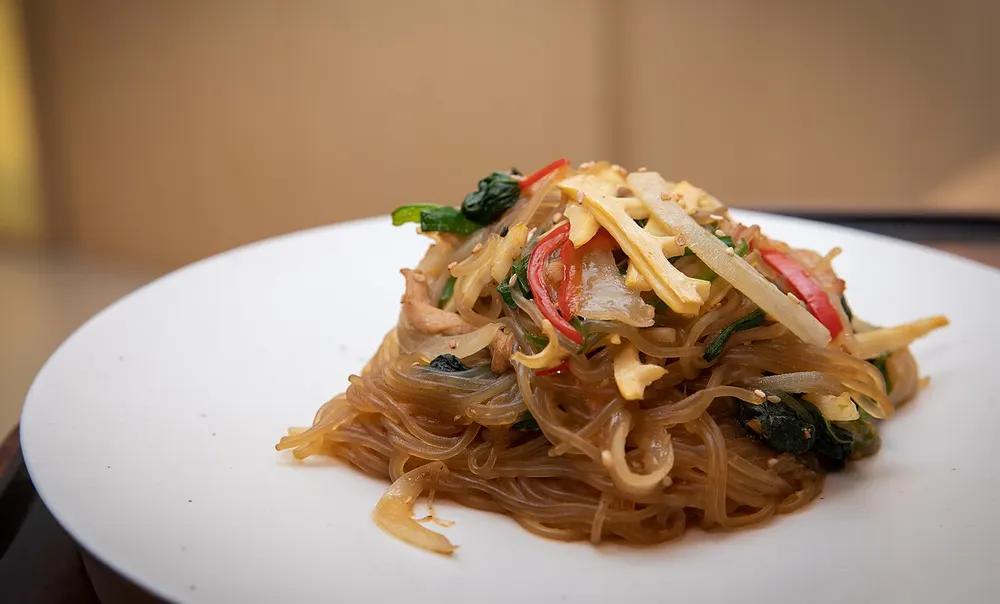
Korean
Source: Traditionnel
Vous l'avez préparé ? Partagez une photo dans la Vitrine.
Partagez votre création →