Débutant
Korean
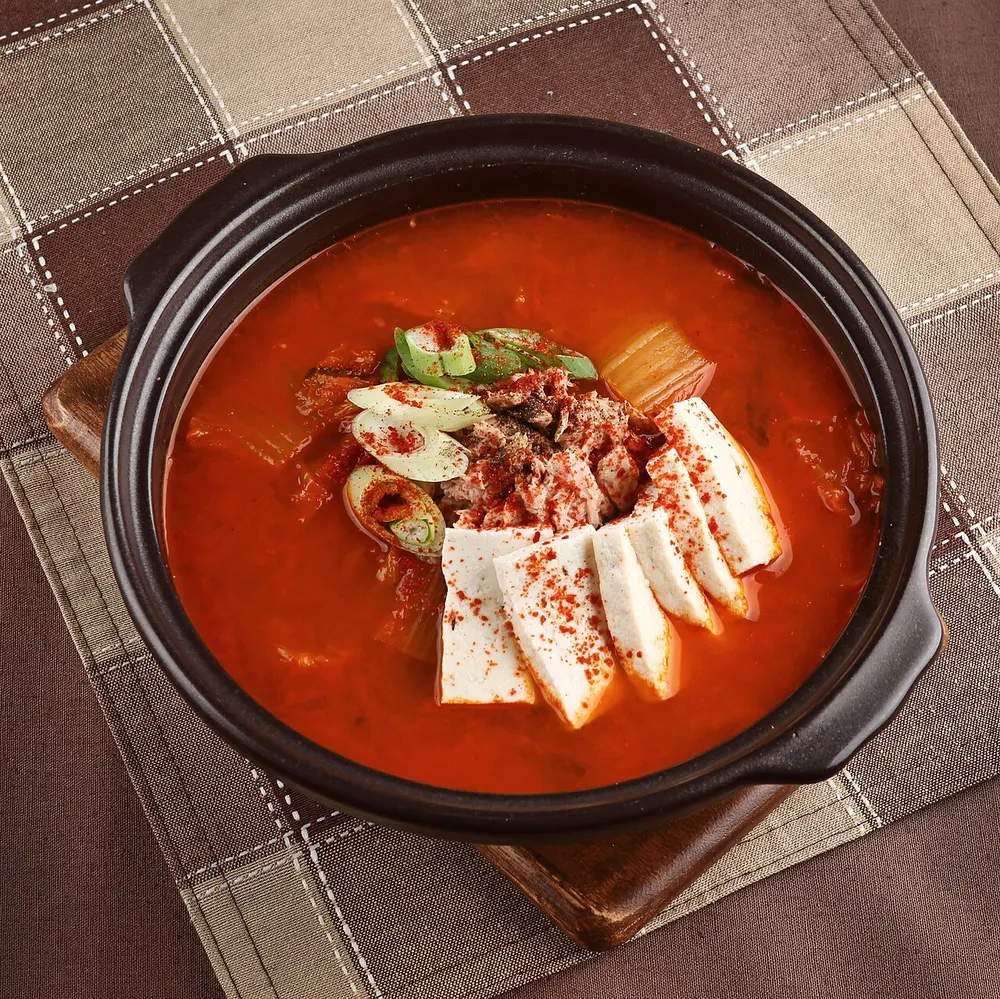
Kimchi Jjigae (Kimchi Stew)
Source: Traditionnel
30 min3420 kcal
Sans produits laitiers🌶️🌶️
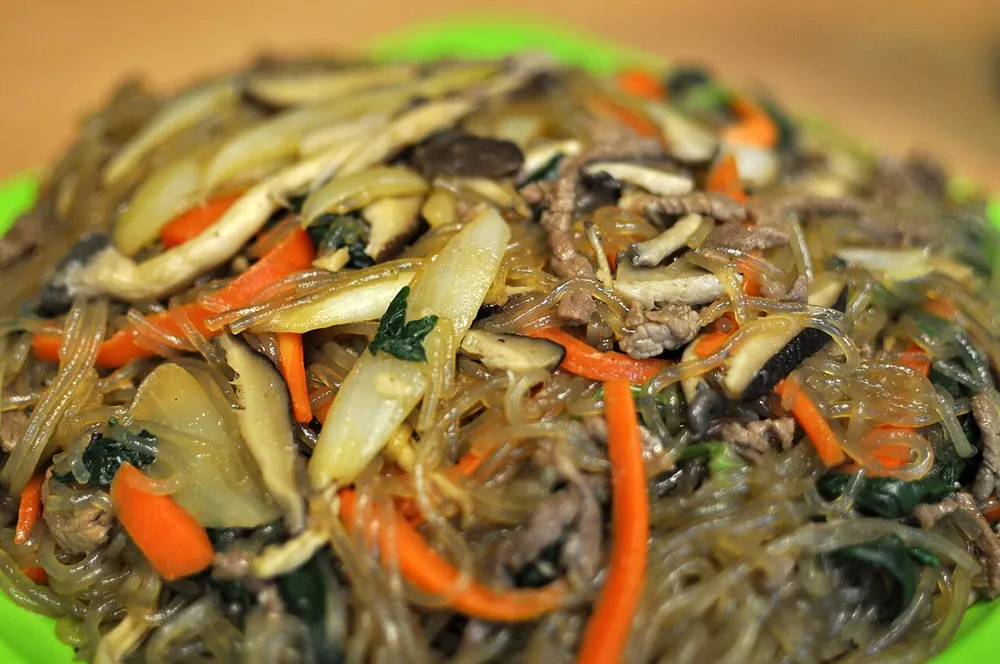
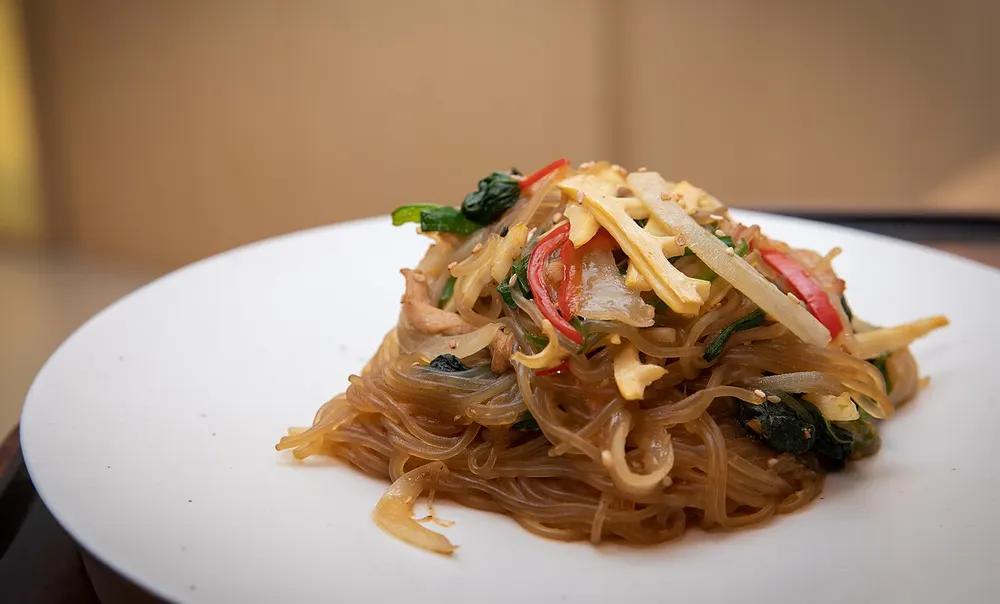
Japchae with the japchae taken out: no beef, no spinach, no carrot, no mushrooms. Just glass noodles fried in oil and reduced down in soy, syrup and garlic — and it is startling how little you miss the rest.
Source
Recette de 하루한끼 (one meal a day) · 📱 Influenceur · Korean cooking YouTuber known for stripped-back, no-nonsense home recipes; publishes the full written recipe in every video description
Les noms des cuisiniers et créateurs figurent uniquement à titre de mention de source. More Recipes Please est indépendant et n'est ni affilié, ni approuvé, ni sponsorisé par eux.
Recipe published by 하루한끼 / 하루한끼가 공개한 레시피 — The creator publishes the full written recipe — four lines and every amount — in this video's description, under the title 보릿고개 잡채. What makes it distinctive is subtraction: japchae normally means beef, spinach, carrot, onion and mushrooms tossed with the noodles, and this one drops all of them, reducing soy, syrup and garlic straight onto the dangmyeon instead.
Cuisinier: 하루한끼 (one meal a day)
Watch it being made
Bring a pot of water to a proper rolling boil over high heat — the surface moving all over, not just fizzing at the rim.
Drop in a big handful of dangmyeon and boil it for 8 minutes.
💡 Do not pre-soak. These noodles are going straight into a hot pan afterwards, and pre-soaked ones turn to mush there.
The noodles are ready when they have gone from grey and glassy-hard to translucent brown and springy — bite one, there should be no chalky centre.
Pour off the water but leave a small splash behind in the pot with the noodles.
💡 That splash is deliberate. It keeps the noodles loose for the next minute instead of setting into one solid block while your back is turned.
Set the pot or a pan over medium heat, add the cooking oil and turn the noodles through it until every strand is shiny.
Keep them moving for about a minute. They stop sticking to each other and start sliding around the pan.
Add the 3 tablespoons of soy sauce, the drizzle of corn syrup and the half spoon of minced garlic.
Stir constantly over medium heat. The noodles drink the soy up and go from pale to a deep glossy brown.
Keep frying until the sauce has reduced away — when you drag the noodles aside, the pan should stay dry behind them instead of filling back up with liquid.
💡 This is the moment people quit early. Stop while liquid still pools and the dish tastes salty and thin; cook it right down and the same soy turns sweet and concentrated.
Watch it closely at the end — syrup and soy go from reduced to burnt in seconds, and burnt is not recoverable.
Kill the heat, then grind over the black pepper and pour on the sesame oil.
💡 Both go on off the heat. Sesame oil cooked in a hot pan loses the exact aroma you added it for.
Toss it once more and eat it straight from the pan while the strands are hot and chewy.
Korean
Source: Traditionnel
Korean
Source: Cuisine maison
Korean
Source: Cuisine maison
Korean
Source: Traditionnel
Vous l'avez préparé ? Partagez une photo dans la Vitrine.
Partagez votre création →