Débutant
Korean
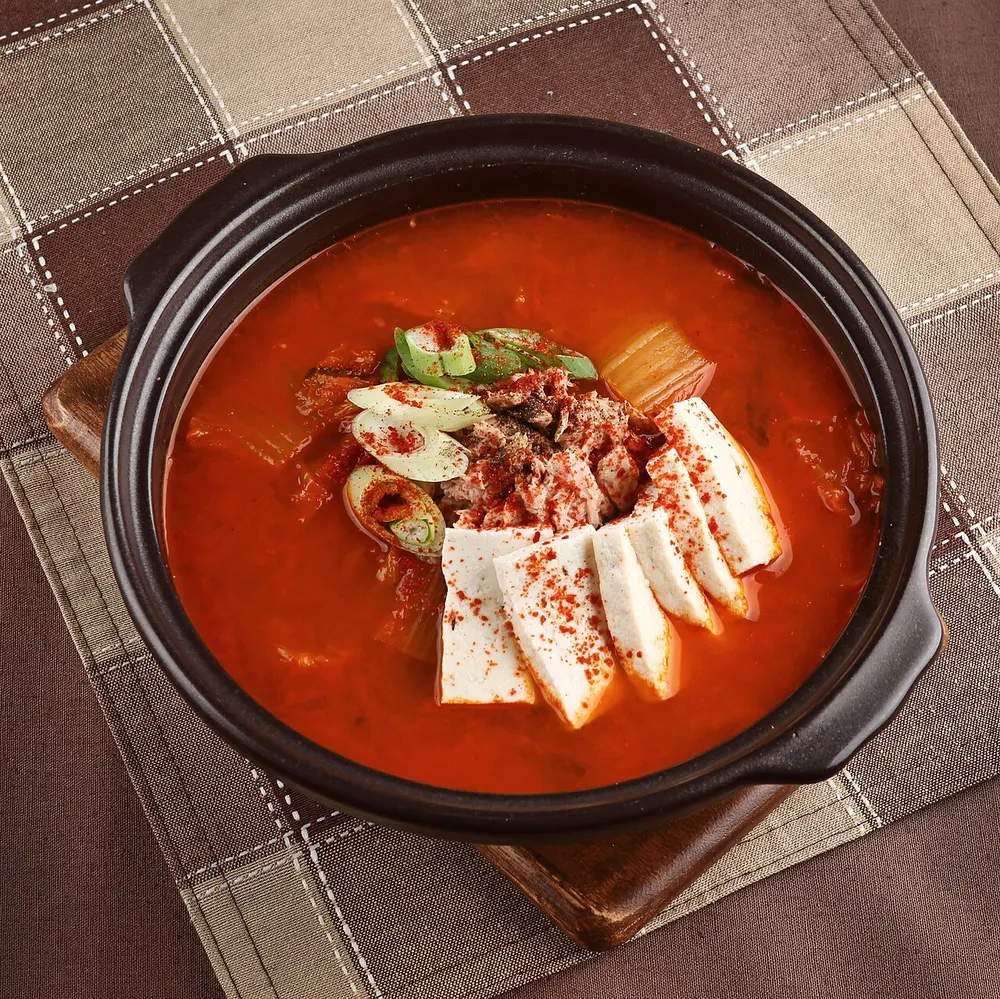
Kimchi Jjigae (Kimchi Stew)
Source: Traditionnel
30 min3420 kcal
Sans produits laitiers🌶️🌶️
The sweet, dark cousin of gamja-tang: no chili paste, no perilla. Pork neck bones are simmered an hour in cola with bay and peppercorns, then braised in more cola with soy, yuja syrup and a knock of cinnamon.
Source
Recette de 김선영 · 👨🍳 Chef · Kim Sun-young — Korean cooking researcher (요리연구가), a recurring cook on EBS's Choego-ui Yori Bigyeol
Les noms des cuisiniers et créateurs figurent uniquement à titre de mention de source. More Recipes Please est indépendant et n'est ni affilié, ni approuvé, ni sponsorisé par eux.
EBS Choego-ui Yori Bigyeol (최고의 요리비결) — Published by EBS on the programme's own channel (EBS 최고의 요리비결, @EBS_best.cooking.secrets), which prints Kim Sun-young's full ingredient list in grams and ml and her numbered method in the video description, and names her in the title. Broadcaster-published text, not a viewer's write-up. The signature of this version is cola used twice — 400 ml in the hour-long first boil to tenderise, 400 ml again in the braise as the sweetener — with yuja syrup and half a teaspoon of cinnamon standing in for the chili paste a gamja-tang would use.
Cuisinier: 김선영
Watch it being made
Soak the 1 kg of pork neck bones in cold water until the blood has drawn out and the water runs pale pink rather than red — change the water a couple of times.
💡 Skipping this is the one thing you cannot fix later. Blood left in the bones turns to grey scum and a barnyard smell that no amount of cola, soy or cinnamon will cover.
Bring a large pot of water to a rolling boil on high heat.
Add the drained bones with 25 g ginger, 5 bay leaves, ½ tbsp whole peppercorns and 400 ml of cola, and boil for about 1 hour — her figure. Skim the foam off in the first ten minutes.
💡 Cola in the boiling water is not a gimmick — the acidity works on the connective tissue while the sugar starts a background caramel note. It is doing what a splash of vinegar or wine does in a Western braise.
Scoop out and reserve 200 ml of the cooking liquid, then lift the bones out and rinse them under cold water.
💡 Rinsing washes off the coagulated scum clinging to the bones. Reserving a cup of the liquid before you do it keeps the gelatin and the pork flavour — that cup is the backbone of the braising sauce.
Cut the potato (150 g), carrot (100 g) and onion (110 g) into large chunks, and cut the daepa (120 g) into lengths.
Put the rinsed bones into a wide pot with the potato and carrot, the reserved 200 ml stock, another 400 ml of cola, 6 tbsp soy sauce, 4 tbsp matsul, 2 tbsp minced garlic, 2 tbsp yuja syrup, ½ tsp cinnamon and 7 Vietnamese chilies.
💡 Note the cola turning up a second time. The first 400 ml tenderised; this 400 ml is the sweetener and the glaze, standing in for the sugar or syrup a soy braise would normally use.
Bring it to a boil and cook about 10 minutes — her figure. Keep it at a confident bubble, not a gentle one.
💡 Half a teaspoon of cinnamon in a savoury pot sounds wrong until you taste it. It is doing the same job as the star anise in a Chinese red braise — you should not be able to name it in the finished dish, only miss it if it were gone.
Add the tteokbokki rice cakes (150 g), the chunked onion (110 g) and the daepa (120 g).
Cook 5 minutes more — her figure — until the rice cakes have puffed and softened and the onion has gone translucent at the edges.
💡 The rice cakes go in this late for a reason: they drink sauce and thicken it as they cook. Add them at the start and you get bloated, mushy tteok in a sauce that has been robbed of its liquid.
Spoon the sauce over the bones a few times so the exposed tops get glazed too.
Turn the heat off and stir through 1 tsp ground pepper, ½ tbsp sesame seeds and 1 tbsp sesame oil.
💡 All three are aromatics and all three are volatile. Off the heat is the only place they belong — boil them and you have spent them for nothing.
Taste the sauce. It should read sweet-savoury and glossy — if it is too sharp, another spoon of yuja syrup rounds it out.
Tip it into a wide bowl and serve hot with rice. Eat it with your hands — neck bones are not cutlery food.
Korean
Source: Traditionnel
Korean
Source: Cuisine maison
Korean
Source: Cuisine maison
Korean
Source: Traditionnel
Vous l'avez préparé ? Partagez une photo dans la Vitrine.
Partagez votre création →