Débutant
Korean
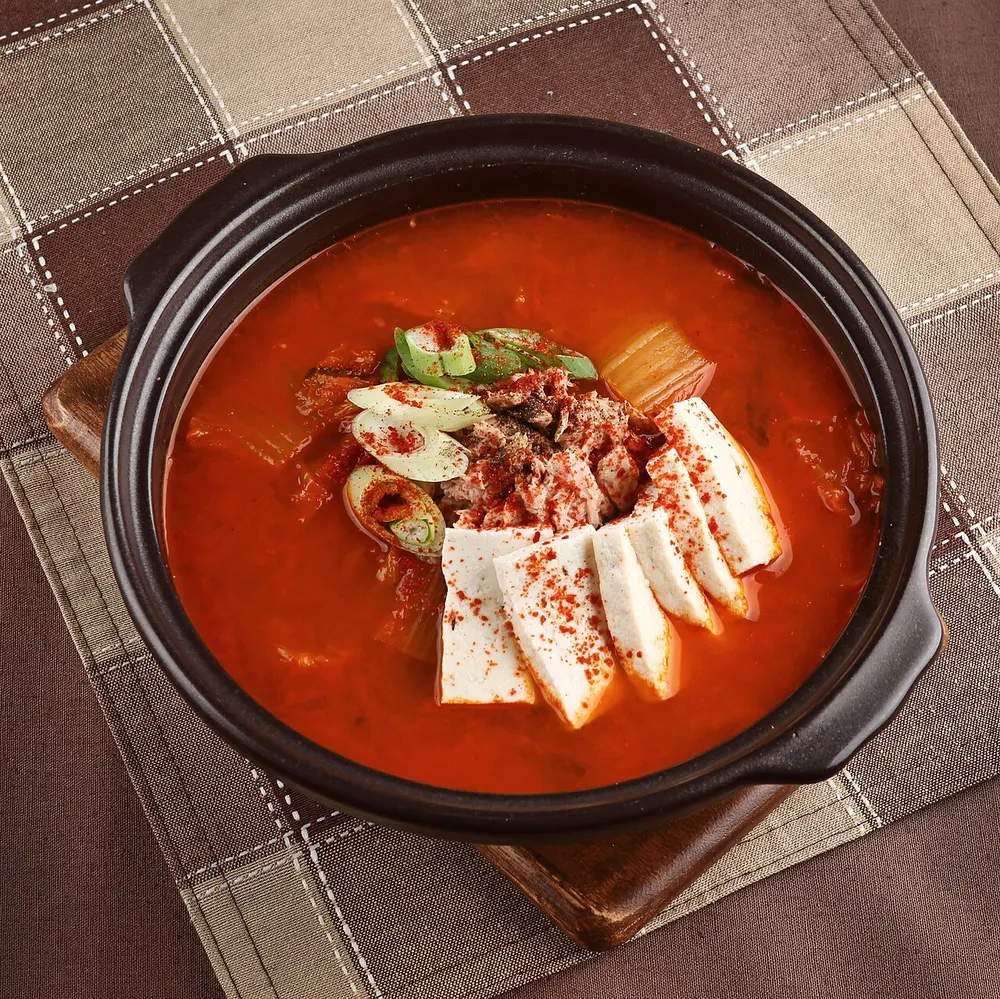
Kimchi Jjigae (Kimchi Stew)
Source: Traditionnel
30 min3420 kcal
Sans produits laitiers🌶️🌶️
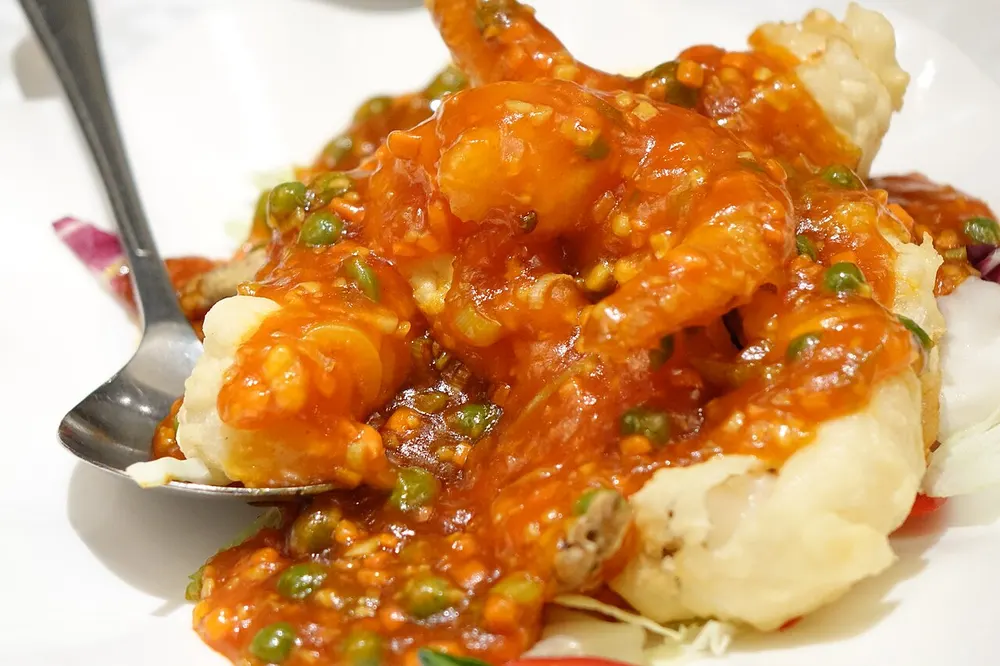
Korean-Chinese chilli prawns done properly: a two-starch batter bound with egg white alone, a double fry at 170°C, and a ketchup-and-doubanjiang sauce thickened to a cling with slurry — the prawns go in last and leave almost immediately.
Source
Recette de 김영준 · 👨🍳 Chef · Kim Yeong-jun — cook on MBN's Altoran. The channel's own text names him only as '김영준 레시피' and states no professional title, so none is claimed here
Les noms des cuisiniers et créateurs figurent uniquement à titre de mention de source. More Recipes Please est indépendant et n'est ni affilié, ni approuvé, ni sponsorisé par eux.
MBN Altoran (알토란) — Published by MBN on Altoran's own channel (알토란 - 집밥 레시피, @Recipe_MBN), whose description carries the full ingredient table and method and heads it 'Altoran episode 358, Kim Yeong-jun's recipe'. Broadcaster-published text, not a viewer's write-up. What marks his version out: the batter is 70 g sweet potato starch to 30 g potato starch bound with 3 egg whites and 2 tbsp of oil — no water, no flour; the prawns are fried 3 minutes, rested, then flash-fried a second time; and the sauce is a ketchup-vinegar base lifted with 1 tbsp of doubanjiang and set with slurry on LOW heat. One flaw is carried honestly rather than fixed: his ingredient list includes half a Cheongyang chili that never appears in any of his numbered steps.
Cuisinier: 김영준
Watch it being made
Pull the heads, shells and tails off the prawns to leave 250 g of clean meat, and pat them thoroughly dry.
💡 Dry prawns are not optional when the batter is egg white and starch. Any surface water thins the batter where it touches and that patch slides off in the oil.
Season the prawns with 2 pinches of salt, 2 pinches of pepper, 1 tbsp cheongju and 1 tsp of fine gochugaru, and leave them 10 minutes — his timing.
Add 70 g sweet potato starch, 30 g potato starch, 2 tbsp of oil and 3 egg whites straight onto the marinated prawns and mix until every prawn wears a thick, even coat.
💡 The two starches do different jobs — sweet potato starch fries into a rugged, craggy shell that grips sauce, potato starch keeps it light. Using 100 g of just one gives you either a heavy crust or a smooth one that sheds sauce.
Heat the 800 ml of oil to about 170°C — his figure. A drip of batter should sink briefly, then rise and sizzle steadily rather than spitting.
Fry the battered prawns for 3 minutes — his figure — then lift them out and let them cool briefly, which he calls for explicitly.
💡 The rest between fries is doing real work: it lets steam escape the crust and the interior finish on carry-over heat. Go straight back in and the second fry just burns the outside.
Bring the oil back up for 3 minutes — his figure again — then return the prawns and fry them a second time, quickly, until the shell is hard and pale gold.
💡 'Quickly' is the whole instruction — seconds, not minutes. The prawns are already cooked; this pass is only about driving the last moisture out of the crust so it stays crisp under sauce.
Drain the prawns on a rack and leave them there. They do not go back in until the very last moment.
Slice 30 g of daepa white and 10 g of ginger into thin coins, halve the 2 garlic cloves, and slice the soaked shiitake. Cut the 100 g onion, 50 g carrot and 50 g green pepper into rough bite-size pieces.
Heat 2 tbsp of chili oil in a clean pan and fry the daepa, ginger and garlic over medium heat until the oil smells of them.
Add the 5 dried Vietnamese chilies, then the onion, carrot, green pepper and sliced shiitake, and keep them moving.
💡 Whole dried chilies perfume the oil without making the dish fiery — they are aromatics here, not heat. His own note says ordinary dried chilies substitute fine.
Pour in 1 tbsp cheongju, 200 ml water, 70 g ketchup, 1 tbsp sugar, 2 tbsp vinegar and 1 tbsp doubanjiang, and let it come together.
Turn the heat to low and stir in 2 tbsp of starch slurry to bring the sauce to a coating consistency — his order: low heat first, then the slurry.
💡 Slurry into a hard-boiling sauce seizes into lumps instantly. Drop the heat first, add it in a thin thread, and stir the whole time.
Tip the fried prawns in, toss just until every one is glossed, and get it onto a plate immediately.
💡 Every extra second in the pan is crunch you paid for with a double fry and are now throwing away. Toss, plate, serve — count to ten and no longer.
Korean
Source: Traditionnel
Korean
Source: Cuisine maison
Korean
Source: Cuisine maison
Korean
Source: Traditionnel
Vous l'avez préparé ? Partagez une photo dans la Vitrine.
Partagez votre création →