Principiante
Korean
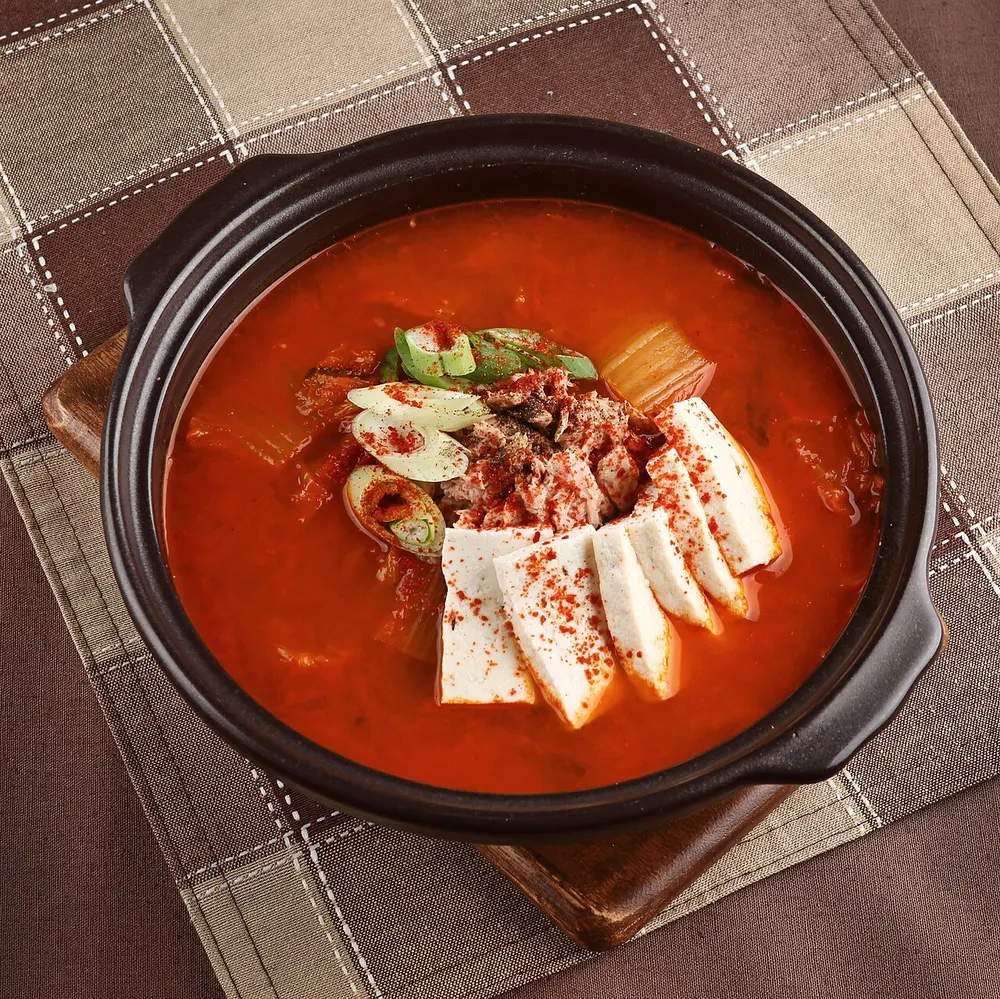
Kimchi Jjigae (Kimchi Stew)
Fuente: Tradicional
30 min3420 kcal
Sin lácteos🌶️🌶️
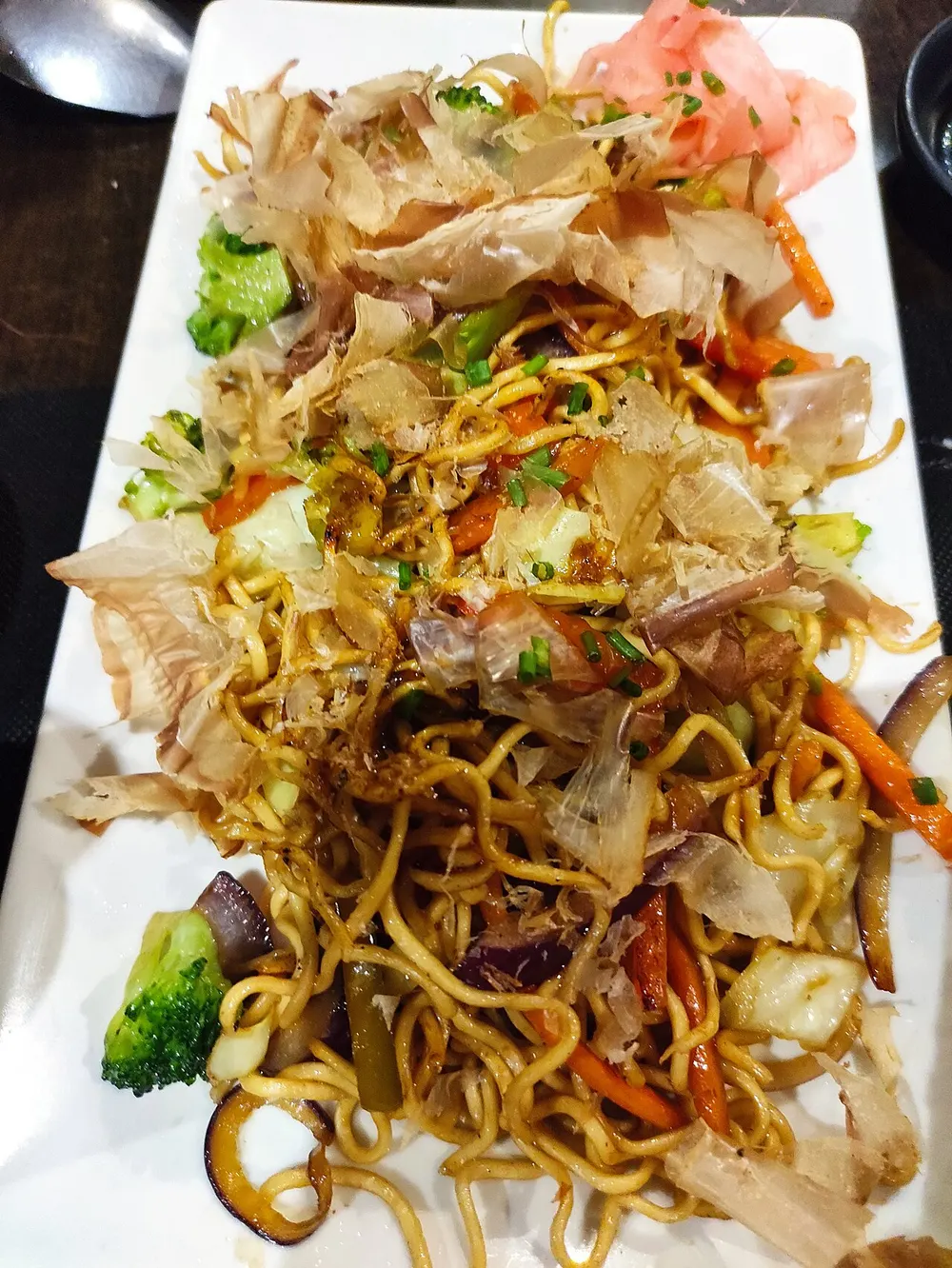
Scallion and garlic are fried in lard to build an aromatic oil, the noodles are seared in it, then pulled out so the aromatics can char — and the sachet sauce that comes in the packet gets upgraded with oyster sauce and a quarter-teaspoon of curry powder.
Fuente
Receta de リュウジ · 📱 Influencer · Ryuji — cooking researcher (料理研究家) and YouTuber behind 料理研究家リュウジのバズレシピ, Japan's biggest cooking channel at ~5.6M subscribers. Known for fast, exactly-measured home recipes.
Los nombres de cocineros y creadores aparecen únicamente como crédito de la fuente. More Recipes Please es independiente y no está afiliada, respaldada ni patrocinada por ellos.
Ryuji (バズレシピ) — Published by リュウジ on his own YouTube channel as 【最高傑作焼きそば】 (his 'masterpiece yakisoba'), built around 香味油 — aromatic oil. The description carries the full ingredient list and his method as text, and that is the source of every quantity here. Two things make his version distinctive. First, he does not throw away the powdered sauce sachet that comes in the noodle packet — he keeps it and builds on it with oyster sauce, sake, mirin, katsuobushi powder and a quarter-teaspoon of curry powder. Second, the sequencing: scallion and garlic are fried in lard to perfume it, the noodles are seared in that oil and then lifted out, and only then are the aromatics deliberately burnt — a step that would ruin the noodles if they were still in the pan.
Cocinero: リュウジ
Watch it being made
Mix the sauce first: in a small bowl combine the katsuobushi powder (2 g), the whole sachet of powdered sauce, sake 大さじ1, mirin 大さじ1/2, curry powder 小さじ1/4, oyster sauce 小さじ2 and 2 shakes of pepper.
💡 Premixing matters: once the noodles are in a hot pan you have about 30 seconds of attention to spare, and a powdered sachet dumped in dry at that point leaves salty pockets.
Cut the long green onion (30 g) into short lengths, smash the garlic clove, season the pork belly (80 g) with salt and pepper, and cut the carrot (20 g) into thin strips and the cabbage (60 g) into bite-size pieces.
Melt the lard (大さじ1) in a frying pan over medium heat and add the green onion and garlic. Fry 2–3 minutes, until they smell sweet and the oil around them turns golden.
💡 You are not cooking these to eat — you are moving their flavour into the fat. This is 香味油, aromatic oil, and it is the entire premise of the recipe.
Add the noodles straight from the packet and press them flat into the aromatic oil. Sear 2–3 minutes without stirring, until the underside picks up brown, crisp patches.
Lift out only the noodles and set them aside on a plate. Leave the green onion and garlic behind in the pan.
💡 This looks like a pointless extra step and is the one thing most worth copying. The noodles are done; the aromatics are not — and they need a heat the noodles would not survive.
Turn the heat up and let the green onion and garlic char — properly blacken at the edges, 1–2 minutes, until the smell turns from sweet to smoky.
💡 Burnt normally means ruined; here it is the point. Charred allium is what gives cheap supermarket yakisoba the smoky depth of a teppan stall. Push it to black, but pull it before it goes acrid and bitter.
Add the seasoned pork belly and stir-fry 2 minutes over high heat, until it is no longer pink and has rendered some fat.
Add the carrot and cabbage and keep stir-frying 2 minutes more, until the cabbage is just wilting at the edges but still has snap.
Return the noodles to the pan, pour the premixed sauce over them, and add the bean sprouts (100 g). Toss everything together for about 1 minute over high heat.
💡 Pour the sauce over the noodles, not onto the bare pan — hitting hot metal, a sugary sauce scorches in seconds. And keep this fast: bean sprouts go limp and start weeping water the moment you overcook them.
In a second pan, fry the egg sunny-side up while the noodles finish — you want the yolk still liquid.
Pile the yakisoba onto a plate and slide the fried egg on top.
Finish with aonori and a heap of beni-shoga, and eat while the noodles still have their seared edges.
💡 Break the yolk over the noodles at the table. It is not in his written line but it is what the egg is there for.
Korean
Fuente: Tradicional
Korean
Fuente: Cocina casera
Korean
Fuente: Cocina casera
Korean
Fuente: Tradicional
¿Lo has preparado? Comparte una foto en la Vitrina.
Comparte tu creación →