Principiante
Korean
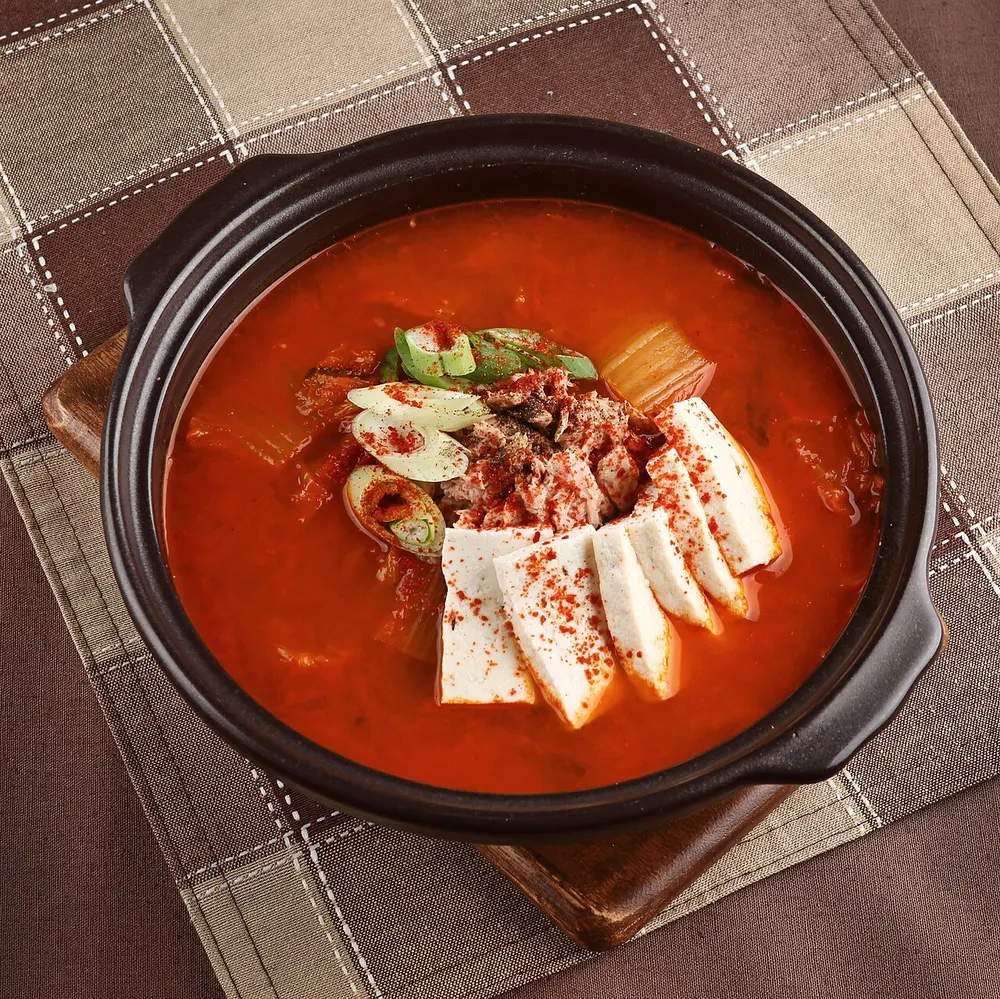
Kimchi Jjigae (Kimchi Stew)
Fuente: Tradicional
30 min3420 kcal
Sin lácteos🌶️🌶️
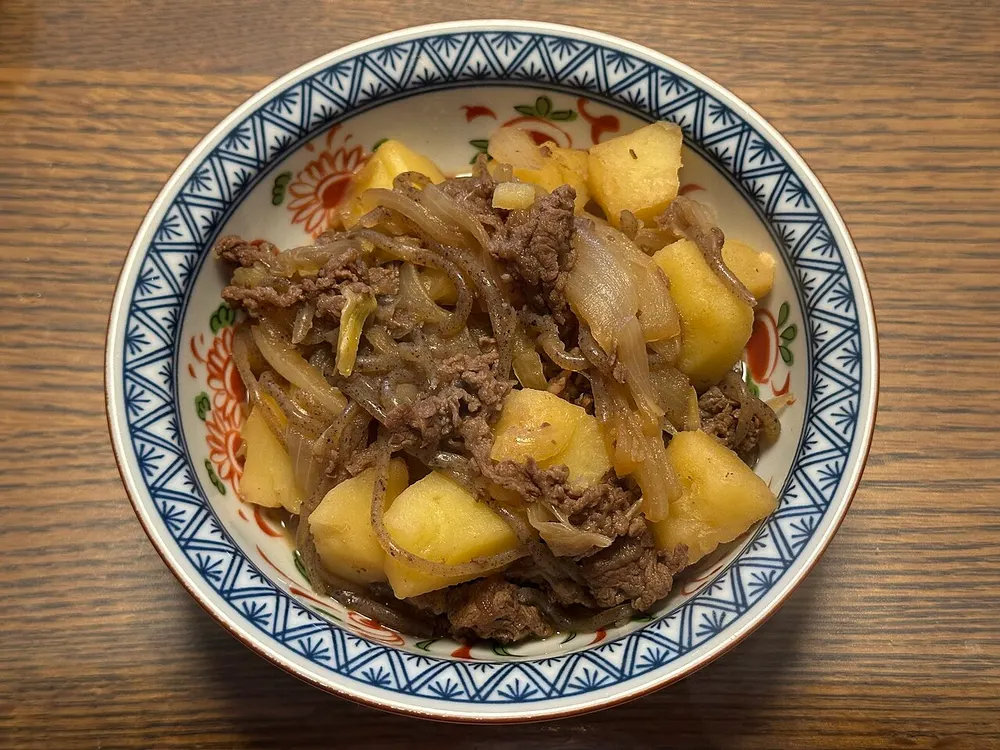
Nikujaga turned back to front: no carrot, no shirataki, just potato, onion and beef — and the beef goes in at the very end, spread over the top like a lid, so it never toughens.
Fuente
Receta de 栗原はるみ · 👨🍳 Chef · Harumi Kurihara — Japan's best-known ryori-kenkyuka (cookery researcher); her company Yutori no Kukan publishes her recipes and personal magazine
Los nombres de cocineros y creadores aparecen únicamente como crédito de la fuente. More Recipes Please es independiente y no está afiliada, respaldada ni patrocinada por ellos.
Harumi Kurihara (official site, Yutori no Kukan) — Published on Harumi Kurihara's official recipe site, run by her own company Yutori no Kukan. The full 材料 list for 4 servings and her numbered method are published there as text, along with her own ポイント notes, and the quantities here are taken from it directly. Hers is a pared-back nikujaga — no carrot, no shirataki, no green beans — and it inverts the usual order: the potatoes are fried alone until their edges turn translucent, the onions are cut into six wedges with the core left on so they keep their bite, and the beef goes in only at the very end, spread flat across the top 'like a drop-lid of meat' in her own phrase, then taken off the heat the moment it changes colour. Her notes also warn not to stir once the drop-lid is on, and offer thin pork shabu slices as an alternative to the beef.
Cocinero: 栗原はるみ
Watch it being made
Wash and peel the potatoes, cut each into quarters, drop them into water to soak, then drain them well.
💡 Drain them properly — really properly. Wet potatoes hitting hot oil in step 4 will spit at you and steam instead of frying.
Peel the onions and cut each into 6 wedges, leaving the root core attached to every wedge.
💡 Her own note explains this: sliced thin, onion collapses to mush almost immediately. Cut into 6 with the core holding each wedge together, it stays in one piece and keeps something to bite. She wants the onion to be food, not a background.
Cut any beef slices that look too big in half.
Heat the oil in a deep pot, add the potatoes alone, and fry them over medium heat for 3–5 minutes until their edges have turned translucent.
💡 Potatoes first, and by themselves. Frying seals the cut faces so they hold their shape through half an hour of simmering instead of disintegrating into the broth. Top up the oil if the pot goes dry — she says so explicitly.
Add the onion wedges and give them a light toss through — just enough to coat them in oil.
Add the dashi, soy sauce, sugar, mirin and sake — in that order, one after another.
💡 'In that order' is her instruction, not ours. Note how little liquid this is — 1 1/2 cups against 1.1 kg of vegetables. This is a braise, not a soup; the potatoes are meant to sit half-exposed.
Lay a drop-lid (otoshibuta) directly on the surface and simmer over medium heat for 10–12 minutes.
💡 A drop-lid sits on the food, not on the pot. It pushes the shallow broth back over the potatoes so the exposed tops still cook and colour, and it stops them knocking about. A circle of baking paper with a hole cut in the middle does the job.
Leave it alone while it simmers. Do not stir.
💡 Her note is blunt about this: once the drop-lid is on, don't stir, or the vegetables break up. Every stir knocks the softening potato corners off, and those crumbs are what turn a clear braise cloudy.
Test a potato with a bamboo skewer. Her guide: when it slides straight through, it still wants a touch longer.
💡 That instruction sounds backwards until you remember the beef still has to go in and cook. The potatoes will finish in the residual time; pulling them off at 'done' means overshooting by the end.
Now the beef. Spread the slices out flat over the top of everything — as if you were laying a second lid of meat across the pot.
💡 'Like a drop-lid of meat' is her own phrase, and it is the point of the whole recipe. Almost every nikujaga starts by frying the beef; hers finishes with it. Thin beef needs perhaps ninety seconds — cook it for the twelve minutes the potatoes need and it goes grey and stringy. Spread flat on top, it steams gently and stays tender.
Skim off any scum that rises as the beef cooks.
As soon as the beef has lost its raw colour, turn the heat off. Leave the pot to stand a while so the flavour soaks in, then serve.
💡 Her warning is explicit: overcook it and the beef turns tough. And the resting is not optional — nikujaga takes on most of its flavour as it cools, when the broth is drawn back into the potatoes. Ten minutes is worth more here than ten extra minutes of heat.
Korean
Fuente: Tradicional
Korean
Fuente: Cocina casera
Korean
Fuente: Cocina casera
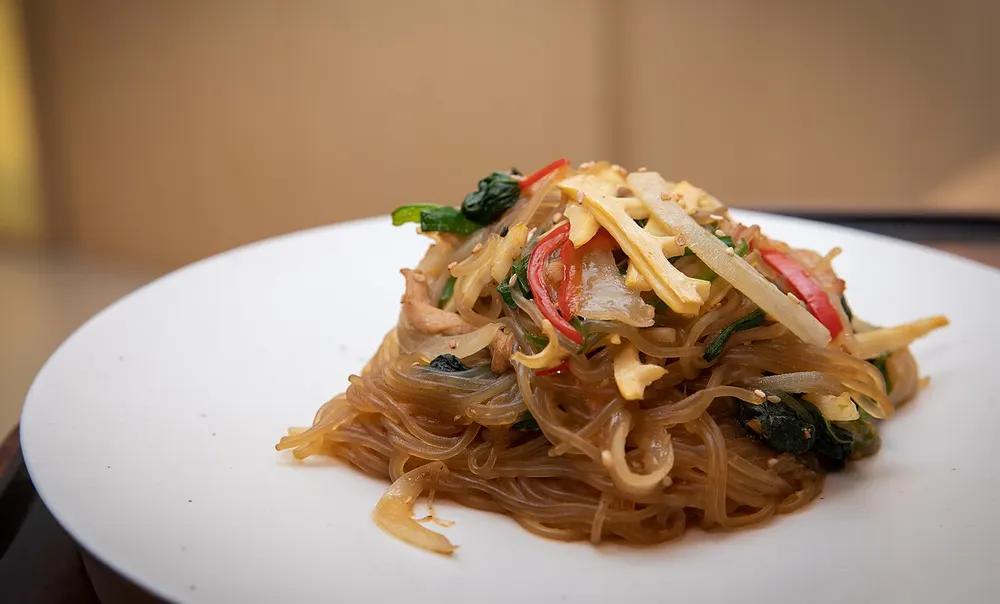
Korean
Fuente: Tradicional
¿Lo has preparado? Comparte una foto en la Vitrina.
Comparte tu creación →