Intermediate
Moroccan
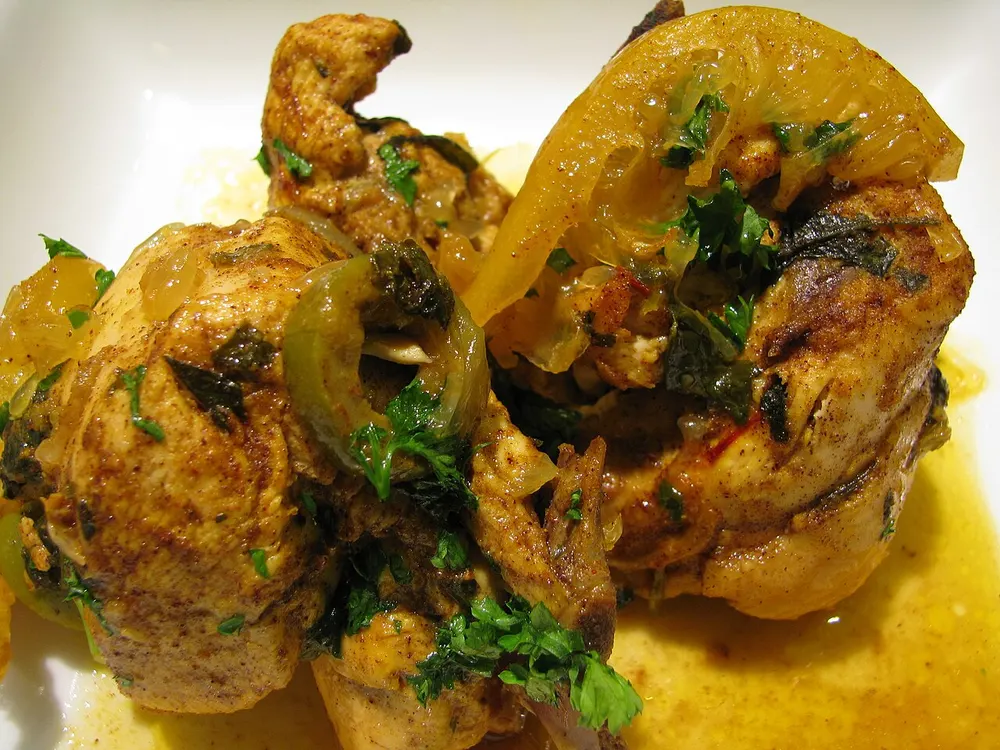
Chicken Tagine with Olives and Lemon
Source: Traditional
90 min4420 kcal
HalalGluten-freeDairy-free
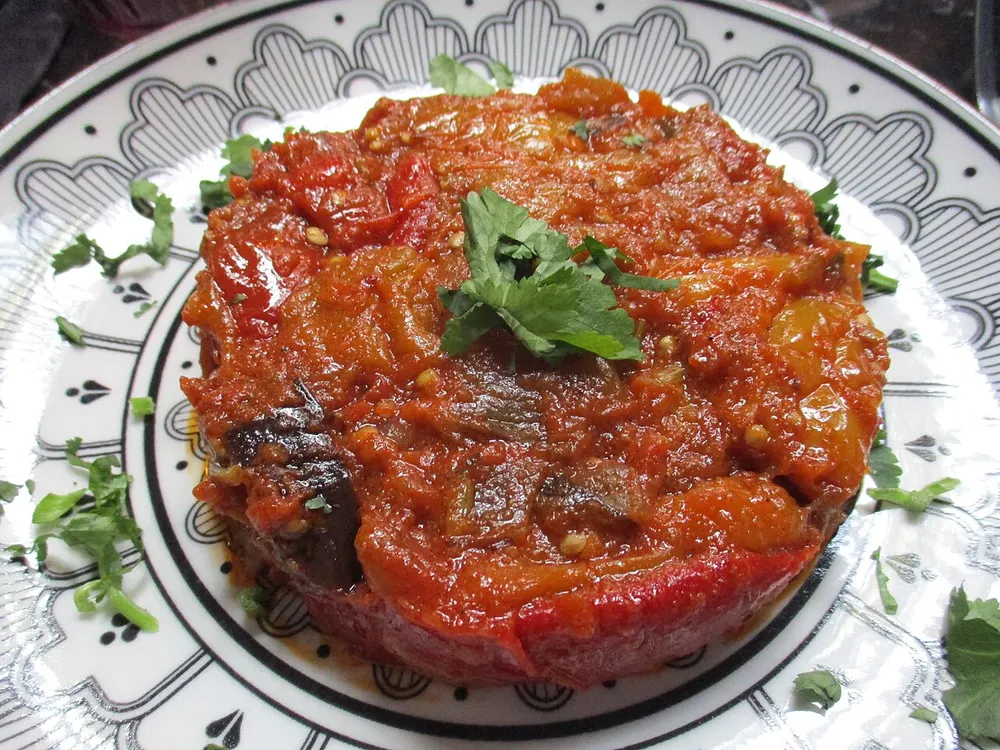
A cooked Moroccan salad that eats like a dip: grilled aubergine crushed into tomatoes with garlic, paprika and cumin, then cooked down until the oil comes back to the surface.
Source
Recipe by Moroccan home kitchens · 🏺 Traditional · Moroccan household cooking
Moroccan home cooking — A Moroccan salad of cooked aubergine and tomatoes: the aubergine is grilled, then combined with the tomatoes and seasoned with spices and garlic. It belongs to the family of cooked Moroccan salads served in small dishes at the start of a meal, and has no single author — the paprika-and-cumin seasoning and the smashing rather than blending are the constants across households.
Watch it being made · 3 videos
Char the aubergines whole over a gas flame or under a hot grill, turning, 15–20 minutes, until blackened and collapsing.
💡 Prick them first so they do not burst. You can also peel and cube them raw and cook them straight in the pan — quicker, and common in Moroccan homes — but you lose the smoke.
Let them cool slightly, then peel off the skin and roughly chop the flesh.
Grate the tomatoes on the coarse side of a box grater, holding the skin — you will be left with skin in your hand and purée in the bowl.
💡 This is the North African way to skin a tomato and it takes 30 seconds — no boiling, no ice bath.
Warm the olive oil in a wide pan over medium heat and add the garlic. Cook 30 seconds, just until it smells sweet.
Add the paprika and cumin and stir for 20 seconds.
💡 Twenty seconds, no more. Paprika burns faster than almost any spice and turns bitter and grey — have the tomatoes ready in your hand before the spices go in.
Pour in the grated tomato and add the salt. It will hiss and stop the spices cooking.
Simmer 10 minutes over medium heat, until the tomato darkens and reduces by about a third.
Add the chopped aubergine and stir it through.
Cook 15 minutes more, mashing with a wooden spoon or fork as you go, until the aubergine breaks down into the tomato.
💡 Mash it, do not blend it. Zaalouk is a salad, not a purée — you should still be able to see and feel the aubergine. A blender turns it into baba ganoush's less interesting cousin.
Keep cooking until the water has gone and the olive oil separates and glistens at the edges of the pan.
💡 That returning oil is the doneness signal across North African cooking. Stop before it and zaalouk tastes watery and raw; the flavour concentrates in the last five minutes.
Stir in the coriander, parsley, lemon juice and cayenne if using.
Taste and adjust the salt and lemon, then let it cool to room temperature.
💡 Zaalouk is served warm or at room temperature, never hot, and it is noticeably better an hour later once the flavours settle.
Serve with crusty bread or khobz, as part of a spread of small salads.
Moroccan
Source: Traditional
Egyptian
Source: Home cook
West African / Nigerian
Source: Traditional
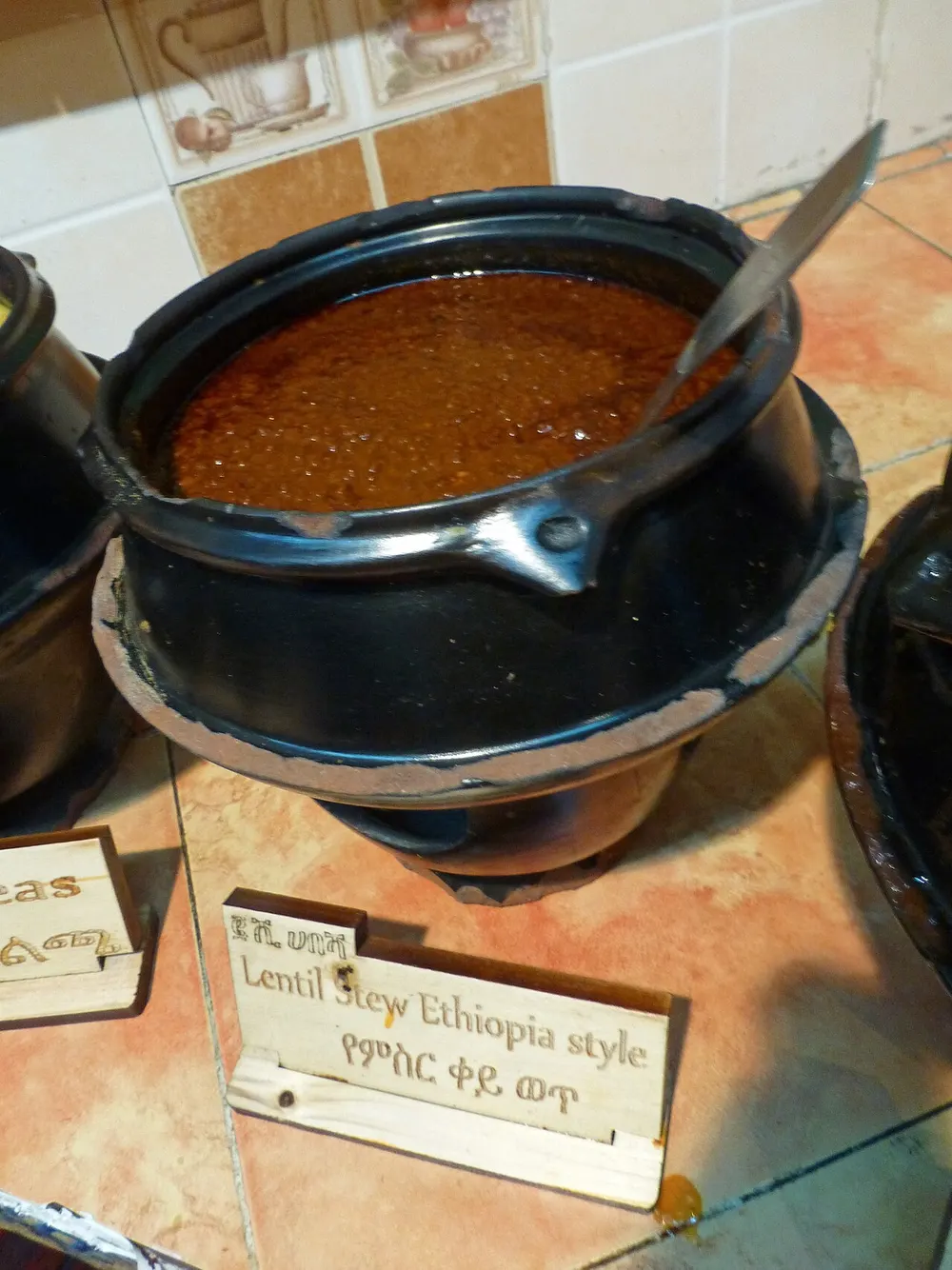
Ethiopian
Source: Home cook
Made this? Share a photo in Showcase.
Share your creation →