Intermediate
Moroccan
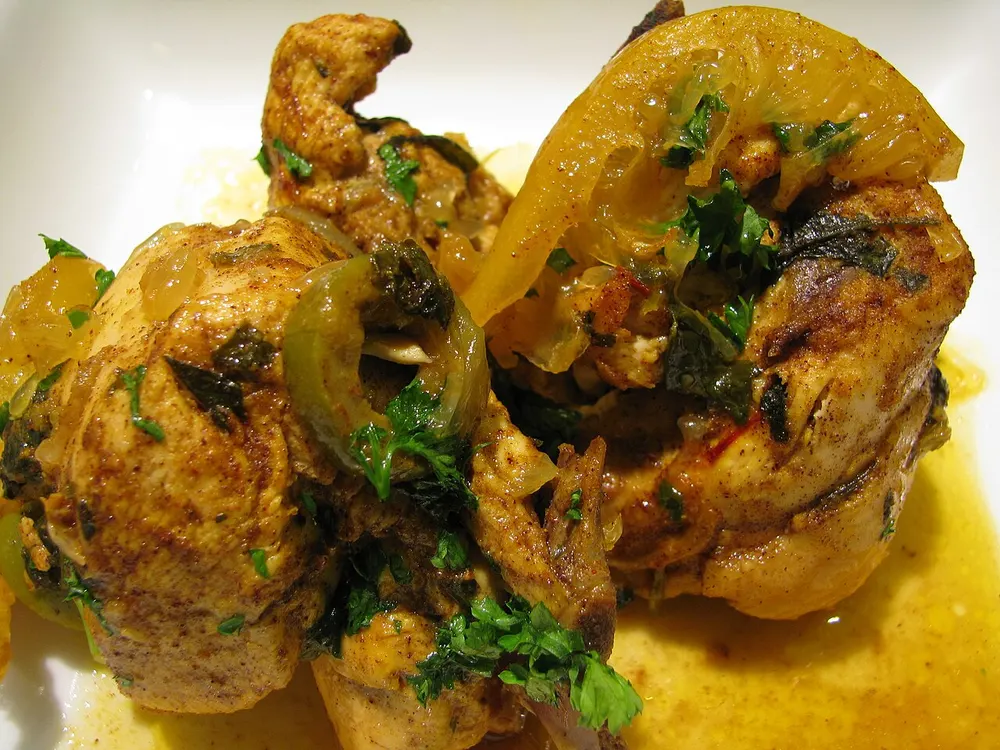
Chicken Tagine with Olives and Lemon
Source: Traditional
90 min4420 kcal
HalalGluten-freeDairy-free
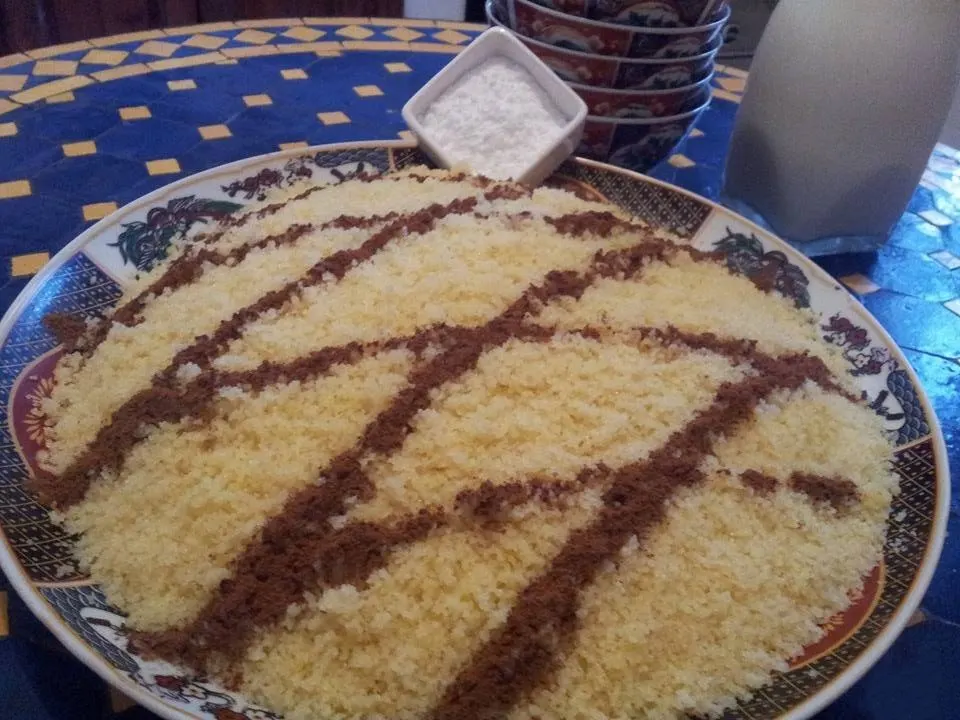
Couscous turned dessert: steamed grain tossed with butter, mounded into a cone and striped with cinnamon and icing sugar, crowned with fried almonds.
Source
Recipe by Moroccan home kitchens · 🏺 Traditional · Moroccan household cooking
Moroccan / Maghrebi home cooking — Seffa is a Maghrebi term for a dish of sweetened semolina couscous with butter, cinnamon and almonds. It may incorporate meat, and can alternatively be made with vermicelli or rice. It is generally eaten at the end of a meal, before dessert, and is often served at traditional marriage ceremonies and family gatherings. There is no single author — the striped cone and the sweetness level vary household to household.
Watch it being made · 3 videos
Fry the almonds in a little oil over medium heat for 3–4 minutes, until golden, then drain them on paper towel.
💡 Watch them constantly. Almonds go from pale to burnt in about 20 seconds, and burnt almonds will make the whole dish taste bitter.
Set aside a third of the almonds whole for the top, and grind the rest coarsely with 2 tbsp of the icing sugar.
💡 The sugar stops the almonds turning to oily paste in the grinder — it absorbs the oil they release.
Put the dry couscous in a wide bowl, sprinkle over 150 ml water and the oil, and rub it through your fingers for 2 minutes.
Steam it uncovered over boiling water for 15 minutes from when the steam comes through.
Tip it back into the bowl, break up the clumps, sprinkle over 200 ml water and the salt, and rub it through again.
Steam a second time for 15 minutes.
💡 Same three-steaming logic as savoury couscous: each pass hydrates the grain a little further. Skip a steaming and the middle stays chalky under all that butter.
Tip it out again, break it up, sprinkle over a final 150 ml water and the orange blossom water, and rub it through.
Steam a third and final time for 15 minutes, adding the drained raisins for the last 5.
Taste a grain — it must be completely tender, with no hard centre.
Tip the hot couscous into a wide bowl and fork the softened butter through it while it is still steaming.
💡 It has to be hot or the butter will not melt in, and cold seffa with lumps of butter through it is a sad thing. Work fast.
Fork through the ground almond-and-sugar mixture and the remaining icing sugar, tasting as you go.
💡 Moroccan seffa is sweet but not sickly. Add the sugar in stages — you can always add more at the table, and every household disagrees about how sweet it should be.
Mound the couscous into a tall cone on a serving plate, shaping it with your hands.
Decorate: dust lines of cinnamon and icing sugar down the cone from the tip, like the spokes of a wheel.
💡 The striped cone is how seffa is always presented in Morocco. A strip of paper held against the side gives you clean lines if you want them sharp.
Press the reserved whole almonds into the cone and serve warm, with glasses of warm milk.
Moroccan
Source: Traditional
Egyptian
Source: Home cook
West African / Nigerian
Source: Traditional
Ethiopian
Source: Home cook
Made this? Share a photo in Showcase.
Share your creation →