Intermediate
Moroccan
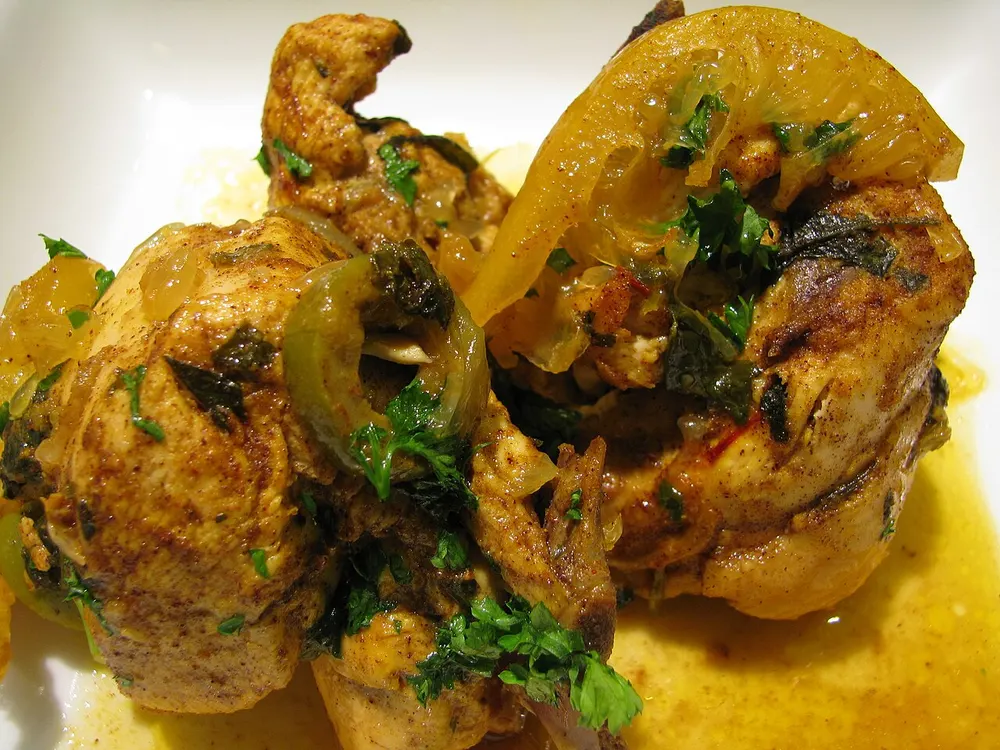
Chicken Tagine with Olives and Lemon
Source: Traditional
90 min4420 kcal
HalalGluten-freeDairy-free
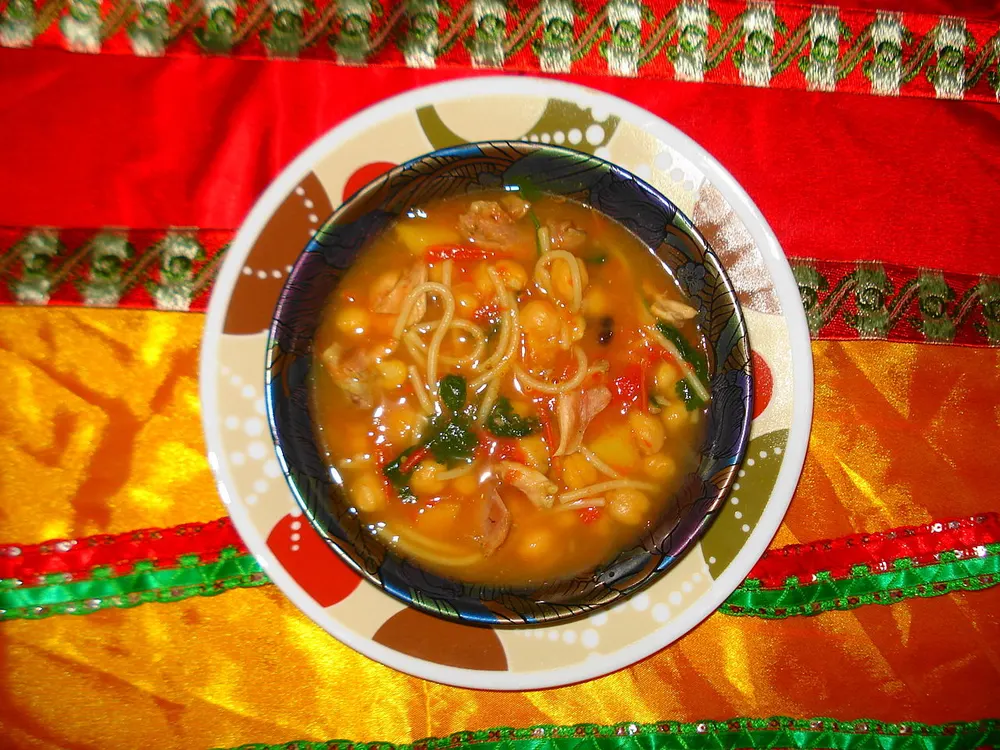
The soup Morocco breaks its fast with: lamb, chickpeas and lentils under a mountain of coriander, thickened at the end with a flour slurry that turns it velvety.
Source
Recipe by Moroccan home kitchens · 🏺 Traditional · Moroccan household cooking
Moroccan home cooking — A traditional Moroccan soup with many variations, popular as a starter and eaten on its own as a light snack. It is mostly served during Ramadan — the soup families break the fast with, alongside dates — although it is made year-round. There is no single author and no fixed recipe: the lamb, the pulse ratio and the vermicelli all shift household to household. The tedouira flour slurry below is the standard Moroccan thickening method.
Watch it being made · 3 videos
If using dried chickpeas, drain the ones you soaked overnight and slip off any loose skins.
💡 The skins never soften and float around like confetti. Rubbing the soaked chickpeas between your palms under water takes two minutes and lifts most of them.
Melt the butter in a large pot over medium heat and add the lamb, onion, celery and the ginger, turmeric, pepper and saffron.
Stir for 5 minutes, until the spices coat everything and smell fragrant rather than dusty.
💡 Frying ground spices in fat for a minute or two is what wakes them up. Thrown into water later, they taste flat and chalky no matter how long the pot simmers.
Add the chickpeas, lentils, tomato purée, half the coriander and the parsley. Pour in the 1.8 L of water.
Bring to a boil, then drop to a low simmer, cover, and cook 60–75 minutes, until the chickpeas are properly soft.
💡 Go by the chickpea, not the clock. A chickpea that still has any bite will not soften later — acidity from the tomato slows it right down, and once the tedouira goes in the texture is fixed for good.
Taste and season with salt now that the pulses are cooked.
If using vermicelli, add it now and cook 5 minutes.
Make the tedouira: whisk the 60 g flour into 250 ml cold water until there is not a single lump.
💡 Cold water, always. Flour hitting warm water seizes into lumps instantly, and once they form you will never whisk them out — you would have to sieve the whole thing.
Let the slurry stand 2 minutes, then whisk it again just before using — the flour settles fast.
With the soup at a gentle simmer, pour the slurry in a thin stream while stirring the pot constantly in one direction.
💡 Thin stream, constant stirring — this is the one moment harira can be ruined. Dumping it in gives you dumplings of raw flour suspended in soup.
Keep stirring and simmer 10–15 minutes more, until the soup turns glossy and velvety and no longer tastes of raw flour.
💡 Taste for the flour. Under-cooked tedouira leaves a pasty, wallpaper-glue flavour that people mistake for 'thick soup'. Fifteen minutes cooks it out.
Stir in the remaining coriander and take it off the heat.
Rest it 5 minutes, check the salt, and serve with lemon wedges and dates alongside.
Moroccan
Source: Traditional
Egyptian
Source: Home cook
West African / Nigerian
Source: Traditional
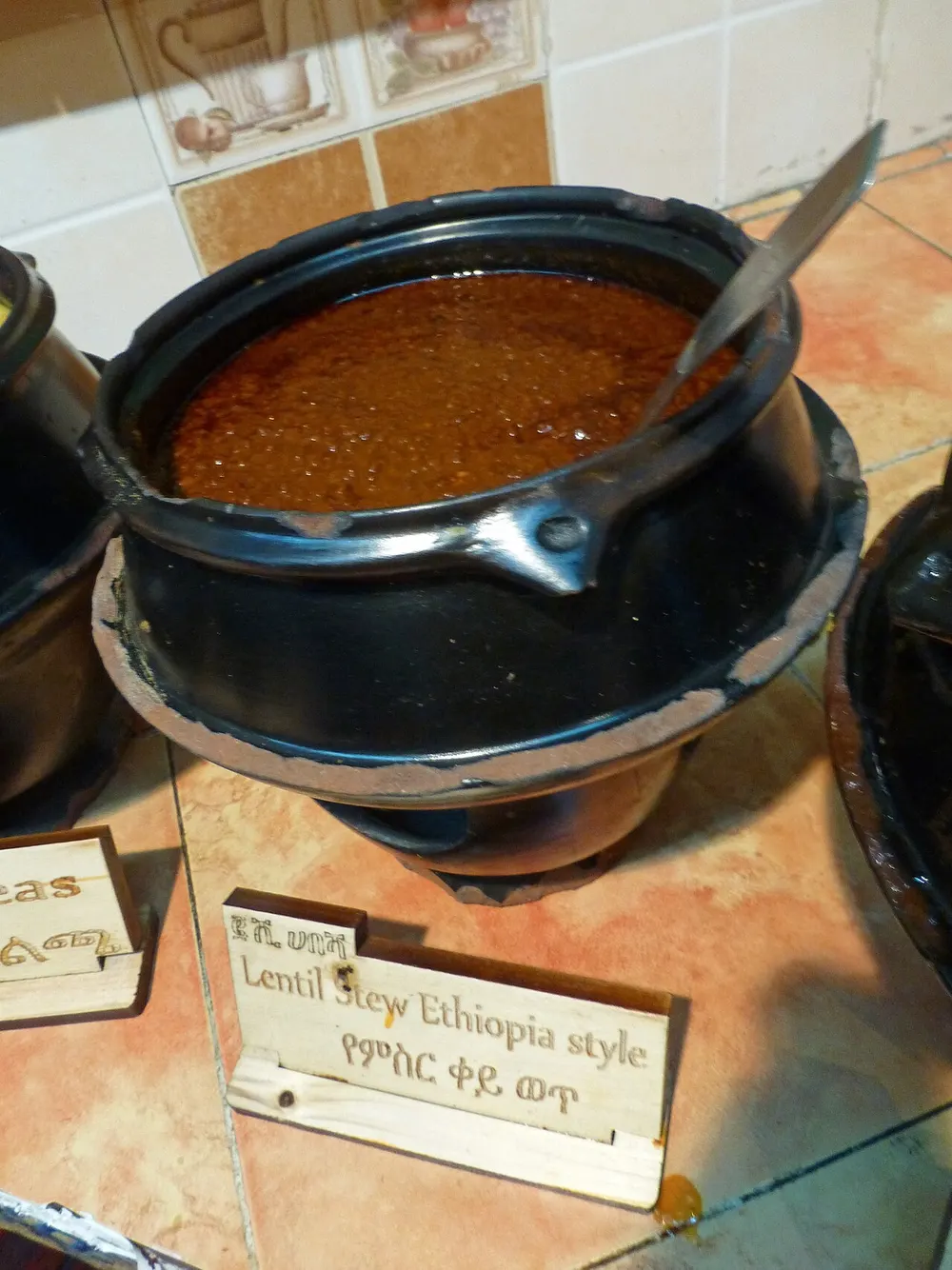
Ethiopian
Source: Home cook
Made this? Share a photo in Showcase.
Share your creation →