Einsteiger
Korean
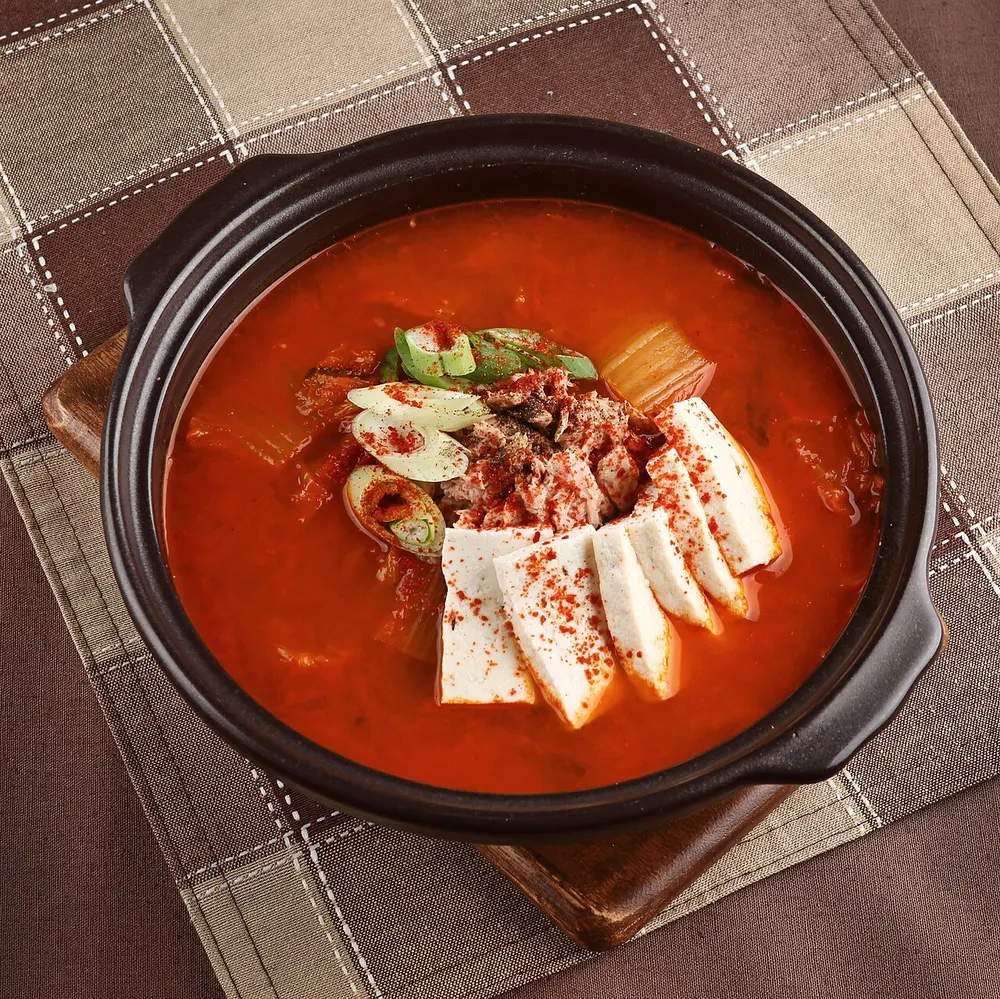
Kimchi Jjigae (Kimchi Stew)
Quelle: Traditionell
30 Min.3420 kcal
Laktosefrei🌶️🌶️
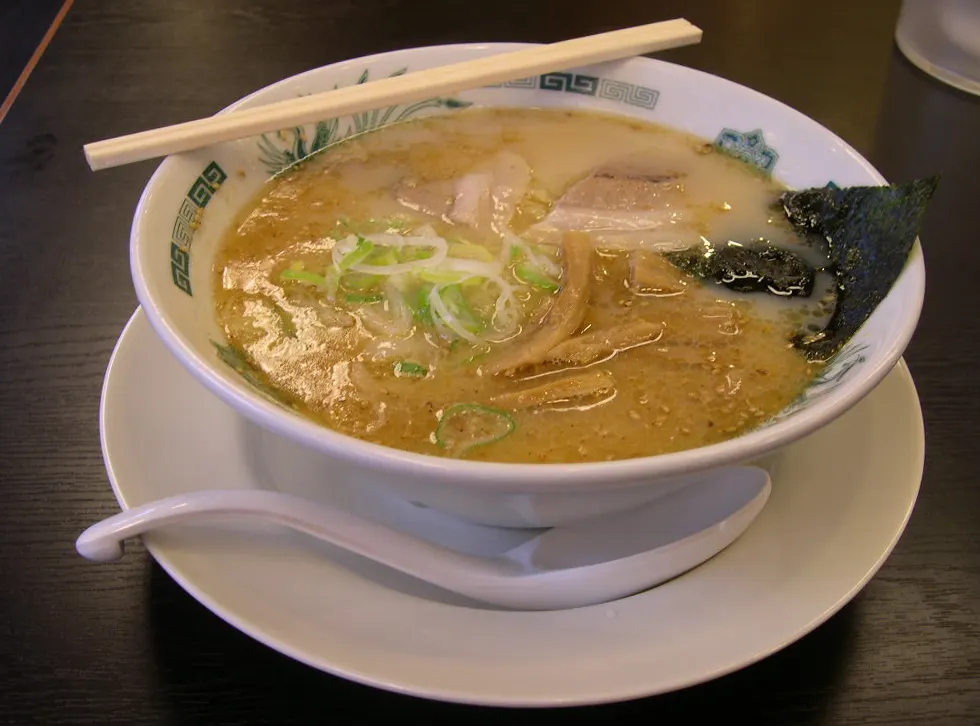
A milky pork-bone broth simmered for hours, poured over springy noodles with chashu, egg and scallion.
Quelle
Rezept von Ramen-ya kitchens · 👨🍳 Küchenchef · In the style of specialist ramen shops
Namen von Köchinnen, Köchen und Creators erscheinen ausschließlich als Quellenangabe. More Recipes Please ist unabhängig und wird von ihnen weder unterstützt noch gesponsert.
Kyushu · Hakata style / 九州・博多スタイル — Tonkotsu (pork-bone) ramen originated in Japan's Kyushu region — the Hakata district of Fukuoka is especially associated with it — where bones are boiled hard for hours until the fat emulsifies into a milky broth.
Zubereitung im Video · 3 Videos
Blanch the bones in boiling water for 10 minutes, drain, and scrub off any scum — this keeps the final broth clean and pale.
Cover the cleaned bones with fresh water and boil hard, topping up as needed, for 6–8 hours until the broth turns opaque and milky.
Meanwhile roll and tie the belly, braise it low in soy, mirin and aromatics until fork-tender, then chill and slice for chashu.
Marinate soft-boiled eggs in the same braising liquid for a few hours.
Strain the broth, season each bowl with a spoon of soy tare, and pour the hot broth over freshly boiled noodles.
Top with chashu, half an egg, scallion and nori, and serve immediately.
Korean
Quelle: Traditionell
Korean
Quelle: Hausmannskost
Korean
Quelle: Hausmannskost
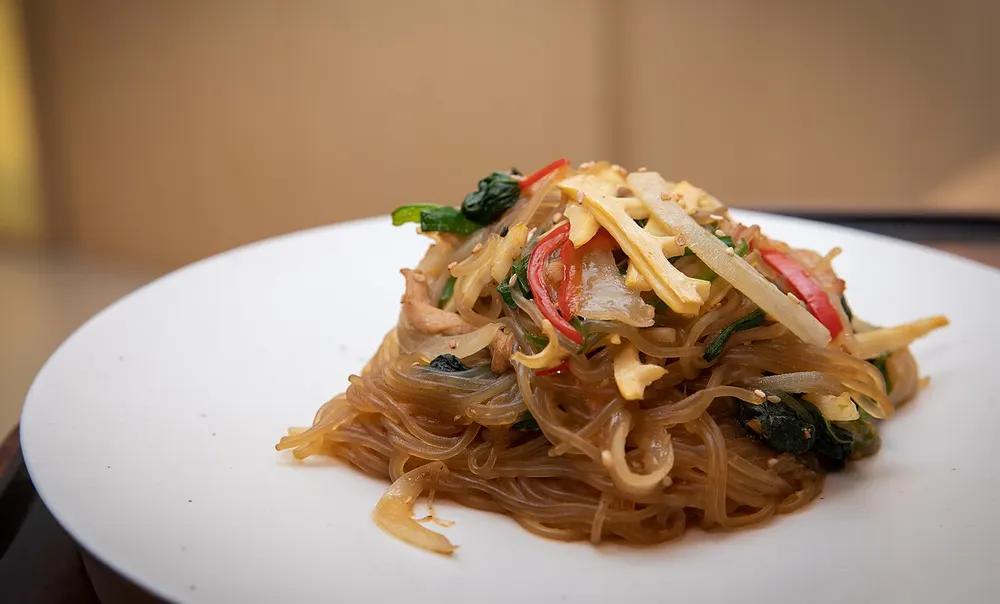
Korean
Quelle: Traditionell
Nachgekocht? Teile ein Foto in der Galerie.
Zeig dein Werk →