
Einsteiger
Brazilian
Pão de Queijo (Cheese Bread)
Quelle: Traditionell
45 Min.690 kcal
VegetarischGlutenfrei
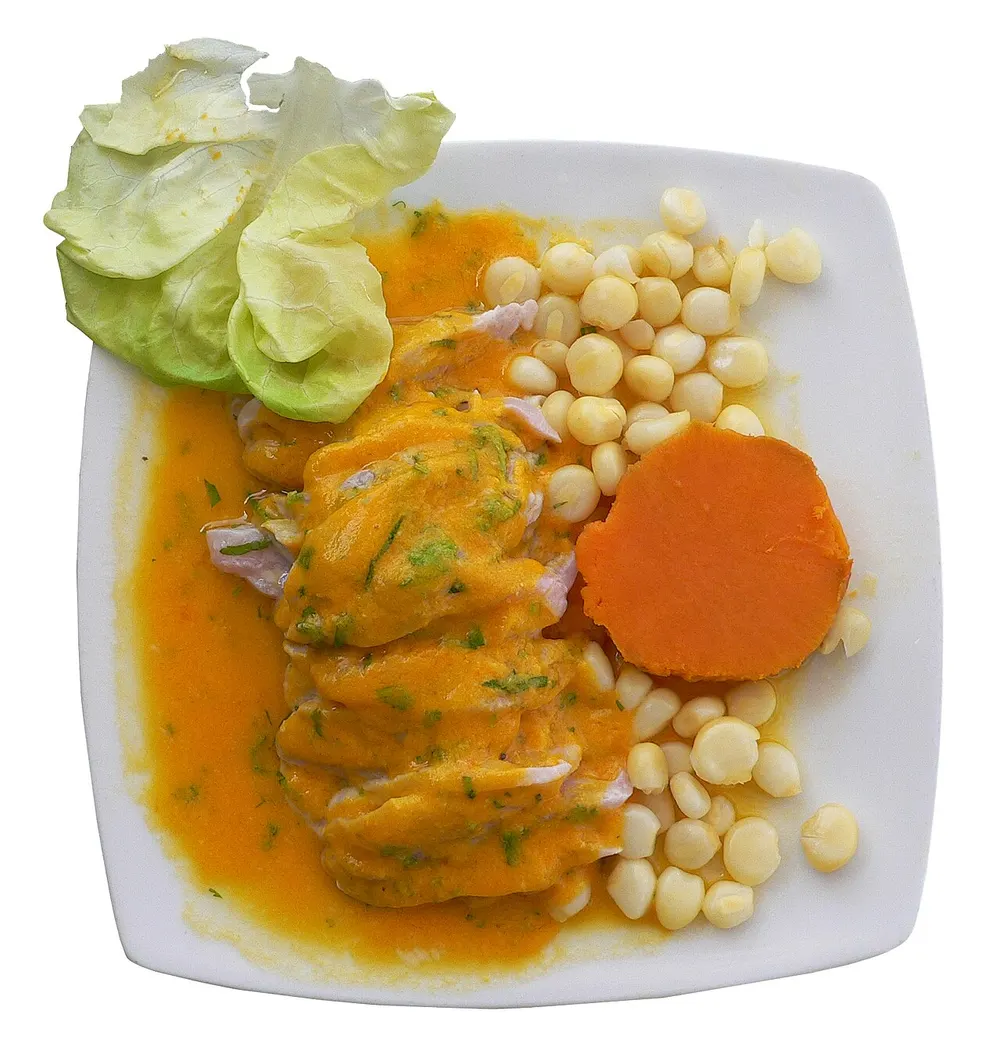
Raw fish sliced like sashimi, laid in a fan and sauced only at the moment it goes to the table — an ají amarillo and lime leche de tigre poured over, sweet potato and corn alongside. Ceviche cut by a Japanese hand: sliced not cubed, sauced not marinated, so the fish is still raw when you eat it.
Quelle
Rezept von Nikkei kitchens · 🏺 Traditionell · Japanese-Peruvian cooking, from families who arrived from 1899 — a sashimi knife and dashi thinking applied to Peruvian fish and chillies.
Peru · ceviche cut by a Japanese hand — An ownerless traditional dish, so no cook is credited. The cited article confirms tiradito as a Peruvian dish of raw fish cut in the shape of sashimi in a spicy sauce, reflecting the influence of Japanese immigrants on Peruvian cuisine, differing from ceviche in that it is sliced rather than cubed and sauced immediately before service rather than marinated beforehand, with some authors stating it contains no onion, and commonly garnished with sweet potato and boiled corn. The leche de tigre recipe, timings and quantities are this book's own.
Zubereitung im Video · 3 Videos
Leche de tigre: blend the lime juice, ají amarillo paste, garlic, ginger, celery, salt, a small piece of the fish and the ice until smooth and pale. Strain and keep in the fridge.
Slice the fish across the grain into pieces 3 mm thick and about 5 cm long, holding the knife at an angle — sashimi slices, not cubes.
💡 Sliced, not cubed — that single knife difference is what separates tiradito from ceviche.
Fan the slices over a chilled plate in a single overlapping layer. Do this up to an hour ahead and keep covered in the fridge.
At the table and not before, pour the cold leche de tigre over so it just covers the fish. Scatter the ají limo and coriander, set the sweet potato and corn at the edge.
💡 Sauce at the last second. Leave it sitting and the lime starts curing the fish and you have made a poorly cut ceviche instead.
Eat immediately, within about five minutes.
Brazilian
Quelle: Traditionell
Brazilian
Quelle: Traditionell
Peruvian
Quelle: Traditionell
Argentine
Quelle: Traditionell
Nachgekocht? Teile ein Foto in der Galerie.
Zeig dein Werk →