Einsteiger
Turkish
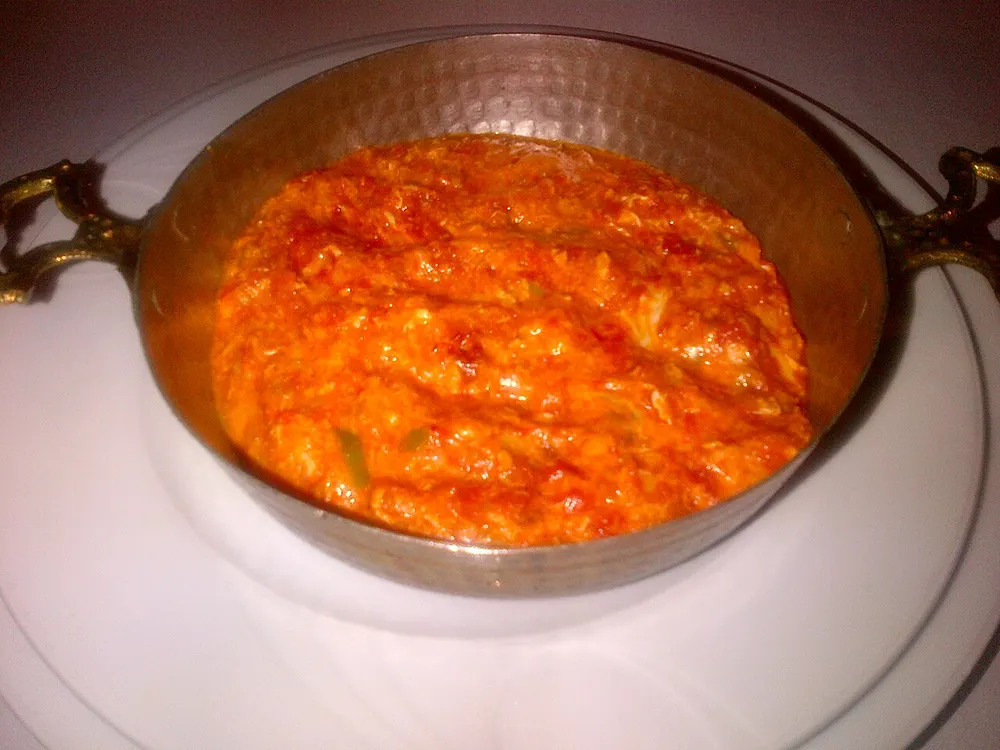
Menemen (Turkish Scrambled Eggs)
Quelle: Hausmannskost
20 Min.2260 kcal
VegetarischGlutenfreiHalal🌶️
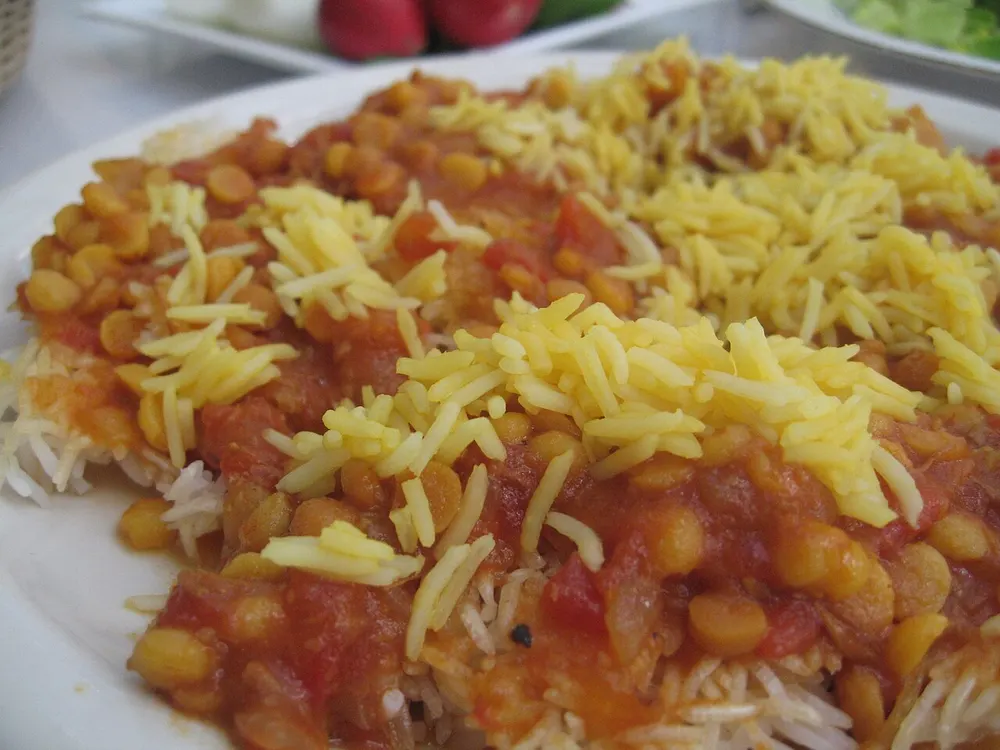
The most fought-over thing on a Persian table: the thin, deep-gold, shatteringly crisp crust that forms at the bottom of the rice pot. Made here the plain oil-and-potato way, turned out in one golden disc and broken into shards.
Quelle
Rezept von Persian home kitchens · 🏺 Traditionell · Everyday and festive cooking of Iranian households — the shared repertoire behind sofreh (the spread) that no single person owns
Persian · traditional dish — An ownerless traditional dish, so no cook is credited. Wikipedia files tahdig under the general article 'Scorched rice' (to which 'Tahdig' redirects), which defines scorched rice — also called crunchy rice or tahdig — as the thin crust of slightly browned rice that forms at the bottom of the pot while the rice cooks. That is the exact thing this recipe sets out to make. The oil-and-potato method and quantities here are this book's own.
Zubereitung im Video · 3 Videos
Bring a large pot of well-salted water to a rolling boil. Drain the soaked rice, tip it in, and boil for 5 to 7 minutes, until the grains are soft on the outside but still have a firm bite at the core. Drain in a sieve and rinse briefly.
💡 This is the make-or-break moment. Rice boiled too long turns to a solid cake with no fluffy layer above the crust; too short and the top stays hard. Test a grain — bendy but with a white core.
Rinse and dry the pot, then heat the oil in it over medium heat. Stir 2 tbsp of the saffron water into the oil and lay the potato slices in a single layer across the base.
Spoon the drained rice over the potatoes, mounding it up into a loose pyramid rather than packing it flat — the mound lets steam escape and keeps the upper rice fluffy. Poke a few holes down through it with the handle of a spoon.
Drizzle over the rest of the saffron water. Wrap the lid in a clean tea towel and clamp it on. Cook on medium heat for 8 to 10 minutes to build steam, until you hear a gentle crackle and the kitchen smells toasty.
Turn the heat to the lowest setting and steam for another 35 to 40 minutes. Do not lift the lid to peek — you will let the steam out and stall the crust.
💡 The towel absorbs dripping condensation so the rice steams dry and fluffy. Your nose is the timer for the crust — the moment you smell it turning from toasty to nutty, it is ready; a whiff of burning means take it off now.
Scoop the fluffy rice off the top into a serving dish. Then set a large plate over the pot and flip the whole thing over to turn the golden crust out in one piece — or just lift the shards out with a spatula if it resists.
Turkish
Quelle: Hausmannskost
Levantine
Quelle: Hausmannskost
Levantine
Quelle: Traditionell

Middle Eastern / North African
Quelle: Hausmannskost
Nachgekocht? Teile ein Foto in der Galerie.
Zeig dein Werk →