Einsteiger
Korean
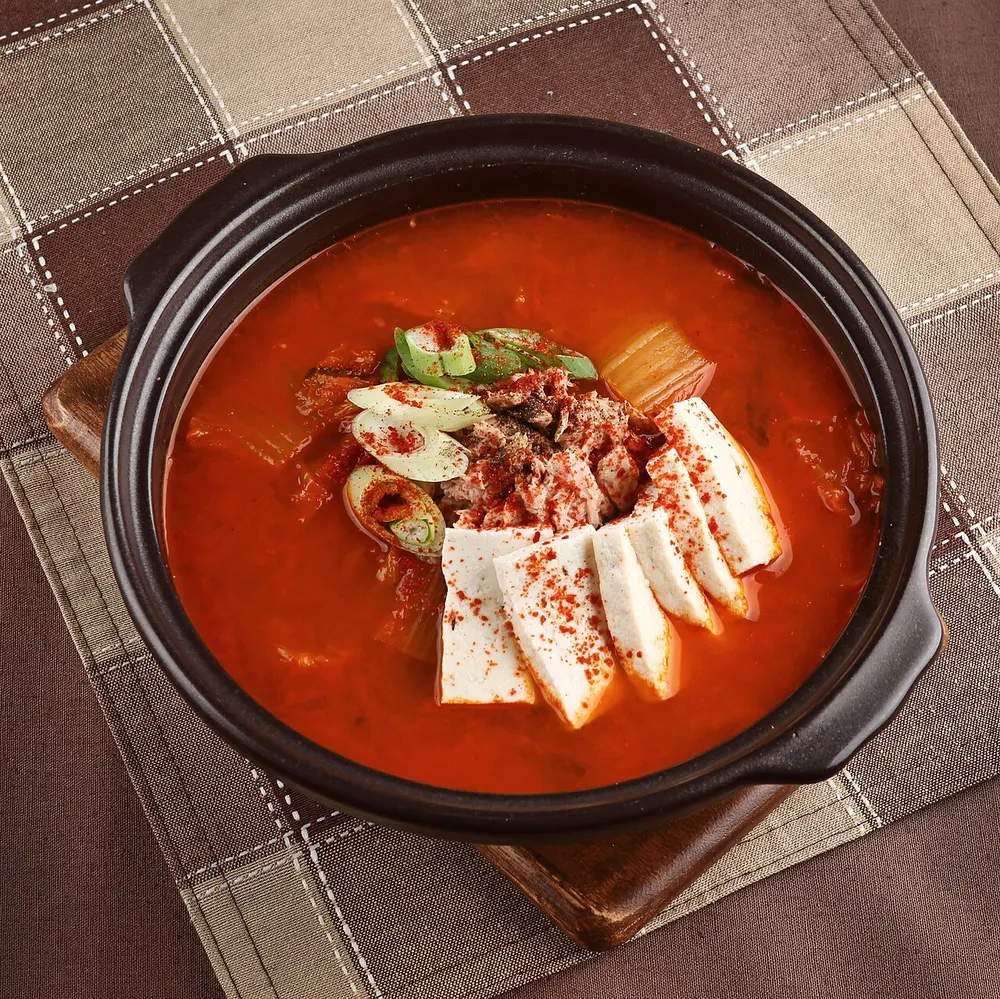
Kimchi Jjigae (Kimchi Stew)
Quelle: Traditionell
30 Min.3420 kcal
Laktosefrei🌶️🌶️
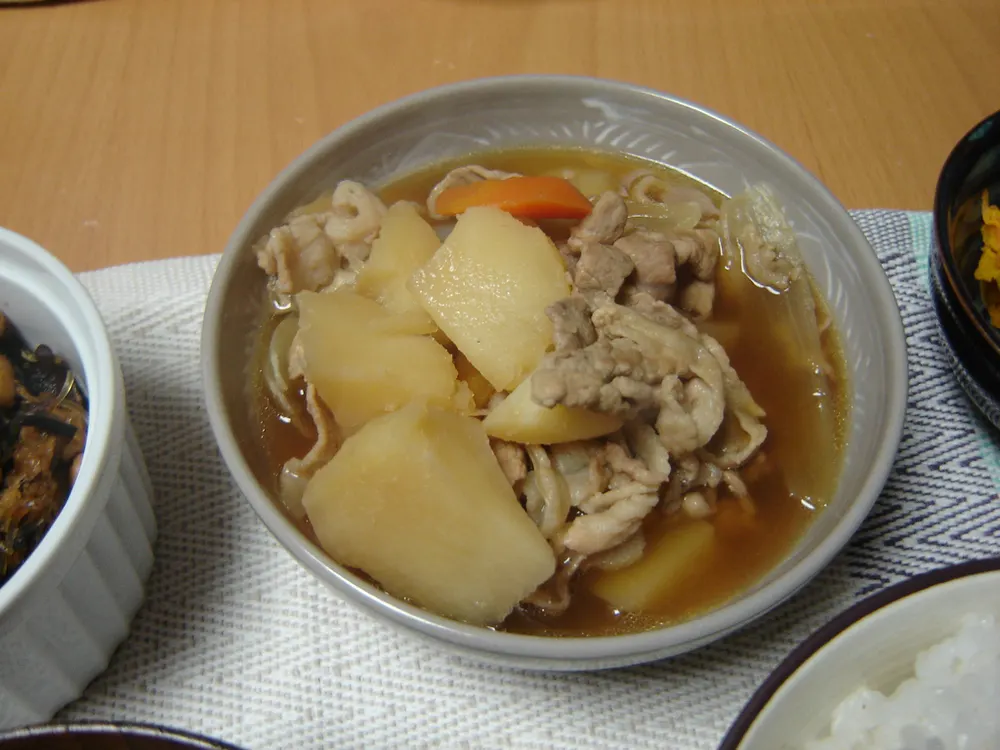
Nikujaga with the stew taken out of it. Two ingredients — pork belly and potato — sliced thin, microwaved, then fried until the potatoes catch colour and finished by boiling the sauce down onto them. No dashi, no simmering, no carrot.
Quelle
Rezept von リュウジ · 📱 Influencer · Ryuji — cooking researcher (料理研究家) and YouTuber behind 料理研究家リュウジのバズレシピ, Japan's biggest cooking channel at ~5.6M subscribers. Known for fast, exactly-measured home recipes.
Namen von Köchinnen, Köchen und Creators erscheinen ausschließlich als Quellenangabe. More Recipes Please ist unabhängig und wird von ihnen weder unterstützt noch gesponsert.
Ryuji (バズレシピ) — Published by リュウジ on his own YouTube channel as 【シン・肉じゃが】, pitched on '材料たった二つ' — only two ingredients. The description carries the full ingredient list and his method as text, and that is the source of every quantity here. What makes it a genuinely different dish from the nikujaga most people know: there is no dashi and no water, no carrot and no onion, and nothing is simmered. The potatoes are sliced instead of cubed, pre-cooked in the microwave for 4 minutes at 600 W, then browned in the pan with the pork before the sauce is boiled down onto them — so the flavour comes from frying rather than stewing. (One small inconsistency in his own text: the ingredient list says 3 potatoes while the method line says 2; both give 300 g, which is what is used here.)
Koch: リュウジ
Zubereitung im Video
Peel the potatoes and slice them into rounds about 5 mm thick — 300 g in total.
💡 Slicing rather than cubing is the entire idea. Slices give you far more surface area to brown, and browning — not simmering — is where this version gets its flavour.
Spread the potato slices on a plate and microwave at 600 W for 4 minutes, until a slice gives easily when you press it.
💡 This replaces the simmering entirely. The potatoes come out already cooked, so the pan only has to brown them — which is why the whole dish takes 20 minutes rather than 40. If your microwave is 500 W, give it about 5 minutes.
Season the pork belly slices (180–200 g) with salt and pepper.
Heat the oil (小さじ1) in a frying pan over medium-high heat and add the pork. Fry 2–3 minutes, until it is no longer pink and its own fat has run out into the pan.
Add the microwaved potato slices and fry 4–5 minutes, turning them only occasionally, until they pick up real brown patches.
💡 Leave them alone. Every time you stir, you interrupt the browning and give the slices another chance to break — and they are already soft from the microwave. Turn them once or twice, no more.
Pour in the soy sauce (大さじ1と1/2), mirin (大さじ1と1/2), sake (大さじ3), sugar (小さじ1と1/2) and 5 shakes of Aji-no-moto.
Let it bubble hard and reduce, tilting and shaking the pan to keep everything coated, until the liquid has gone from watery to a glossy sauce that clings — roughly 3–4 minutes.
💡 This is the step to watch. There are only about 90 ml of liquid in the pan and a good spoonful of sugar in it — the gap between 'glossy' and 'burnt caramel' is under a minute. Shake, do not stir.
Cut the heat the moment the sauce coats a slice and leaves a clear trail when you drag the spatula across the pan.
Pile it onto a plate, scraping any sauce left in the pan over the top.
Serve hot with rice, and a dab of karashi on the side of the plate for anyone who wants it.
Taste before you reach for anything else. With no water and no dashi, this is a concentrated, salty-sweet glaze rather than a mild broth — it is meant to eat with rice, not on its own.
💡 If it does come out too strong for you, the fix is more potato next time, not more water now — adding water at the end just breaks the glaze back into a puddle.
Korean
Quelle: Traditionell
Korean
Quelle: Hausmannskost
Korean
Quelle: Hausmannskost
Korean
Quelle: Traditionell
Nachgekocht? Teile ein Foto in der Galerie.
Zeig dein Werk →