Einsteiger
Korean
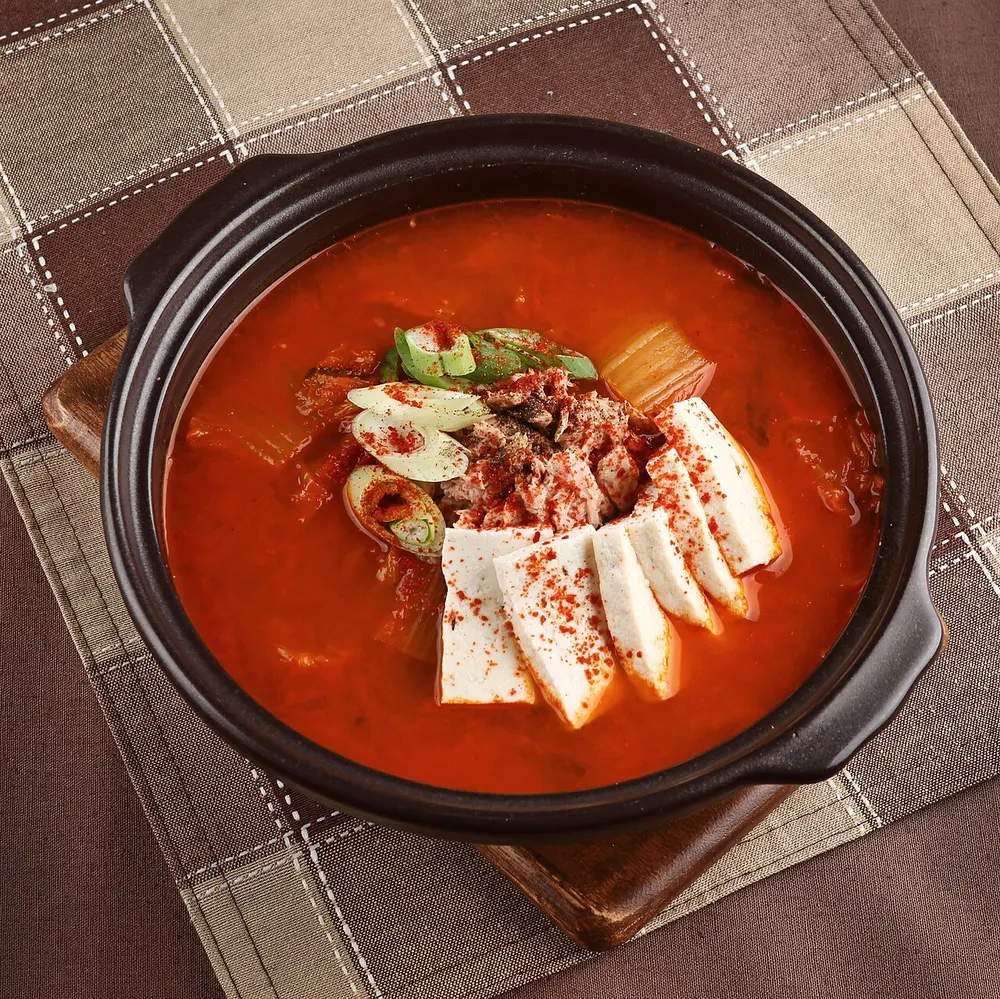
Kimchi Jjigae (Kimchi Stew)
Quelle: Traditionell
30 Min.3420 kcal
Laktosefrei🌶️🌶️
The actor's most-copied stew: pork rendered in a dry pot, chili flakes toasted off the heat, and — the twist — a spoon of salted shrimp for depth and a spoon of vinegar at the very end for brightness.
Quelle
Rezept von 류수영 · ⭐ Prominente · Ryu Soo-young — actor (b. 1979); appears as '어남선생' on KBS2's Fun-Staurant (신상출시 편스토랑). The nickname puns on his legal name, 어남선.
Namen von Köchinnen, Köchen und Creators erscheinen ausschließlich als Quellenangabe. More Recipes Please ist unabhängig und wird von ihnen weder unterstützt noch gesponsert.
Broadcast recipe by 류수영 (KBS2 Fun-Staurant) / 류수영 방송 레시피 — Ryu Soo-young's '평생 김치찌개' (lifetime kimchi stew) as shown on KBS2's Fun-Staurant. Linked here is a viewer's written record of the broadcast — not an official KBS or 류수영 publication — and the amounts above are those on which two independent Korean write-ups agree. What makes it his: salted shrimp for umami, chili flakes toasted in residual heat, and a spoon of vinegar stirred in at the finish.
Koch: 류수영
Zubereitung im Video
Slice the onion into strips, chop the green onion, and cut the tofu into slices about 0.5 cm thick. Set them aside separately — the tofu goes in last.
Put the empty pot on medium heat with the lid on and let it preheat for about 3 minutes, until a drop of water flicked in skitters and vanishes.
💡 A properly preheated pot is why the pork browns instead of steaming in its own water.
Add the oil, then the pork, and fry it on medium heat until the pieces are browned at the edges and a pool of clear fat has rendered out, about 5–7 minutes.
Add the minced garlic and stir it through the hot pork fat until the raw, sharp smell has gone and it turns nutty, about 1 minute.
Stir in the salted shrimp and cook it for 30 seconds, just until it dissolves into the fat and smells savoury rather than fishy.
💡 This is the step most people skip. Saeujeot is what makes the broth taste like a restaurant's, not like plain kimchi water.
Pour the soy sauce down the inside rim of the pot, not onto the meat, and let it sizzle for a few seconds before mixing it in — it caramelises on the hot metal and gains a smoky edge.
Turn the heat OFF, then add the gochugaru and stir it through the residual heat for about 30 seconds until it blooms into a red oil.
💡 Beginner warning: gochugaru scorches in seconds over a live flame and turns the whole pot bitter. Killing the heat first is not optional here.
Pour in the 1 L of water and turn the heat back on high.
Add the kimchi, the kimchi brine, the onion and the green onion, then season with the 1 tsp of salt and bring it to a full rolling boil.
Lower to medium, cover, and simmer for 30–40 minutes. The kimchi should go from crunchy to floppy and translucent, and the broth from pink to deep brick red.
💡 Do not rush this. Under 30 minutes the kimchi still tastes raw and sharp; the long simmer is what rounds it out.
Taste the broth. If it is flat, add salt a pinch at a time; kimchi saltiness varies wildly between jars.
Add the vinegar and slide in the tofu. Simmer just 2–3 minutes more — only until the tofu is heated through — then take it off the heat and serve with rice.
💡 The vinegar goes in at the end so it stays bright. Boil it long and the sourness cooks off and you lose the whole point.
Korean
Quelle: Traditionell
Korean
Quelle: Hausmannskost
Korean
Quelle: Hausmannskost
Korean
Quelle: Traditionell
Nachgekocht? Teile ein Foto in der Galerie.
Zeig dein Werk →