Einsteiger
Korean
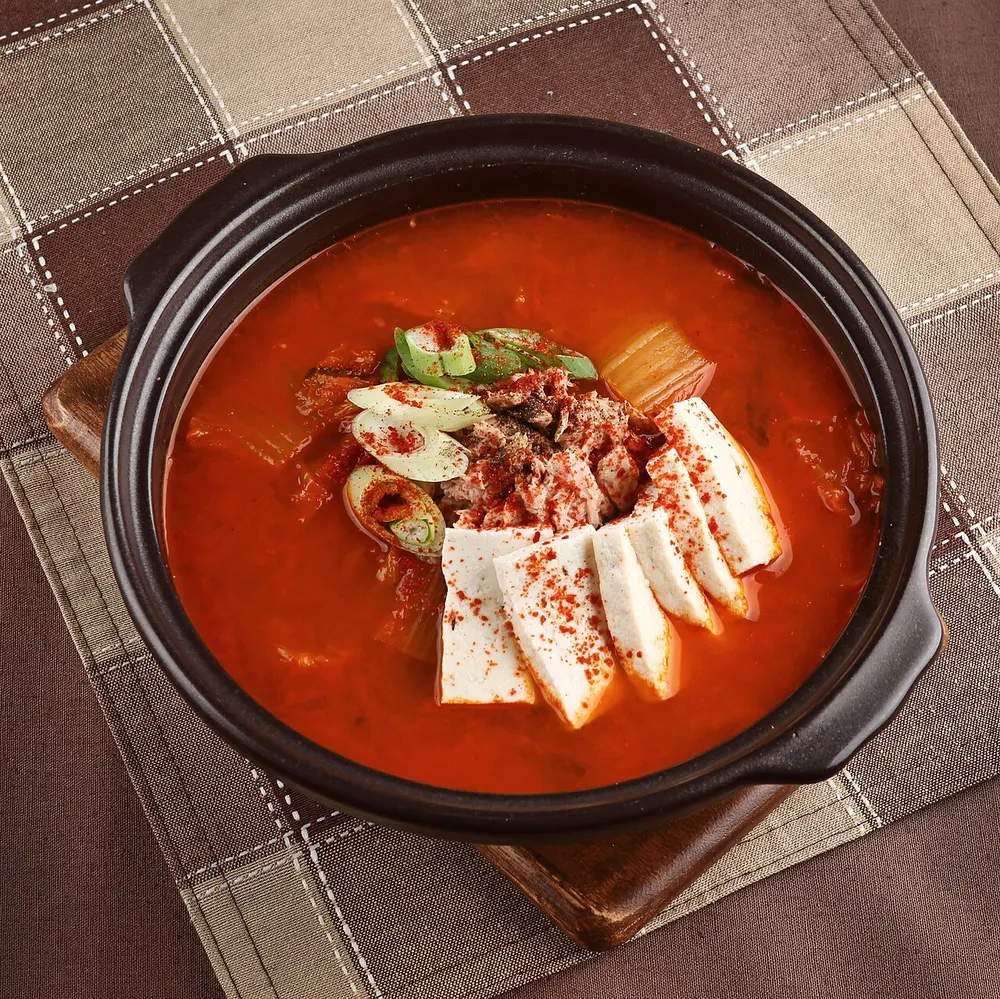
Kimchi Jjigae (Kimchi Stew)
Quelle: Traditionell
30 Min.3420 kcal
Laktosefrei🌶️🌶️
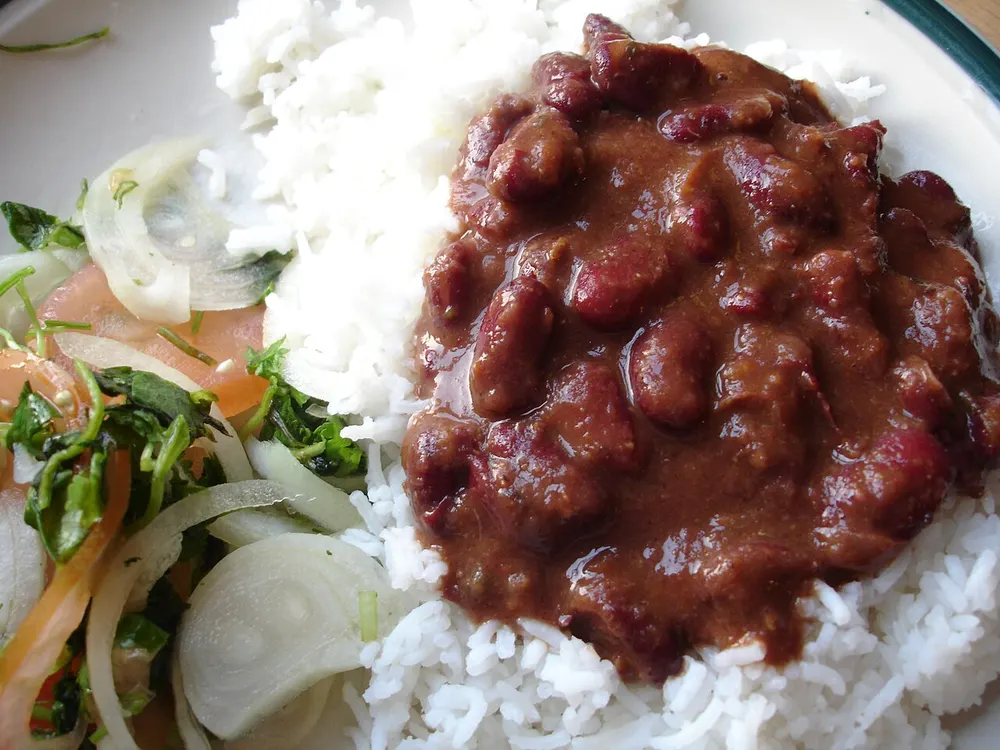
North India's Sunday-lunch comfort food: red kidney beans stewed soft in an onion-tomato masala until the gravy thickens itself, spooned over plain rice.
Quelle
Rezept von Punjabi home kitchens · 🏺 Traditionell · North Indian (Punjabi) household cooking
Traditional dish — no single author — An ownerless North Indian home dish — red kidney beans in a thick spiced gravy, eaten over rice as 'rajma chawal', as the reference describes. The same reference notes the kidney bean itself is not native to India but arrived from Mexico, which is why a dish this beloved is historically fairly recent. The method below is our own writing.
Zubereitung im Video · 3 Videos
Soak the beans overnight in plenty of cold water. Next day drain them, cover with 1 litre of fresh water and boil hard for 10 minutes, then simmer 45–60 minutes until a bean squashes easily.
💡 The first 10 minutes at a hard boil matters: raw and undercooked kidney beans contain a toxin that vigorous boiling destroys. Never cook them from raw in a slow cooker.
Keep the cooking water — it is starchy and lightly flavoured, and it will become the body of the gravy.
Heat the oil in a wide pot, add the cumin seeds and wait for them to sizzle and darken slightly — about 20 seconds. Add the onions and fry 10 minutes over medium heat until deep golden.
Stir in the ginger–garlic paste and green chilli, cook 1 minute, then add the tomato purée with the coriander powder, turmeric and chilli powder. Cook 8–10 minutes until it thickens and oil rims the edge of the pan.
Add the drained beans with about 500 ml of their cooking water. Season with salt and simmer, uncovered, for 20 minutes.
Mash roughly a quarter of the beans against the side of the pot. Carry on simmering 10 more minutes until the gravy coats a spoon.
💡 This is the whole trick to good rajma: the gravy is thickened by the beans themselves, never by flour or cream.
Stir in the garam masala, turn off the heat and let it sit 5 minutes. Scatter with coriander and serve over rice.
Korean
Quelle: Traditionell

Korean
Quelle: Hausmannskost
Korean
Quelle: Hausmannskost
Korean
Quelle: Traditionell
Nachgekocht? Teile ein Foto in der Galerie.
Zeig dein Werk →