Einsteiger
Korean
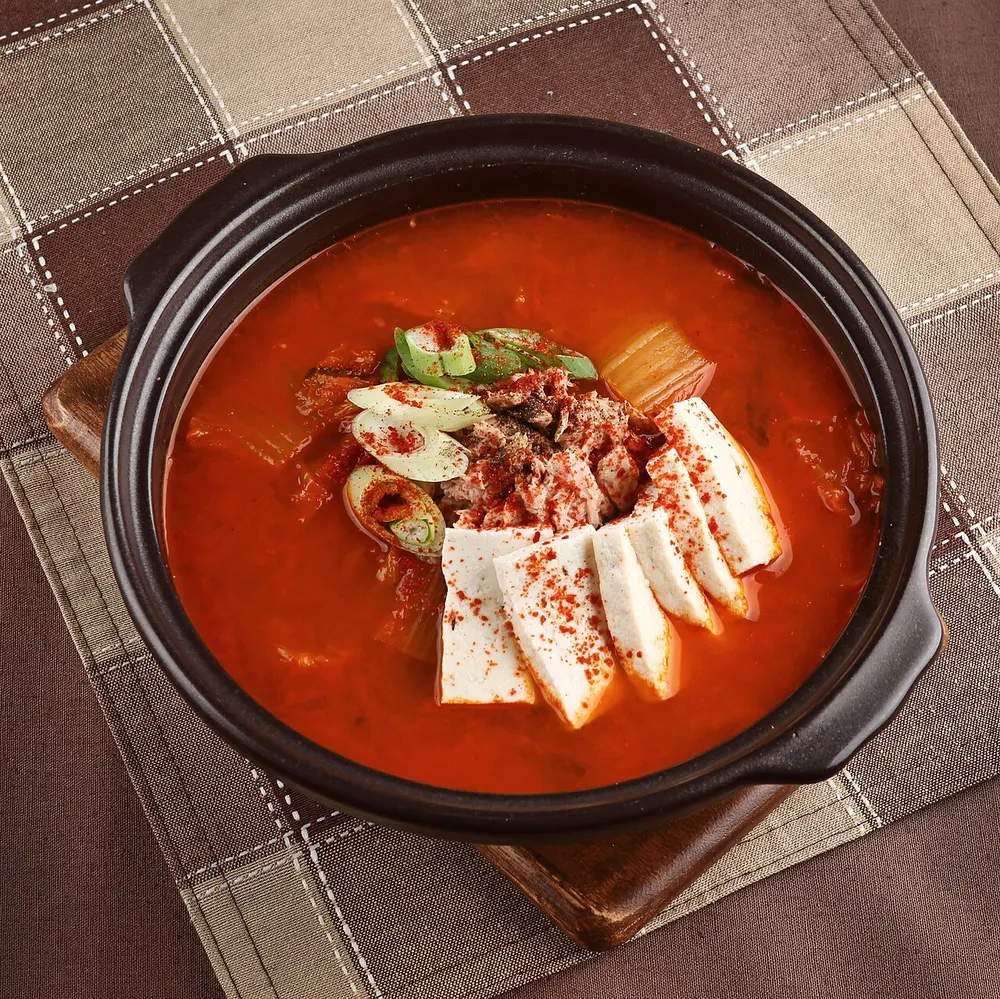
Kimchi Jjigae (Kimchi Stew)
Quelle: Traditionell
30 Min.3420 kcal
Laktosefrei🌶️🌶️
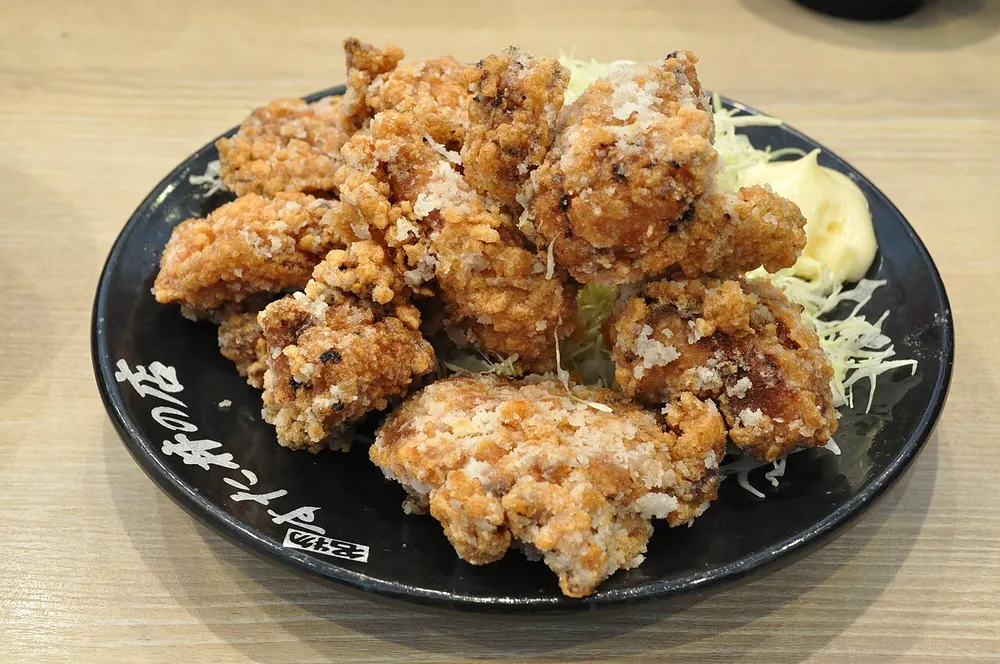
Thirty years of cooking distilled into one platter: soy-garlic thigh coated in soft flour then potato starch, salt-and-sesame wings coated in bread flour, and both fried, rested three minutes, then fried again.
Quelle
Rezept von 笠原将弘 · 👨🍳 Küchenchef · Masahiro Kasahara — Japanese-cuisine chef, owner of the Tokyo restaurant Sanpi Ryoron (賛否両論)
Namen von Köchinnen, Köchen und Creators erscheinen ausschließlich als Quellenangabe. More Recipes Please ist unabhängig und wird von ihnen weder unterstützt noch gesponsert.
Masahiro Kasahara (笠原将弘の料理のほそ道) — The video Masahiro Kasahara launched his YouTube channel with, published as '料理歴30年かけてたどり着いた「最高の唐揚げ」' — the best karaage he arrived at over thirty years of cooking. The full 材料 list for 3–4 servings and his numbered method are published as text in the video description, and the quantities here are taken from it directly. His version is really two karaage on one platter: chicken thigh in a soy-sake-garlic-ginger marinade, coated first in soft flour worked to a sticky paste and then in potato starch; and wings pricked with a fork and marinated in salt, garlic and sesame oil, coated in bread flour alone. Both are fried at 170°C for 3 minutes, rested 3 minutes off the heat, then fried about 2 minutes more while being lifted in and out of the oil.
Koch: 笠原将弘
Zubereitung im Video
Trim the chicken thighs and cut them into generously sized bite-size pieces — bigger than you think, so the inside stays juicy.
Rub the thigh marinade into the meat with your hands — 3 tbsp soy sauce, 3 tbsp sake, 2 tsp sugar, 2 tsp grated garlic, 2 tsp grated ginger and about 2 pinches of salt — and leave it for at least 30 minutes.
💡 At least 30 minutes — that is his floor, not a suggestion. Under-marinated karaage tastes of its coating and nothing else.
Prick the wings all over with a fork, then rub in their own marinade — 1 tsp salt, 2 tsp grated garlic, 1 tbsp sesame oil — and leave those for at least 30 minutes too.
💡 Two birds, two completely different marinades: the thigh goes soy-sweet, the wings go salt-and-sesame. That contrast is the point of the platter — it is not one recipe made twice. And the fork holes matter, because wing skin is tight and otherwise nothing gets in.
When the thigh has marinated, tip away the excess liquid pooled in the bowl.
💡 Don't skip this. Marinade left in the bowl turns the flour into a wet batter that slides off in the oil.
Add the soft flour to the thigh and mix until the whole bowl turns sticky and clinging — Kasahara's word is 'nettchori'.
💡 You are not dusting here, you are making a paste. The soft flour drinks up whatever marinade still clings to the meat and glues itself on. That paste layer is what the starch grips in the next step — it is the reason his coating does not fall off.
Now roll those sticky pieces in the potato starch so each one is coated a second time.
💡 Two different powders, in this order, on purpose. Soft flour alone gives a pale, bready crust; potato starch alone has nothing to hold on to and flakes away. Flour to stick, starch to shatter.
Heat the oil to 170°C and fry the thigh pieces for 3 minutes, then lift them out onto a rack.
Rest them for exactly 3 minutes off the heat.
💡 The rest is not idleness — it is cooking. Carry-over heat travels from the hot crust into the cold centre and finishes the meat gently, without the oil drying it out. This is why his chicken is juicy inside and yours, fried straight through in one go, is not.
Fry them a second time for about 2 minutes, lifting them in and out so they meet the air as they go.
💡 Lifting the chicken clear of the oil is a specific instruction of his, not a flourish. Each time it meets air, surface moisture flashes off — that is what turns the crust genuinely brittle instead of merely brown.
For the wings, coat them in bread flour only — no starch, no double powder — and fry at 170°C for 3 minutes, then lift them out.
💡 Bread flour has the most protein of the three powders, so it fries into a hard, craggy, almost crunchy shell. That toughness suits a wing, which has skin and collagen to fight through; it would be far too heavy on a piece of thigh.
Rest the wings 3 minutes as well, then fry them for a further 2 minutes.
Drain the wings well and dust them with white pepper while they are still hot and glistening.
💡 White pepper, not black — it is floral and sharp rather than woody, and it lands only on the wings. This is the finishing note that keeps the two halves of the platter distinct.
Flash-fry the parsley in the same oil for a few seconds until it goes bright and translucent, then arrange both chickens on plates with the lemon and the fried parsley.
Korean
Quelle: Traditionell
Korean
Quelle: Hausmannskost
Korean
Quelle: Hausmannskost
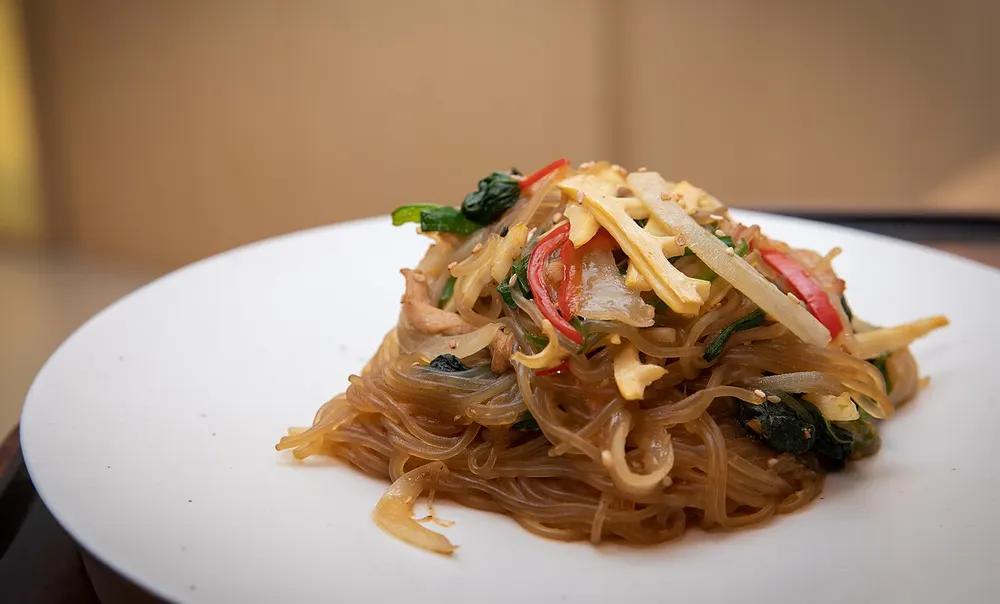
Korean
Quelle: Traditionell
Nachgekocht? Teile ein Foto in der Galerie.
Zeig dein Werk →