Einsteiger
Korean
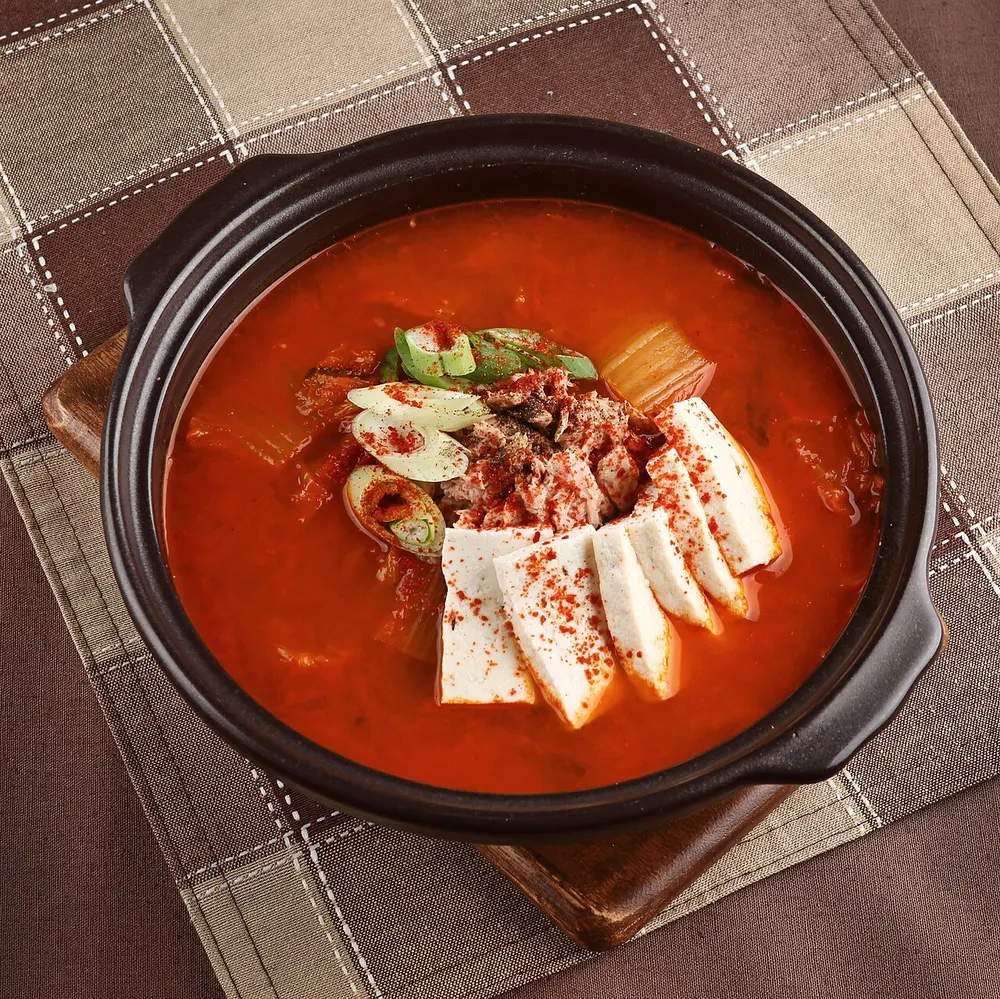
Kimchi Jjigae (Kimchi Stew)
Quelle: Traditionell
30 Min.3420 kcal
Laktosefrei🌶️🌶️
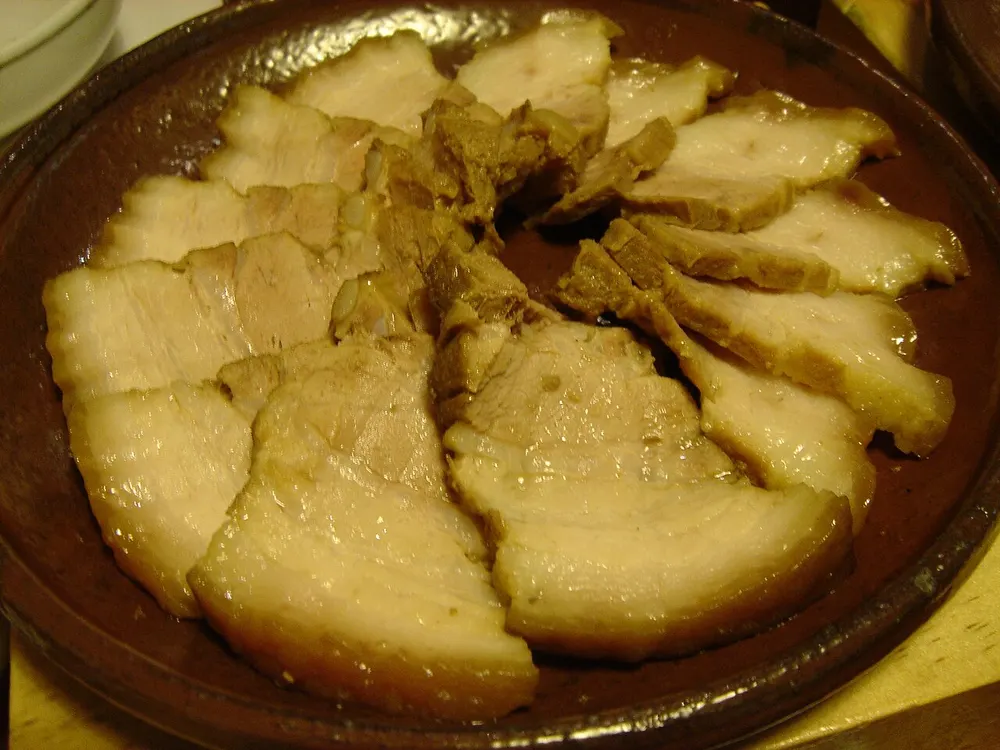
Two ingredients: pork belly and half a spoon of salt. Sear the slab whole, drop it in salted water for half an hour, slice. No stock, no aromatics, no doenjang — and it still tastes like a Sunday.
Quelle
Rezept von 하루한끼 (one meal a day) · 📱 Influencer · Korean cooking YouTuber known for stripped-back, no-nonsense home recipes; publishes the full written recipe in every video description
Namen von Köchinnen, Köchen und Creators erscheinen ausschließlich als Quellenangabe. More Recipes Please ist unabhängig und wird von ihnen weder unterstützt noch gesponsert.
Recipe published by 하루한끼 / 하루한끼가 공개한 레시피 — The creator publishes the whole recipe as text in this video's description — it runs to two ingredients and three lines, and ends with '끝!' ('done!'). Distinctive: suyuk is normally simmered with doenjang, coffee, onion, leek and bay to mask pork odour, and this version throws all of that out. It browns the slab whole in a dry pan first, then boils it in nothing but water and half a spoon of salt, covered, on medium-low for 30–40 minutes. The creator adds that optional extras may be added if you want them.
Koch: 하루한끼 (one meal a day)
Zubereitung im Video
Take the pork out of the fridge and pat the surface properly dry with kitchen paper.
💡 A wet surface steams instead of browning. Thirty seconds with paper decides whether the next step works at all.
Set a dry pan over medium-high heat. Add no oil at all.
💡 Pork belly is about half fat and renders its own oil within a minute. Extra oil here just spits at you.
Lay the whole block in and sear it, turning it onto each face in turn — including the ends — until every side is browned.
Give each face a few minutes and let it be. When a side has properly browned it releases from the pan on its own; if it grips, it is not ready to turn.
Meanwhile, fill a pot with enough water to cover the pork completely and bring it to a full rolling boil over high heat.
Stir the half spoon of salt into the boiling water.
Lower the seared block into the boiling water. If you want the optional onion, garlic, peppercorns or mirin, they go in now.
💡 It goes into water that is already boiling, not cold water. Starting cold leaches the pork's flavour out into the pot instead of keeping it in the meat.
Put the lid on and drop the heat to medium-low, so the water ticks over gently rather than thrashing.
Cook it there for 30 to 40 minutes. A hard boil will only tighten the meat and make it stringy — you want a lazy, barely-moving surface.
Test it with a skewer or a chopstick through the thickest part: it should slide in and out with almost no resistance, and the juice should run clear rather than pink.
💡 Thickness decides the time, not the clock. A fat slab may want the full 40 minutes; test rather than trust the number.
Lift it out and let it rest on a board for about 10 minutes before it meets a knife.
💡 Slice it straight from the pot and the juice runs out onto the board. Ten minutes and it stays in the meat where you want it.
Slice it across the grain, about as thick as a pound coin, so each piece shows its own ribbons of fat and lean.
Serve it warm with kimchi, ssamjang and lettuce, and eat it before it cools.
Korean
Quelle: Traditionell
Korean
Quelle: Hausmannskost
Korean
Quelle: Hausmannskost
Korean
Quelle: Traditionell
Nachgekocht? Teile ein Foto in der Galerie.
Zeig dein Werk →