Người mới
Korean
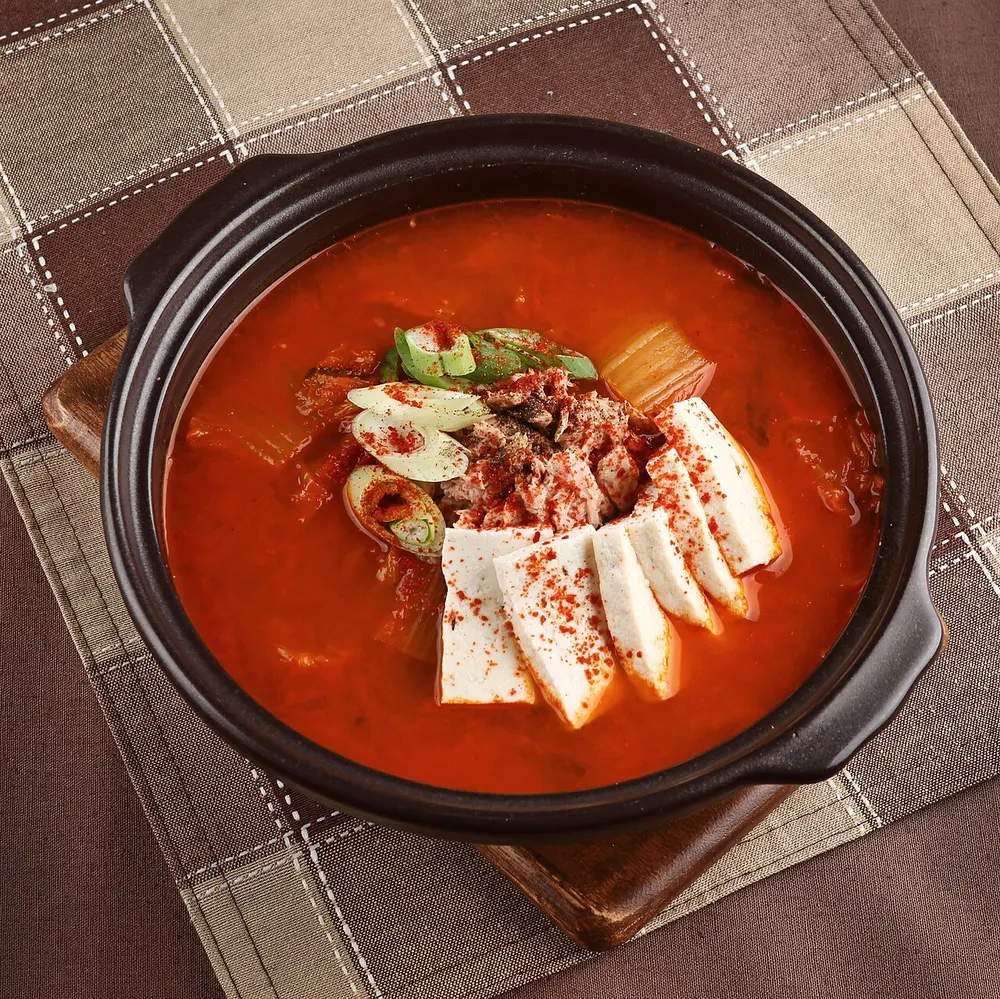
Kimchi Jjigae (Kimchi Stew)
Nguồn: Truyền thống
30 phút3420 kcal
Không sữa🌶️🌶️
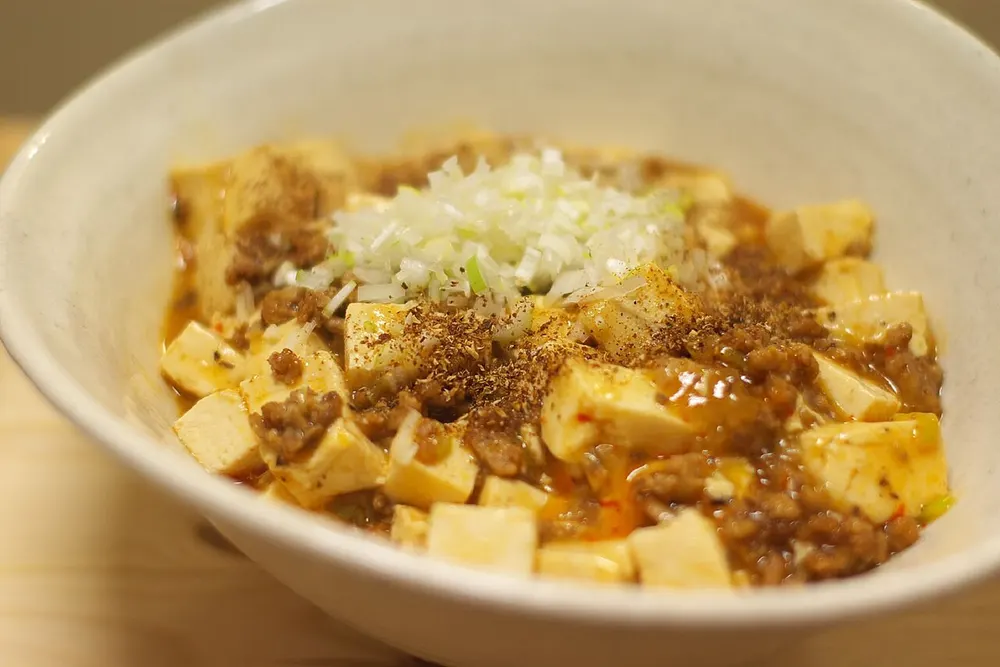
Mapo tofu with the chili bean paste taken out and yuzu-kosho put in. The result is pale instead of red, and the heat is bright and citrusy rather than deep and fermented. The tofu is salt-blanched first so it holds together.
Nguồn
Công thức của リュウジ · 📱 Influencer · Ryuji — cooking researcher (料理研究家) and YouTuber behind 料理研究家リュウジのバズレシピ, Japan's biggest cooking channel at ~5.6M subscribers. Known for fast, exactly-measured home recipes.
Tên của các đầu bếp và nhà sáng tạo chỉ xuất hiện để ghi nguồn. More Recipes Please hoạt động độc lập, không liên kết, không được họ chứng thực hay tài trợ.
Ryuji (バズレシピ) — Published by リュウジ on his own YouTube channel as 【塩麻婆豆腐】, under a title that translates roughly as 'honestly, you won't go back to normal mapo — the one that uses that instead of doubanjiang'. The description carries the full ingredient list and his method as text, and that is the source of every quantity here. It is filed under China because mapo tofu is a Sichuan dish, but this is explicitly his variant rather than the classic: the doubanjiang is gone and 小さじ2 of yuzu-kosho — a Japanese fermented paste of green chili, yuzu peel and salt — takes its place, so the finished dish is pale rather than red and the heat is citrusy rather than deep and fermented. The cuisine label here is left as the general 'Chinese' rather than 'Sichuan' for that reason. Two techniques are worth taking away regardless of the flavour: the tofu is blanched in salted water first so it holds its shape, and the starch is slaked in sake with the yuzu-kosho stirred into the same slurry, so the aromatics go in late and barely cook.
Đầu bếp: リュウジ
Watch it being made
Cut the firm tofu (300 g) into 2 cm cubes.
Bring 1 litre of water to a simmer with 小さじ1 of salt, slide the tofu in and let it blanch gently for 2–3 minutes. Drain it.
💡 This is the step everyone skips and the one that decides whether your mapo has cubes of tofu or a bowl of tofu debris. Salt-blanching firms the surface and drives out water, so the cubes survive being stirred and do not water down the sauce later.
Heat the sesame oil (小さじ2) in a frying pan over medium-high heat and add the ground pork (120 g). Fry 3–4 minutes, breaking it up, until it is browned and the fat has run.
Add the garlic (5 g) and ginger (5 g) and fry 1 minute more, until fragrant.
💡 Aromatics after the meat, not before. Garlic and ginger burn in the time pork needs to brown — going in now, they have the pork fat to fry in and only need a minute.
Pour in the water (200 cc) and add the Soumi Shantan (小さじ1), salt (小さじ1/3), the blanched tofu (300 g) and black pepper. Bring it to a boil.
In a small bowl, mix the sake (大さじ1と1/2), the yuzu-kosho (小さじ2) and the potato starch (小さじ2) into a smooth slurry.
💡 Note he dissolves the starch in sake rather than water, and stirs the yuzu-kosho into the same slurry. That means the yuzu-kosho arrives late, all at once, and barely cooks — which is how its citrus survives. Stir it in early and you boil the aroma off.
Stir the slurry once more so nothing has settled, then pour it into the boiling pan while stirring gently.
Keep it at a boil for about a minute, stirring, until the sauce thickens and turns glossy and clear rather than cloudy.
💡 Potato starch needs to actually boil to set and lose its raw floury taste. If you thicken it off a proper boil, the sauce will thin back out on the plate within a minute.
Stir gently from here on, pushing rather than beating, so the tofu cubes stay whole.
💡 Chinese cooks shake the pan or use the back of a ladle for exactly this reason. A whisking motion will turn 300 g of blanched tofu into scrambled tofu in about four strokes.
Add the chopped long green onion (40 g) and simmer 1 minute more, just until it softens slightly but keeps its colour.
Cut the heat and circle a little sesame oil over the top.
Serve straight away with hot rice, while the sauce is still thick enough to sit on the grains.
Korean
Nguồn: Truyền thống
Korean
Nguồn: Món nhà làm
Korean
Nguồn: Món nhà làm
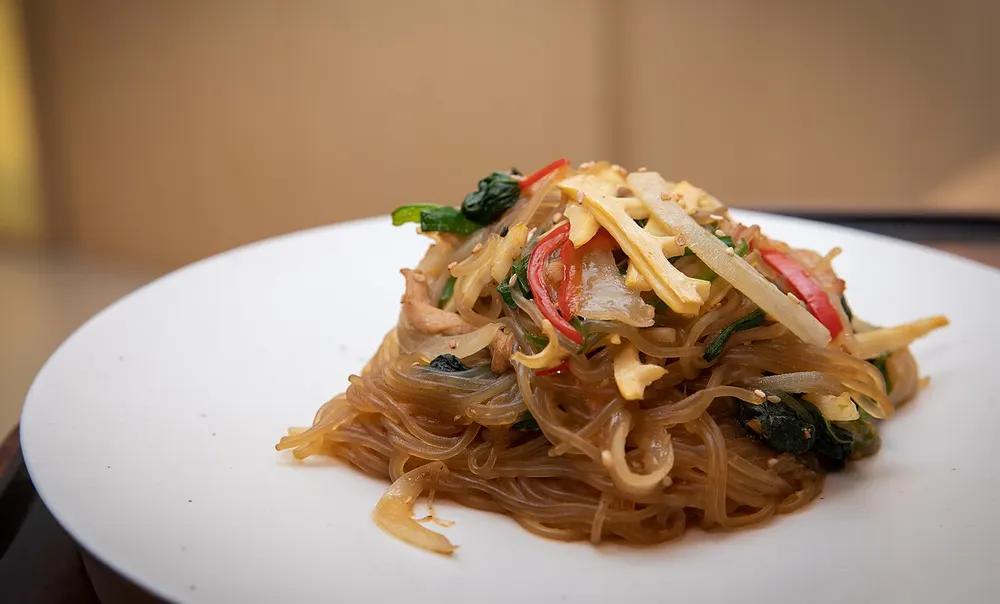
Korean
Nguồn: Truyền thống
Đã làm món này? Chia sẻ ảnh ở mục Khoe món.
Chia sẻ món bạn làm →