Người mới
Korean
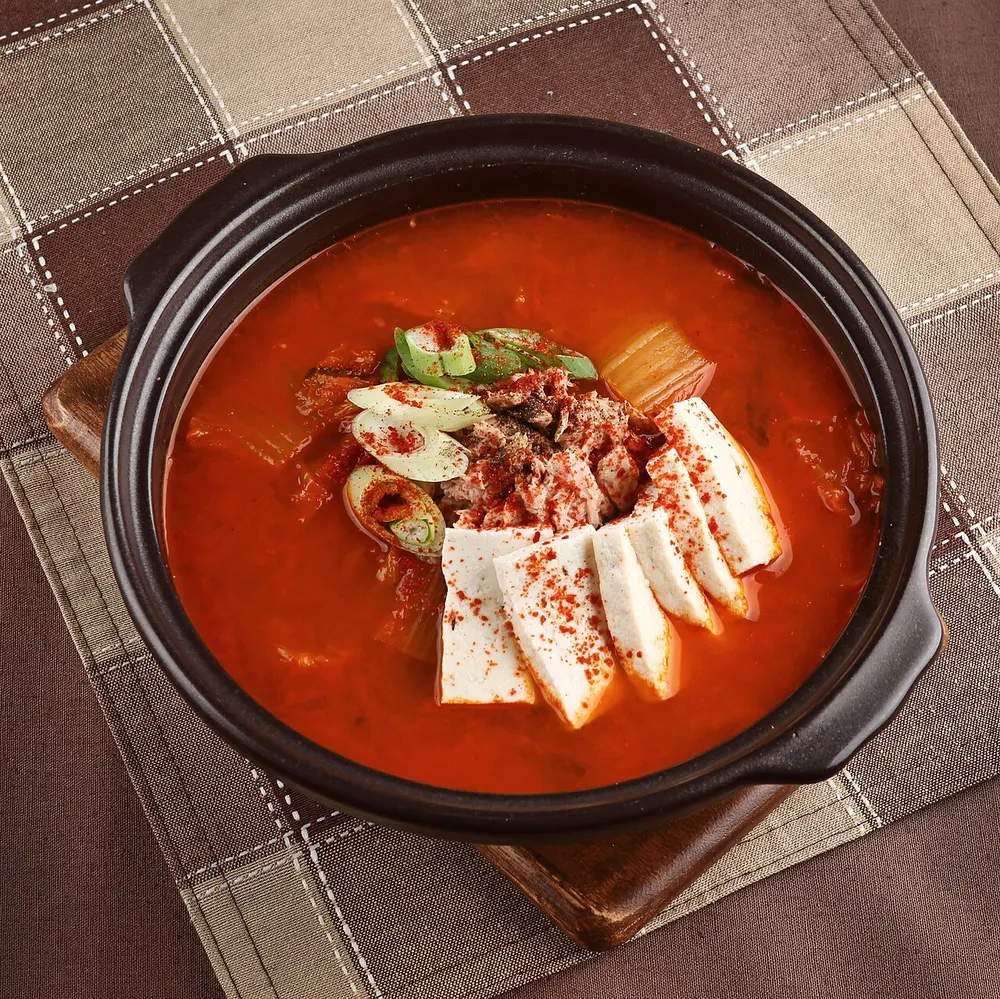
Kimchi Jjigae (Kimchi Stew)
Nguồn: Truyền thống
30 phút3420 kcal
Không sữa🌶️🌶️
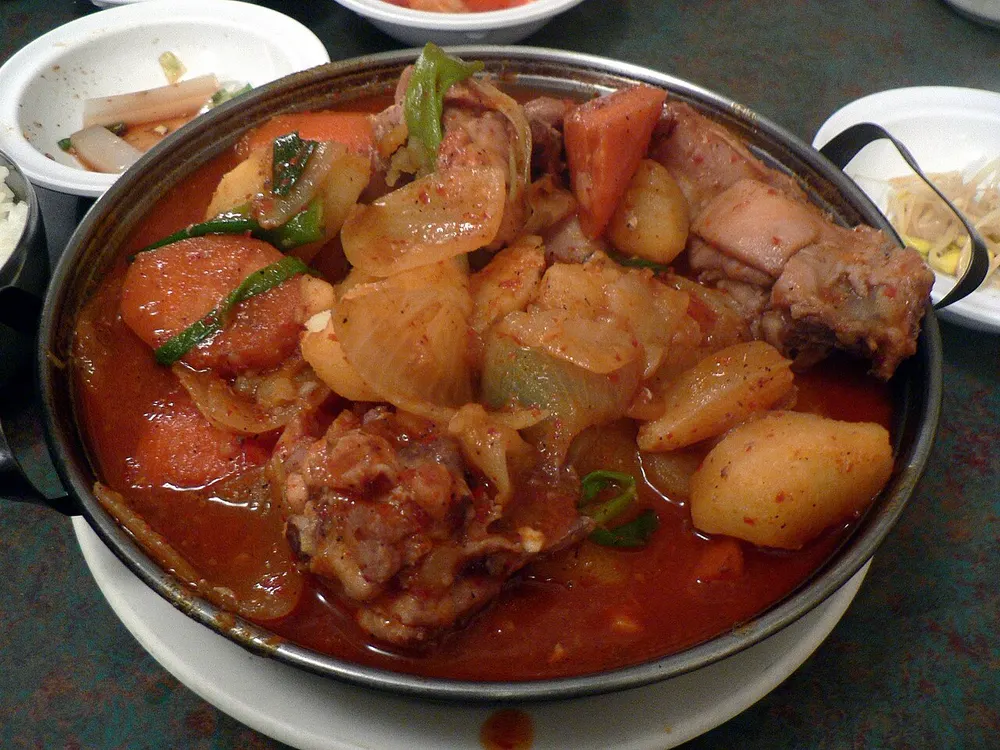
Paik's spicy chicken braise, cooked with the lid OFF from start to finish so the last of the poultry smell escapes — and seasoned only after the chicken and potato are already half-cooked.
Nguồn
Công thức của 백종원 · 👨🍳 Đầu bếp · Paik Jong-won — chef & restaurateur, 백종원의 요리비책
Tên của các đầu bếp và nhà sáng tạo chỉ xuất hiện để ghi nguồn. More Recipes Please hoạt động độc lập, không liên kết, không được họ chứng thực hay tài trợ.
Paik Jong-won (요리비책) — Published by Paik Jong-won on his own YouTube channel, where he calls dak-bokkeum-tang the GOAT of Korean chicken dishes and makes it with a chicken he had bought at a market. Two things mark his version: the pan is boiled uncovered from the start, and the chili, soy and garlic are held back until the chicken and potato are already about half-cooked.
Đầu bếp: 백종원
Rinse the chicken pieces under running water, rubbing away the bone dust and any offal left in the cavities, then snip a few cuts into the thicker pieces with scissors.
💡 Bone dust from the butcher's saw is what makes a home dak-bokkeum-tang taste muddy. The scored cuts let the seasoning reach the middle of thick pieces.
Blanch the chicken briefly in boiling water, then drain it and rinse it under cold water.
💡 Brief means brief — you are not cooking it, just driving the scum and blood out of the surface. Rinse away every trace of grey foam clinging to the skin.
Cut the king oyster mushrooms and the onion into big, bite-size chunks, and the shiitake into decent-size pieces.
Cut the potatoes into big quarters, and the carrot small, in ginkgo-leaf shapes.
💡 The size difference is on purpose — chunky potato survives a long braise, small carrot catches up to it. That is why they go in at different times.
Cut the green onion into 4 cm lengths and the red and Cheongyang chilies into 2 cm lengths. Set them aside — they go in at the very end.
Put the blanched chicken, the water, the potato, the onion and the brown sugar into a deep pan and boil over high heat WITH THE LID OFF.
💡 Lid off, and he is specific about it. An open pot lets the last of the chicken smell boil away instead of condensing on the lid and dripping back in. It also reduces the liquid, which is the point — this is a braise, not a soup.
Boil until the chicken has turned white all over and the potato is about half-cooked — a skewer should meet resistance in the middle.
Add the carrot, the king oyster mushrooms and the shiitake. (If your potato and carrot are cut to a similar size, they can go in together at the previous step instead.)
Once about 15 minutes have passed in total, add the coarse and fine gochugaru and stir them through.
💡 Seasoning goes in late here, not at the start. The chicken and potato cook first in plain sweetened water, so the chili is never boiled long enough to go bitter and the potato can absorb liquid before salt tightens it up.
Add the soy sauce, the minced garlic and the black pepper, mix well and let it boil.
Keep boiling, lid still off, spooning the sauce over the chicken now and then, until the liquid reduces and turns glossy and the potato is soft all the way through — roughly 10–15 minutes more.
💡 Spooning the sauce over is what colours and glazes the pieces sitting proud of the liquid.
Add the green onion, red chili and Cheongyang chili, stir them in and boil only until they wilt — no longer.
Turn it out onto a plate and serve with rice — spooning the sauce over the rice is half the pleasure.
Korean
Nguồn: Truyền thống
Korean
Nguồn: Món nhà làm
Korean
Nguồn: Món nhà làm
Korean
Nguồn: Truyền thống
Đã làm món này? Chia sẻ ảnh ở mục Khoe món.
Chia sẻ món bạn làm →