Người mới
Korean
Kimchi Jjigae (Kimchi Stew)
Nguồn: Truyền thống
30 phút3420 kcal
Không sữa🌶️🌶️
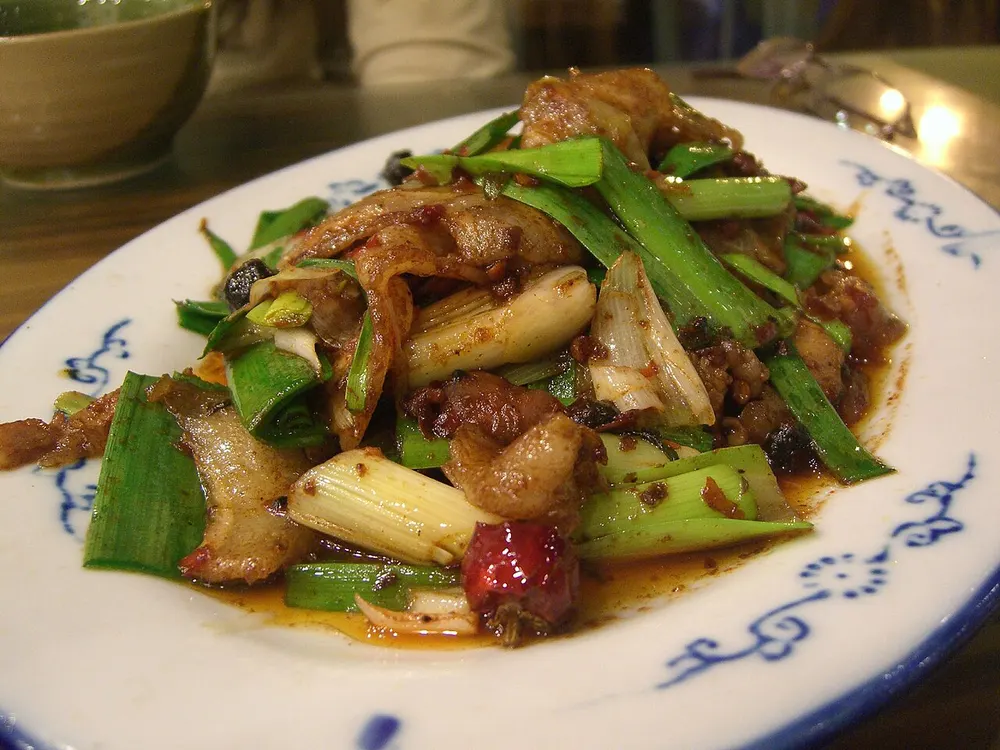
Pork belly simmered whole, chilled, sliced paper-thin and sent back to the wok until the edges curl into little cups that scoop up red, fragrant chili bean paste.
Nguồn
Công thức của Sichuan home kitchens · 🏠 Món nhà làm · A household staple across Sichuan — no single author
Sichuan home-style / 四川家常菜 — Twice-cooked pork is the dish Sichuan cooks name first when asked what a home kitchen tastes like. The name is literal: the belly is simmered whole, then 'returned to the wok' to be stir-fried a second time. Garlic sprouts are the classic partner, with baby leeks, cabbage, peppers or scallion standing in, and the sauce is built on Sichuan's own chili bean paste and sweet wheat paste.
Watch it being made · 3 videos
Rinse the pork belly and put it in a small pot with the ginger, snapped scallion, Sichuan peppercorns and Shaoxing wine. Add cold water to cover by 3 cm.
💡 Start from cold water, not boiling. Cold water draws the scum out slowly so you can skim it; dropping meat into boiling water seals it in.
Bring to a boil over high heat, then skim off the grey foam that rises. Drop to medium-low and simmer 25–30 minutes.
Test it with a chopstick: it should go through the thickest part with a little resistance still. That is done — not falling-apart tender.
💡 This is the single most-missed point. Overcooked pork shreds when you slice it and turns to mush in the wok. You want it just cooked through, because it gets a second cooking later.
Lift the pork out and chill it — 30 minutes in the fridge, or 10–12 in the freezer — until it is firm and cold to the touch.
💡 Warm pork belly will not slice thin — the fat smears and the knife tears the lean. Cold, firm fat is what lets you get to 2–3 mm.
Slice the cold pork across the grain into 2–3 mm slices, each one carrying skin, fat and lean together.
💡 A slice with all three layers is the whole point: the skin gives chew, the fat renders into the sauce, the lean carries it. Fat-only slices just melt away.
Cut the garlic sprouts into 4 cm lengths, keeping the firm white stems in one pile and the leafy greens in another. Have the doubanjiang, tianmianjiang and douchi measured out beside the stove.
💡 Stir-frying gives you no time to fetch things. Everything must be within arm's reach before the wok goes on — this is what 'mise en place' means in a Chinese kitchen.
Heat a wok over medium-high until a drop of water skitters and vanishes. Add the 10 ml of oil and swirl it up the sides.
Lay the pork slices in a single layer and let them render for 2–3 minutes, turning once, until the fat turns glassy and the edges curl up into little cups.
💡 Sichuan cooks call those curled slices 灯盏窝, 'lamp-nests' — the classic sign the pork is ready. If the slices just sit flat and grey, the wok is too cool.
Tip out all but about a tablespoon of the rendered fat, push the pork to one side of the wok, and lower the heat to medium.
Add the doubanjiang to the pooled fat and press it around for 30–45 seconds, until the oil turns a glowing red and smells toasty rather than raw.
💡 Beginners rush this. Under-fried doubanjiang tastes raw and salty; over-fried on high heat turns bitter in seconds. Medium heat, keep it moving, watch for the colour of the oil — that red oil is the flavour.
Stir in the douchi and the tianmianjiang and fry another 20 seconds, then fold the pork back through it so every slice is coated red.
Raise the heat to high, add the garlic sprout whites and toss hard for 1 minute — they should soften but still snap.
Add the greens with the soy sauce and sugar, toss 30 seconds until the leaves just wilt and go glossy, and turn it straight out onto a plate.
💡 Do not let it sit in the hot wok while you find a plate — the greens keep cooking and go khaki. Plate first, then serve.
Korean
Nguồn: Truyền thống
Korean
Nguồn: Món nhà làm
Korean
Nguồn: Món nhà làm
Korean
Nguồn: Truyền thống
Đã làm món này? Chia sẻ ảnh ở mục Khoe món.
Chia sẻ món bạn làm →