Người mới
Korean
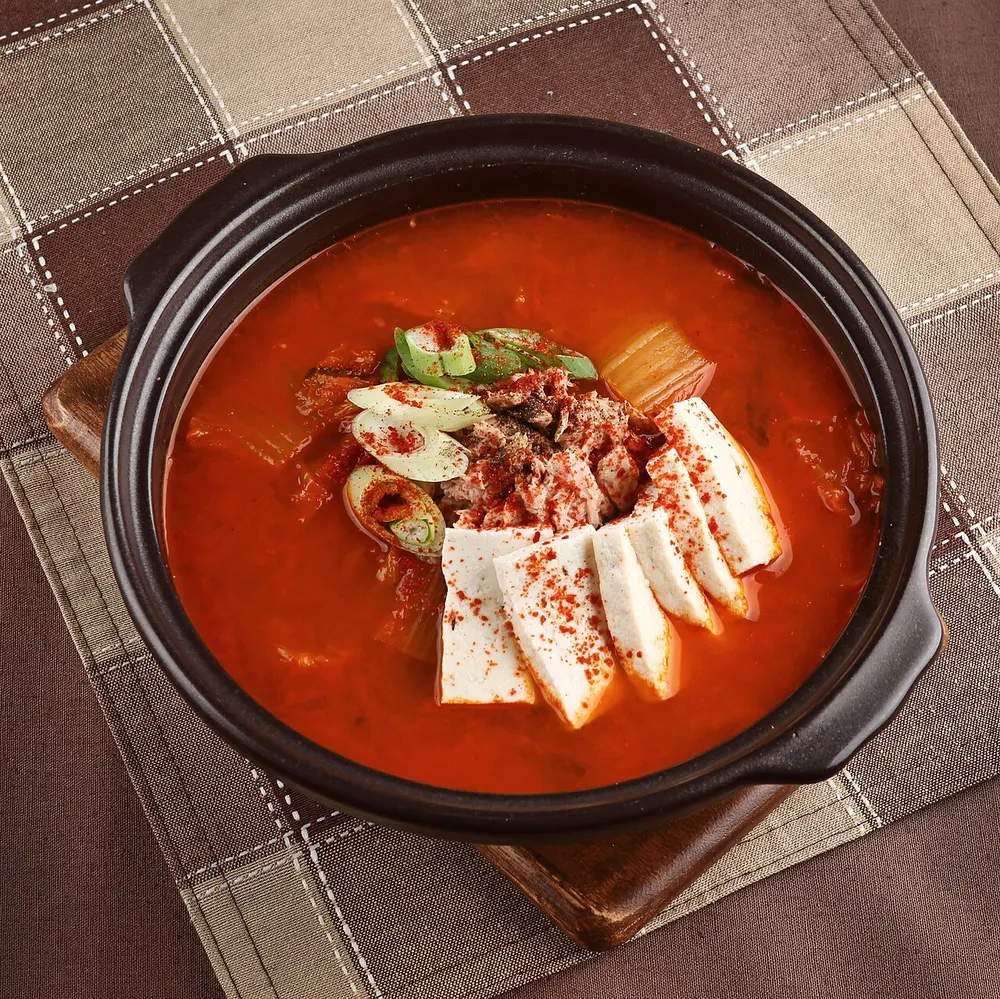
Kimchi Jjigae (Kimchi Stew)
Nguồn: Truyền thống
30 phút3420 kcal
Không sữa🌶️🌶️
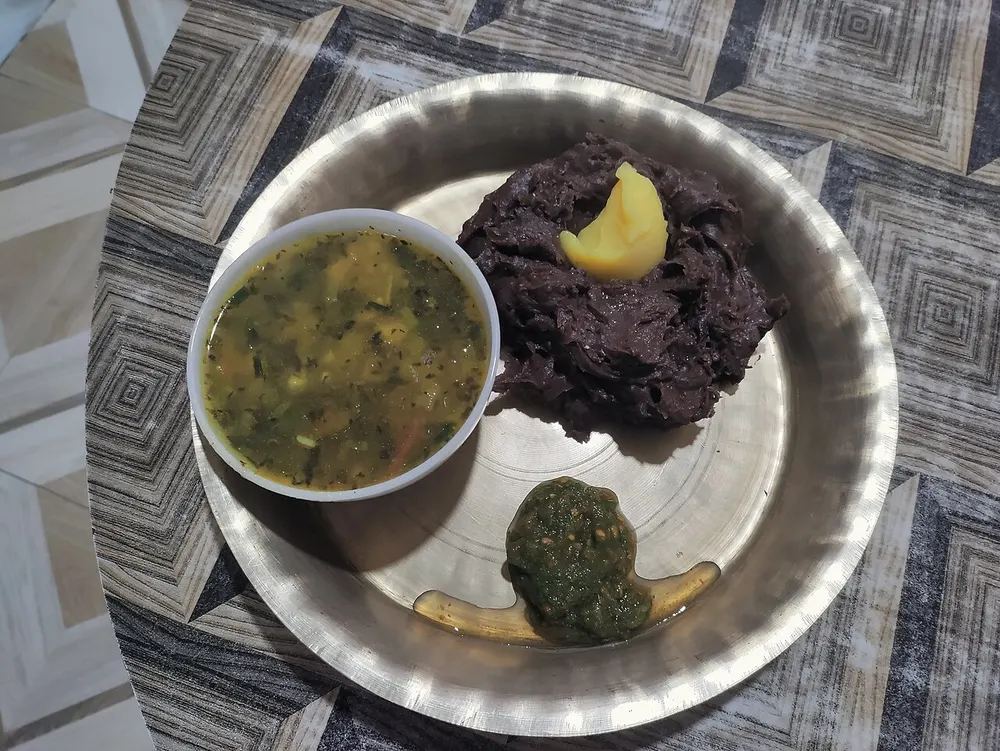
Buckwheat or millet flour beaten into boiling water until it turns into a smooth, dense mound — the hill food Nepal ate before rice reached the ridges, and now eats by choice.
Nguồn
Công thức của Nepali home kitchens · 🏺 Truyền thống · Everyday Nepali cooking — rice and lentils twice a day, a seasonal vegetable beside them, and a fermented something sharp enough to cut through both.
Nepali · hill staple — An ownerless traditional dish, so no cook is credited. The cited article confirms the method — flour added gradually to boiling water and stirred — the buckwheat and millet flours used, and that it is eaten with soup or curry rather than alone. Quantities and the serving instructions are this book's own.
Watch it being made · 3 videos
Bring the water and salt to a hard boil in a heavy pan. Keep a sturdy wooden spoon or a dhindo stick to hand.
Sprinkle in a third of the flour and beat it smooth. Do not dump it all in at once.
💡 The whole dish is one technique: add flour in stages, beat it against the side of the pan, and never let a lump survive a stage.
Keep the heat low and work in the rest of the flour a handful at a time, beating hard between each addition. It will fight back.
After 10 minutes of beating it pulls away from the pan in one mass and looks glossy. That is done.
Wet a bowl, press the dhindo into it, and turn it out onto a plate as a smooth mound. Press a hollow in the top and pour in the ghee.
Eat it by pinching off small pieces with your fingers and dipping them into gundruk soup or a curry. It is not chewed so much as swallowed.
Korean
Nguồn: Truyền thống
Korean
Nguồn: Món nhà làm
Korean
Nguồn: Món nhà làm
Korean
Nguồn: Truyền thống
Đã làm món này? Chia sẻ ảnh ở mục Khoe món.
Chia sẻ món bạn làm →