Người mới
Korean
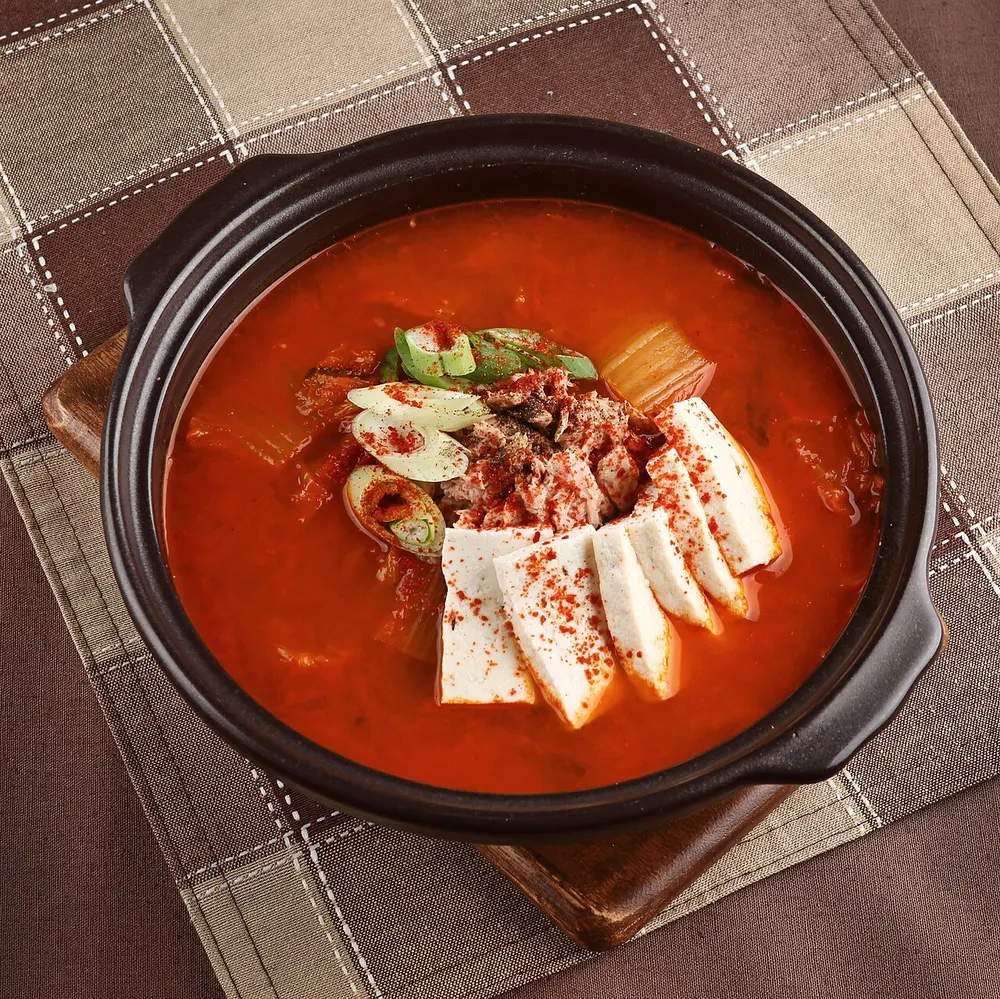
Kimchi Jjigae (Kimchi Stew)
Nguồn: Truyền thống
30 phút3420 kcal
Không sữa🌶️🌶️
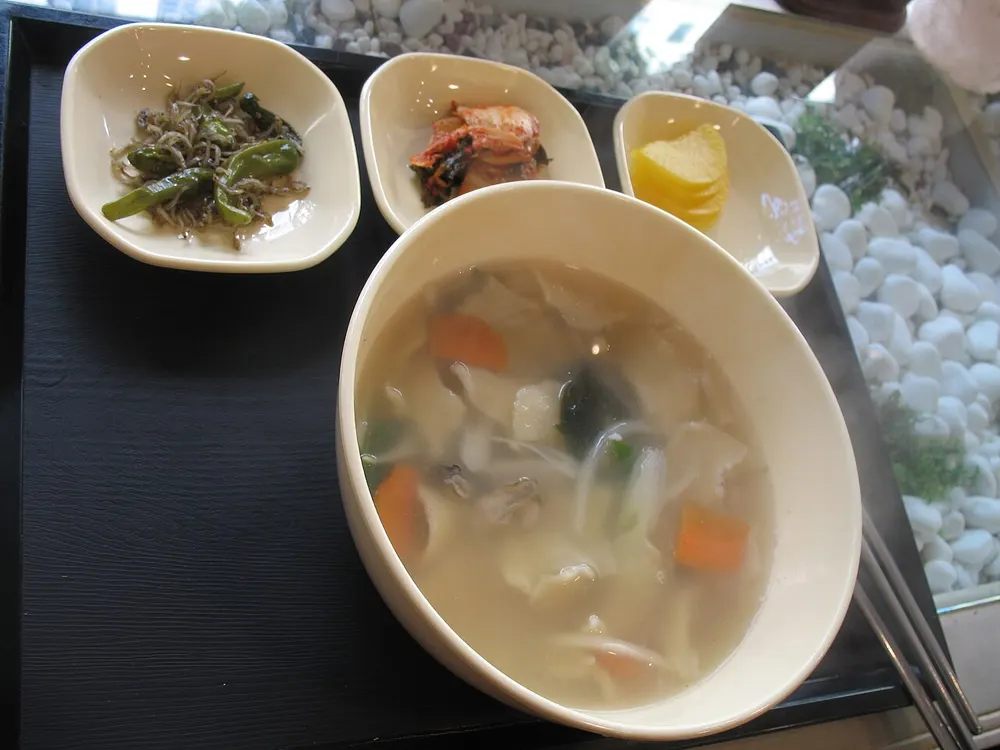
Two ideas make this sujebi unusual: boiled potato and whole perilla seeds go into the wholemeal dough, and the shepherd's purse is not thrown into the broth but bound with beaten egg and spooned in as soft green dumplings.
Nguồn
Công thức của 선미자 · 👨🍳 Đầu bếp · Seon Mi-ja — Korean cooking researcher (요리연구가), a recurring cook on EBS's Choego-ui Yori Bigyeol
Tên của các đầu bếp và nhà sáng tạo chỉ xuất hiện để ghi nguồn. More Recipes Please hoạt động độc lập, không liên kết, không được họ chứng thực hay tài trợ.
EBS Choego-ui Yori Bigyeol (최고의 요리비결) — Published by EBS on the programme's own channel (EBS 최고의 요리비결, @EBS_best.cooking.secrets), which prints Seon Mi-ja's full ingredient list in grams and ml and her numbered method in the video description, and names her in the title. Broadcaster-published text, not a viewer's write-up. Two things set her sujebi apart from the standard: boiled potato and whole perilla seeds are worked into a wholemeal dough that then rests three hours, and the shepherd's purse is bound with beaten egg and spooned in as dumplings rather than stirred loose into the broth.
Đầu bếp: 선미자
Watch it being made
Boil the 120 g of potato until a knife slides through with no resistance, then mash it smooth while it is still hot.
💡 Mash it hot. A cooled potato turns waxy and refuses to blend into flour, leaving lumps that tear the dough when you stretch it.
Put 1½ cups of wholemeal flour in a bowl with the mashed potato, 2 tbsp whole perilla seeds, ½ tbsp perilla oil and 100 ml of water, and knead it together.
💡 Only 100 ml of water for 1½ cups of flour, because the potato is bringing moisture of its own. The dough will look too dry at first — keep working it before you reach for more water.
Knead until it comes together as one smooth ball that springs back slowly when pressed.
💡 Wholemeal has less gluten than white flour, so this dough will never be as elastic as a plain sujebi dough. That is what the potato is compensating for — it gives softness where the gluten cannot.
Cover the dough with a damp kitchen towel and rest it about 3 hours — her figure.
💡 Three hours is long, and it is the reason her sujebi tears into thin sheets instead of thick blobs. The damp towel matters as much as the time — a dry skin forms fast on wholemeal and never softens again.
Crush the roots of the naengi (50 g) with the flat of a knife, then chop the whole plant finely. Finely chop half a red chili too.
💡 Crushing the roots is not tenderising — it is where nearly all the fragrance of shepherd's purse lives. Chop the leaves and discard the roots and you have thrown away the dish.
Mix the chopped naengi and red chili together, beat the 2 eggs, and stir the eggs through them.
Bring the 900 ml of anchovy stock to a boil and add the second potato (100 g), cut into pieces. Boil until it is nearly tender.
Tear the rested dough into thin pieces with wet hands, stretching each one before it drops into the boiling stock, and let it come back to one rolling boil.
💡 Wet hands stop the dough sticking to you, and stretching each piece thin as you tear is what makes sujebi sujebi. Thick pieces stay doughy in the middle no matter how long the pot boils.
Add the aehobak (90 g) and keep it boiling until the dough pieces float and look glossy rather than floury.
Season with 1 tbsp tuna fish sauce and 1 tbsp clear fish sauce, and let it boil through.
Spoon the egg-and-naengi mixture into the boiling broth a spoonful at a time, and do not stir — let each spoonful set into a soft green dumpling.
💡 This is her signature and the whole reason to make this version. Stir it and you get egg-drop broth with green flecks; leave it alone for thirty seconds and you get proper dumplings of shepherd's purse.
Skim the foam off as the egg sets, and let it boil just until the dumplings have firmed and turned deep green.
Turn the heat off and scatter the sliced daepa (30 g) over the top.
💡 Off the heat, not in it. The residual warmth is enough to soften the daepa and release its aroma; boiling it just makes it limp and grey.
Ladle into bowls, making sure everyone gets both torn dough and green dumplings, and eat straight away — sujebi waits for nobody.
Korean
Nguồn: Truyền thống
Korean
Nguồn: Món nhà làm
Korean
Nguồn: Món nhà làm
Korean
Nguồn: Truyền thống
Đã làm món này? Chia sẻ ảnh ở mục Khoe món.
Chia sẻ món bạn làm →