Người mới
Korean
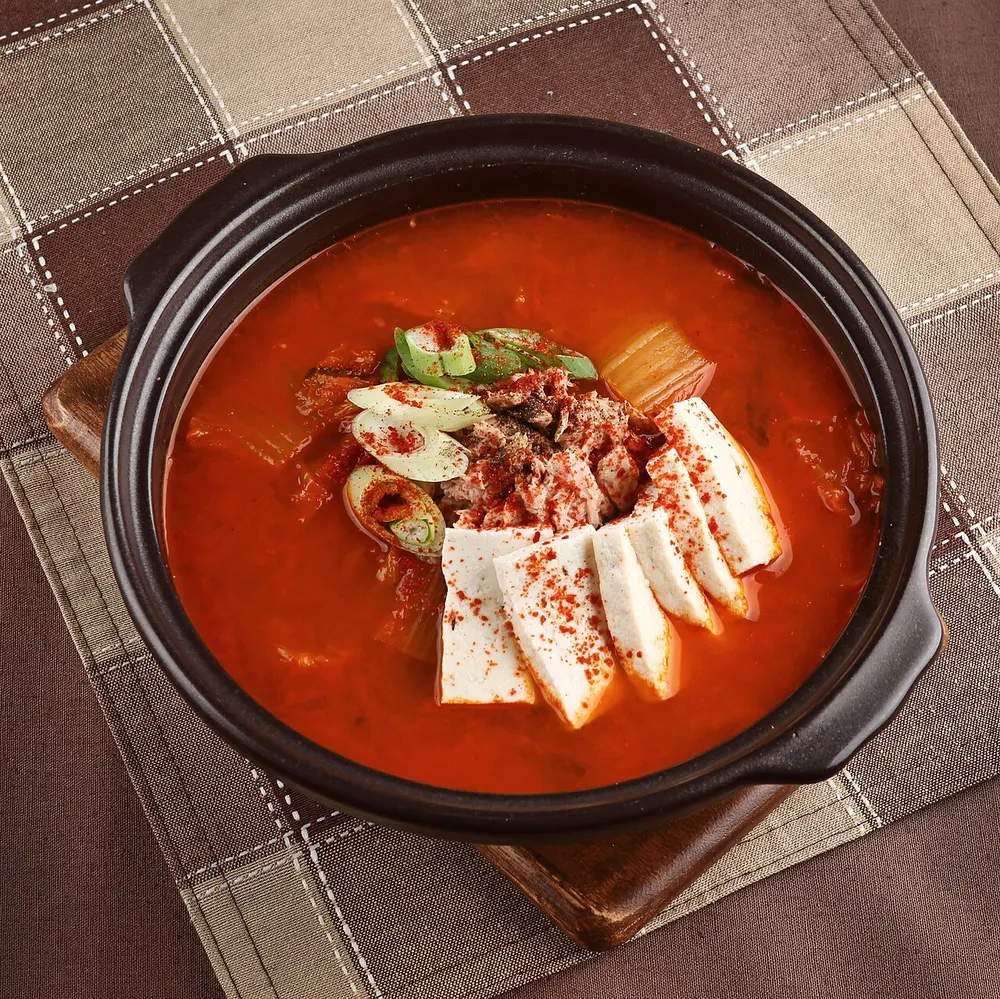
Kimchi Jjigae (Kimchi Stew)
Nguồn: Truyền thống
30 phút3420 kcal
Không sữa🌶️🌶️
Cold rice noodles smothered in a tomato-chili pork sauce, built on a deep-fried garlic oil, then piled with peanuts, raw garlic, chili and herbs. A Dehong Dai dish whose name is a joke about weddings and funerals — and one that genuinely does batch-prep for the office.
Nguồn
Công thức của Chinese Cooking Demystified · 📱 Influencer · Steph & Chris — a China-based cooking channel that publishes every recipe in full, free, on its Substack
Tên của các đầu bếp và nhà sáng tạo chỉ xuất hiện để ghi nguồn. More Recipes Please hoạt động độc lập, không liên kết, không được họ chứng thực hay tài trợ.
Chinese Cooking Demystified (Substack) — Published free by Chinese Cooking Demystified on their own Substack, and linked from their YouTube video as the 'FULL, DETAILED WRITTEN RECIPE'. Their post explicitly states this serves four bowls, so the yield here is theirs, not ours. They are open about their two substitutions: Vietnamese rice vermicelli stands in for Yunnan mixian for easier sourcing abroad, and the Dehong Dai chili sauce xianglajiang (香辣酱) — a fermented mix of soybeans, split peas, rice and chili that they say is hard to find even in central Yunnan, where they live — is rebuilt from doubanjiang, duojiao and tomato paste. They also explain the name: 'business noodles' is a Dai joke, since banshichu (办事处) literally reads as 'the place your business gets done' but the dish is really eaten at weddings and funerals.
Đầu bếp: Chinese Cooking Demystified (Steph & Chris)
Watch it being made
Soak the 480 g of rice vermicelli in cool water for about 1 hour. Longer is fine. Leave them soaking while you cook everything else — they are the last thing you will finish.
💡 Cool water, not hot. Hot water starts gelatinising the starch straight away and you end up with noodles that go to mush the second they hit the boiling pot.
Start the garlic oil. Slice the 30 g of onion, smash the 15 g of ginger, and mince the 4 large cloves of garlic — keeping all three in separate piles.
💡 Separate piles matter here — unlike the chili-fried dishes, these three go into the oil at different times and come out again at different times.
Set a wok over medium heat with the 1/2 cup of oil, the sliced onion and the cilantro root if you have it. Fry until the onion is golden brown — about 10 minutes. Then shut off the heat and fish out the onion and cilantro root, leaving the flavoured oil behind.
💡 Ten minutes feels long for an onion, and that is the point — you are not softening it, you are slowly leaching its sweetness into the oil. The onion itself gets thrown away.
With the heat off for a moment, add the star anise, the tsaoko, the smashed ginger and the minced garlic to the hot oil. Bring it back to a medium to medium-low flame and fry until the garlic is just barely starting to turn golden — then shut the heat off and let it keep frying in the residual heat for one more minute.
💡 Pulling the garlic while it is 'barely golden' is not caution, it is arithmetic — the oil stays hot enough to keep cooking it. Wait until it looks done in the pan and it will be bitter in the bowl.
Lift out the ginger and the two spices and set them aside — they get reused in the sauce. Pour the garlic oil, deep-fried garlic bits and all, into a bowl and reserve.
Prep the tomatoes: cut a small x in the skin of the 450 g of tomato, blanch for about 1 minute until the peel starts lifting, rinse cool, peel, and chop into roughly 1 cm dice.
Back to the wok on a medium flame: strain in 1/4 cup (4 tbsp) of the garlic oil from before, then add the 250 g of ground pork. Stir-fry it — first it will dry out and loosen up, then keep going until the oil starts to run clear again and the pork is just barely beginning to brown, about 5 minutes.
💡 'Strain in' is deliberate: only the clear oil goes in here. The crispy garlic bits stay behind in the bowl for the topping — fry them again now and they burn.
Push the pork up the side of the wok and let a little of the oil drain off it. Then, with the flame on low, add the 1 tbsp of doubanjiang, the 1 tbsp of duojiao and the 1 tbsp of tomato paste, and fry slowly until the oil is stained a deep red — about 2 minutes.
💡 Low flame, and watch the oil rather than the paste. Doubanjiang scorches easily, and the red-stained oil — not the paste itself — is what carries the colour and flavour through the whole sauce.
Add the diced tomato along with the reserved star anise, tsaoko and ginger. Fry over a medium to medium-high flame for about 10 minutes, mixing now and then, until the liquid has mostly evaporated and the tomato has broken down and is 'frying' in the oil again rather than boiling in its own juice.
💡 The switch from boiling to frying is audible as much as visible — the wet burbling quiets down into a sizzle. That is the moment the sauce stops tasting raw.
While that cooks, mix the seasoned slurry: 1 tbsp potato starch, 1.25 cups water, 2 tbsp soy sauce, 1/2 tsp dark soy sauce, 1/2 tbsp oyster sauce, 1/4 tsp MSG, 1/8 tsp salt and 1/8 tsp chicken bouillon powder. Mix it very well.
💡 Mix it again right before it goes in. Potato starch drops to the bottom of the bowl within a minute of standing, and a settled slurry will thicken your sauce unevenly.
Slowly pour the slurry into the sauce while stirring. Mix it well into the tomato base and bring it to a light simmer, cooking until it thickens to your liking — about 3 minutes. Take the sauce off and set aside.
Prepare the toppings: mince the 4 cloves of garlic and the 4 red chilis; roughly chop the 40 g of cilantro and the 40 g of culantro; and have the 2 tbsp of peanuts ready. Keep them all separate.
💡 This garlic is raw and stays raw. It is not a smaller version of the fried garlic in the oil — the sharp, uncooked bite is one of the flavours the dish is actually built on.
Bring a pot of water to a boil and toss in the soaked, softened noodles. Cook just 30–45 seconds, until al dente.
💡 Thirty seconds is not a typo. The hour-long soak has already done nearly all the hydrating — the boil is just to set them.
Strain immediately and rinse very well under cool running water. Once they are cool enough to touch, lift and jiggle the noodles under the tap until they are completely cold — about 3 minutes. Set aside to drain until they are no longer obviously wet.
💡 Rinsing is not optional and neither is draining. The cold water strips the surface starch so the strands stay separate; leftover water on them will dilute the sauce into pink soup.
Divide the noodles among four bowls. To each bowl add a base seasoning of 1/8 tsp salt, 1/8 tsp MSG, 1/8 tsp Sichuan peppercorn powder and 1 tsp chili flakes. Then top each with about 1/3 cup of the tomato sauce and about 1 tbsp of the garlic oil, and divide the peanuts, raw garlic, chili, cilantro and culantro evenly between the bowls. Mix at the table.
💡 Season each bowl, not the pot. This is how the dish is actually served at a Dai gathering — the host puts it out, and each guest mixes their own, which is exactly why it works as a make-ahead lunch.
Korean
Nguồn: Truyền thống
Korean
Nguồn: Món nhà làm
Korean
Nguồn: Món nhà làm
Korean
Nguồn: Truyền thống
Đã làm món này? Chia sẻ ảnh ở mục Khoe món.
Chia sẻ món bạn làm →