Người mới
Korean
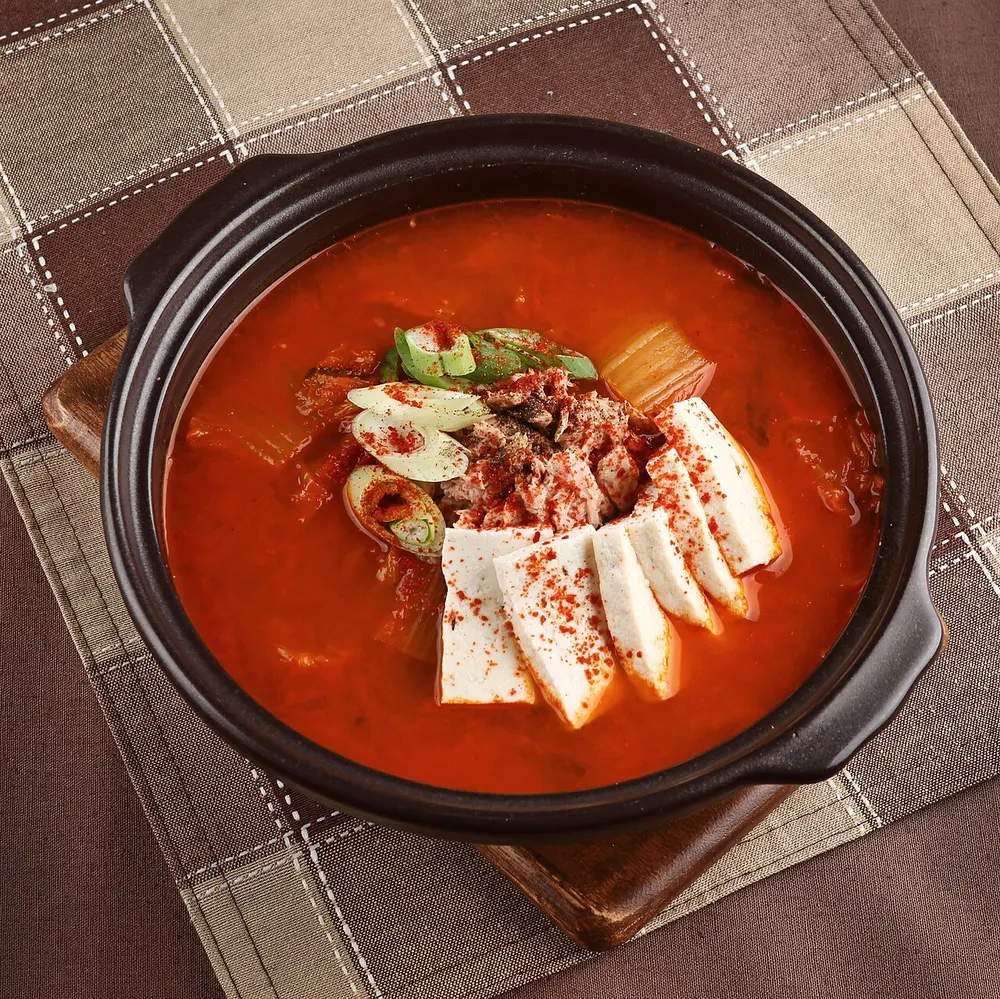
Kimchi Jjigae (Kimchi Stew)
Nguồn: Truyền thống
30 phút3420 kcal
Không sữa🌶️🌶️
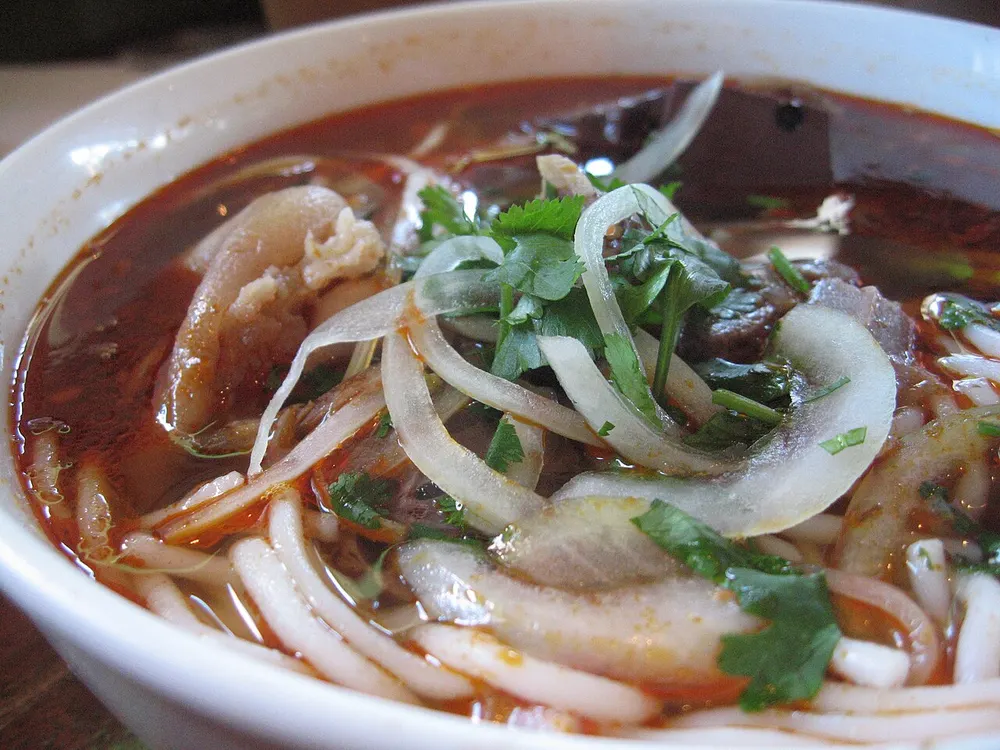
Nước dùng bò nấu với sả và mắm ruốc, cay và đậm, chan lên sợi bún to tròn cùng bắp bò và giò heo — món của xứ Huế.
Nguồn
Công thức của Huế kitchens · 🏺 Truyền thống · Central Vietnamese cooking from the old imperial capital — smaller plates, sharper chilli, fermented shrimp paste
Central Vietnamese speciality · Huế — An ownerless dish from Huế with no verifiable individual creator, so no cook is credited. The reference confirms the origin in Huế under the Nguyễn lords (late 1500s to early 1600s), the broth of beef bones and shank simmered with lemongrass and seasoned with fermented shrimp paste and sugar, the annatto oil that gives the Saigon version its orange colour, the thicker cylindrical rice noodles, the beef shank, oxtail, pork knuckle and coagulated pork blood, and the raw herb plate with banana blossom. Two competing origin stories exist — a royal-court origin that spread to street vendors, and a legend crediting a woman called Cô Bún in Vân Cù village — and this book does not claim either is settled. Quantities are ordinary home proportions.
Watch it being made · 3 videos
Cover the bones and pork knuckle with cold water, bring to the boil for 5 minutes, then drain everything and rinse both the meat and the pot. Refill with 5 litres of fresh cold water.
Add the beef shank, the six whole lemongrass stalks, salt and rock sugar. Simmer gently for 2 hours, skimming often. Take the shank out after about 90 minutes, once a skewer slides in easily, and cool it.
💡 Cool the shank completely before slicing — ideally in the fridge. Hot beef shreds under the knife; cold beef gives you clean, thin slices.
Make the chilli oil: warm the annatto seeds in 6 tbsp oil for a minute, strain them out, then fry the minced lemongrass, shallots and garlic in that orange oil until soft. Stir in the chilli flakes off the heat.
💡 Chilli flakes burn in seconds and turn bitter. Always add them after the pan comes off the heat.
Dissolve the mắm ruốc in a ladle of hot broth, let the grit settle for a minute, then pour the clear liquid into the pot. Add the fish sauce and half the chilli oil, and simmer 30 minutes more.
💡 Straight from the jar, mắm ruốc smells alarming. Thirty minutes in the pot turns it into the savoury backbone of the whole broth — this step is not skippable.
Taste and correct: it should be salty, sour-free, hot, and lemongrass-forward, with the shrimp paste sitting underneath everything rather than on top. Adjust with fish sauce and sugar a teaspoon at a time.
Cook the noodles until just tender, drain, and divide between six deep bowls. Lay on the sliced shank and a round of pork knuckle, ladle the boiling broth over, and float a spoon of the remaining chilli oil on top.
Send the herbs, banana blossom, red onion and lime to the table on a separate plate. Everyone tears and drops in their own — this is the last stage of cooking, not decoration.
Korean
Nguồn: Truyền thống
Korean
Nguồn: Món nhà làm
Korean
Nguồn: Món nhà làm
Korean
Nguồn: Truyền thống
Đã làm món này? Chia sẻ ảnh ở mục Khoe món.
Chia sẻ món bạn làm →