Người mới
Korean
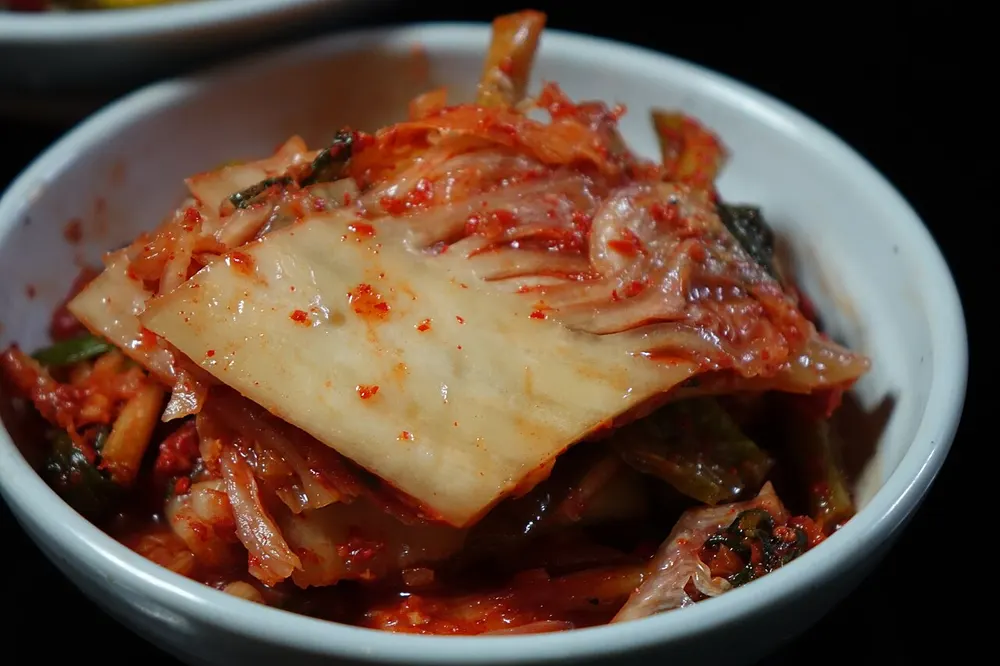
Kimchi Jjigae (Kimchi Stew)
Nguồn: Truyền thống
30 phút3420 kcal
Không sữa🌶️🌶️
Korea's signature ferment: whole napa cabbage salted, packed with a garlicky chili-and-seafood paste, and left to ripen into deep, tangy, savory kimchi.
Nguồn
Công thức của Korean home kitchens · 🏺 Truyền thống
Korean home-style / 한국 가정식 — Korea's defining ferment. The whole-cabbage, chili-red form came together only after napa cabbage and Korean chili pepper (which reached Korea via the Columbian exchange around the 17th century) became common — earlier kimchi was often white and un-spiced. Kimjang, the communal late-autumn kimchi-making, was inscribed on UNESCO's Intangible Cultural Heritage list in 2013.
Watch it being made
Halve the cabbages lengthwise, splay the leaves, and rub coarse salt between every leaf, heaviest at the thick stems.
Lay the salted cabbages cut-side up and leave 4–6 hours, turning once, until the stems bend without snapping.
💡 Properly wilted cabbage is the whole game — it should flex like a rubber band, not crack.
Rinse the cabbage three times in cold water to wash off surface salt, then drain cut-side down for 30 minutes.
Stir the cooled rice porridge with gochugaru, garlic, ginger, fish sauce, salted shrimp and sugar into a loose paste, then fold in the radish and green onions.
Wearing gloves, smear the paste over and between every leaf, working from the stem outward, then fold each half into a tidy bundle.
Pack tightly into a jar or container, press out air gaps, and leave at room temperature 1–2 days until it smells sour, then refrigerate.
Korean
Nguồn: Truyền thống
Korean
Nguồn: Món nhà làm
Korean
Nguồn: Món nhà làm
Korean
Nguồn: Truyền thống
Đã làm món này? Chia sẻ ảnh ở mục Khoe món.
Chia sẻ món bạn làm →