Новичок
Korean
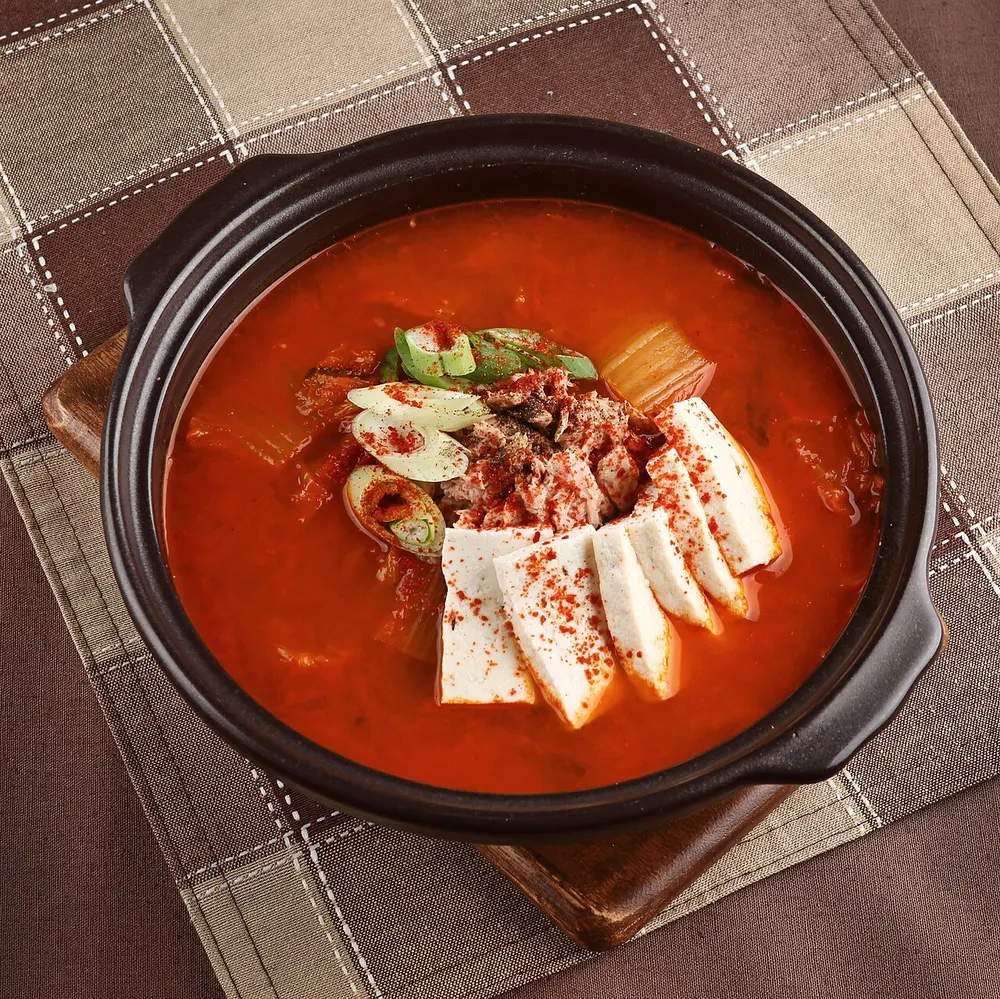
Kimchi Jjigae (Kimchi Stew)
Источник: Традиционное
30 мин3420 ккал
Без молочного🌶️🌶️
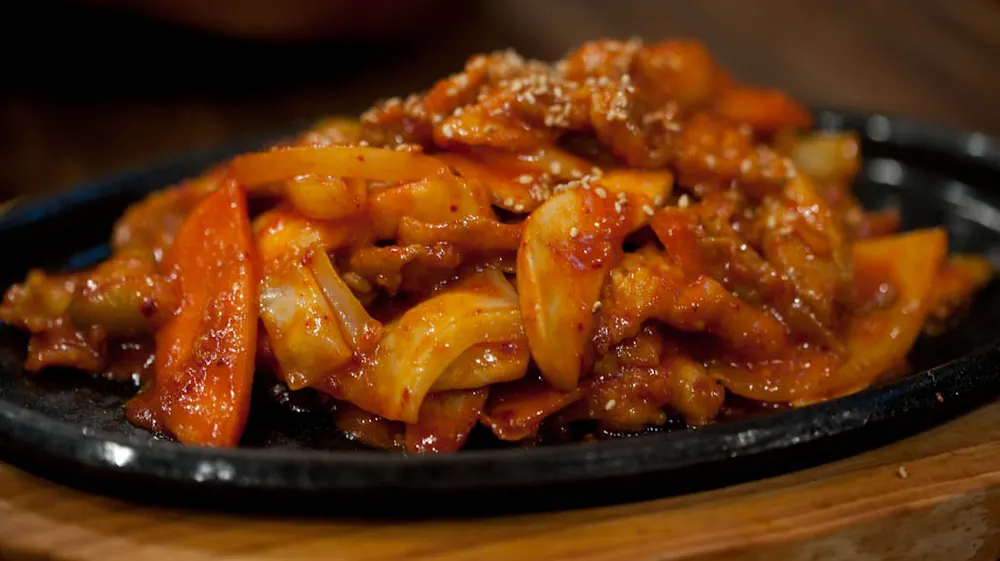
No marinade, no bowl of sauce — pork belly is browned first, then sugar and soy are burned onto the hot pan for smokiness, and a whole 200 g of green onion goes in at the end.
Источник
Автор рецепта 백종원 · 👨🍳 Шеф-повар · Paik Jong-won — chef & restaurateur, 백종원의 요리비책
Имена поваров и авторов указаны только как ссылка на источник. More Recipes Please независима, не связана с ними, не одобрена и не спонсируется ими.
Paik Jong-won (요리비책) — Published by Paik Jong-won on his own YouTube channel as '대파 듬뿍! 삼겹살로 만든 대파 제육볶음', where he says it is the dish he cooked for the Jindo episode of the TV programme Matnam-ui Gwangjang. Unlike standard jeyuk-bokkeum, nothing is marinated: the pork belly renders its own fat first, sugar and soy sauce are caramelised directly on the pan for smoky aroma, and 200 g of green onion goes in at the very end.
Повар: 백종원
Смотри, как это готовят
Halve the green onions lengthways and cut them into 5 cm lengths. Slice the Cheongyang chilies thickly on the diagonal.
Slice the garlic into thick coins and cut the pork belly into bite-size pieces.
💡 Thick garlic coins, not minced garlic — they need to survive the pan and turn golden and sweet rather than burn away.
Lay the pork belly in a cold-to-warm pan, season with seasoned salt and black pepper, and cook over medium-low heat.
💡 Medium-LOW, and no oil at all. You are rendering the belly's own fat, which becomes the cooking oil for everything that follows. High heat here scorches the outside before the fat ever runs.
Cook 5–7 minutes, turning once, until the edges are golden brown and a pool of clear fat has run out.
Add the sliced garlic and cook it in the rendered fat.
If the pan is swimming in fat, spoon some out — leave roughly enough to coat everything.
💡 He calls this out explicitly. Too much fat left in and the sauce slides off the meat instead of clinging to it.
When the garlic has turned golden at the edges, add the sugar and stir-fry it into the hot fat.
💡 Sugar before soy sauce, always. It melts and lightly caramelises against the pan — that faint toffee smell is the flavour you are after.
The moment you smell that caramel, pour the soy sauce around the rim of the pan — not over the meat — and let it hiss and scorch on the bare metal for a few seconds before tossing everything together.
💡 This is the trick the whole dish turns on. Soy hitting bare hot metal burns off into a smoky aroma — Korean cooks call it 불향. Pour it straight onto the meat and it just steams and tastes salty.
Add the green onions and both chili powders, coarse and fine, and stir-fry over medium-high heat.
Pour in the water and keep tossing so the seasoning loosens and coats every piece instead of clumping.
💡 The water is not for a sauce — it is there to stop the chili powder catching on the dry pan and turning bitter.
Add the Cheongyang chilies, then — while the green onion is still bright and only just wilting — add the black pepper and sesame oil and toss once to combine.
💡 Beginner warning: stop here. He is explicit that the pepper and sesame oil go in BEFORE the green onion collapses. Cook it limp and you lose the sweet, snappy scallion that names the dish.
Turn it out onto a plate, scatter with ground sesame, and serve with rice — or with lettuce and perilla leaves and a dab of ssamjang to wrap.
Korean
Источник: Традиционное
Korean
Источник: Домашняя кухня
Korean
Источник: Домашняя кухня
Korean
Источник: Традиционное
Приготовил? Поделись фото в галерее.
Покажи своё блюдо →