Новичок
Korean
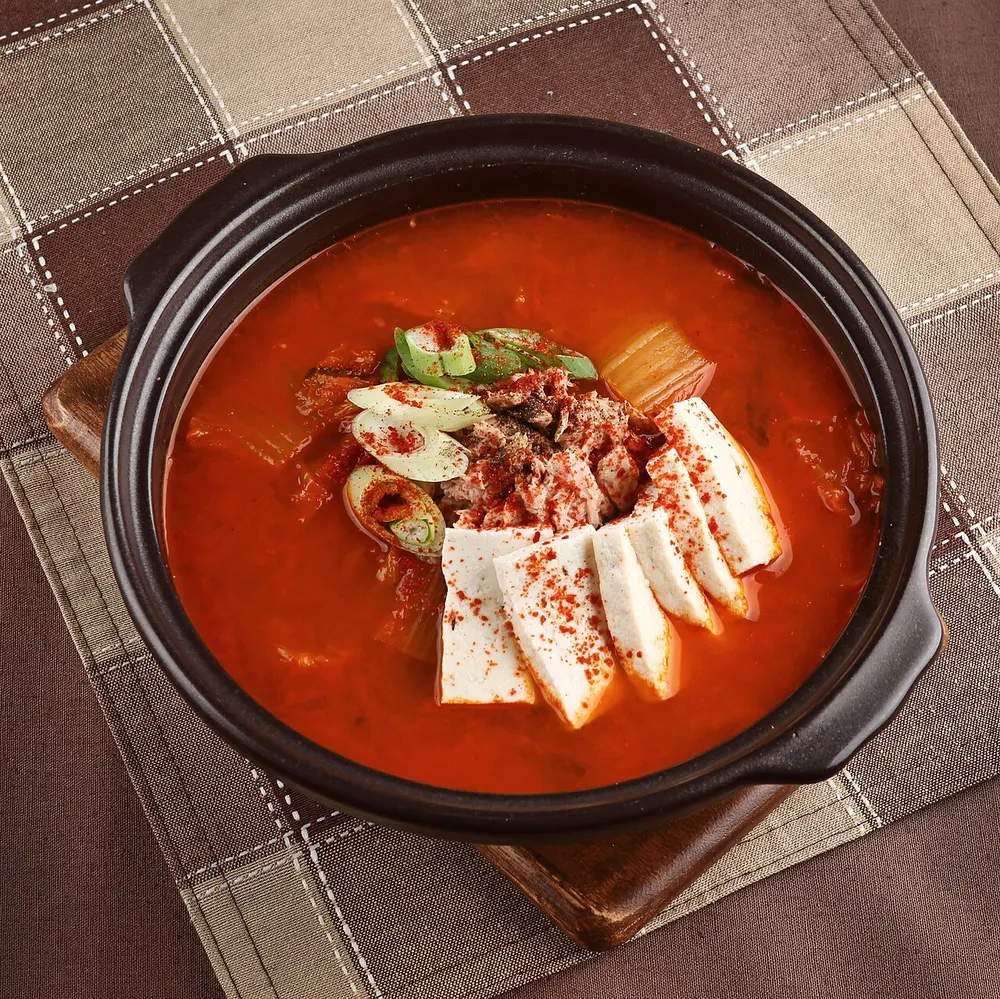
Kimchi Jjigae (Kimchi Stew)
Источник: Традиционное
30 мин3420 ккал
Без молочного🌶️🌶️
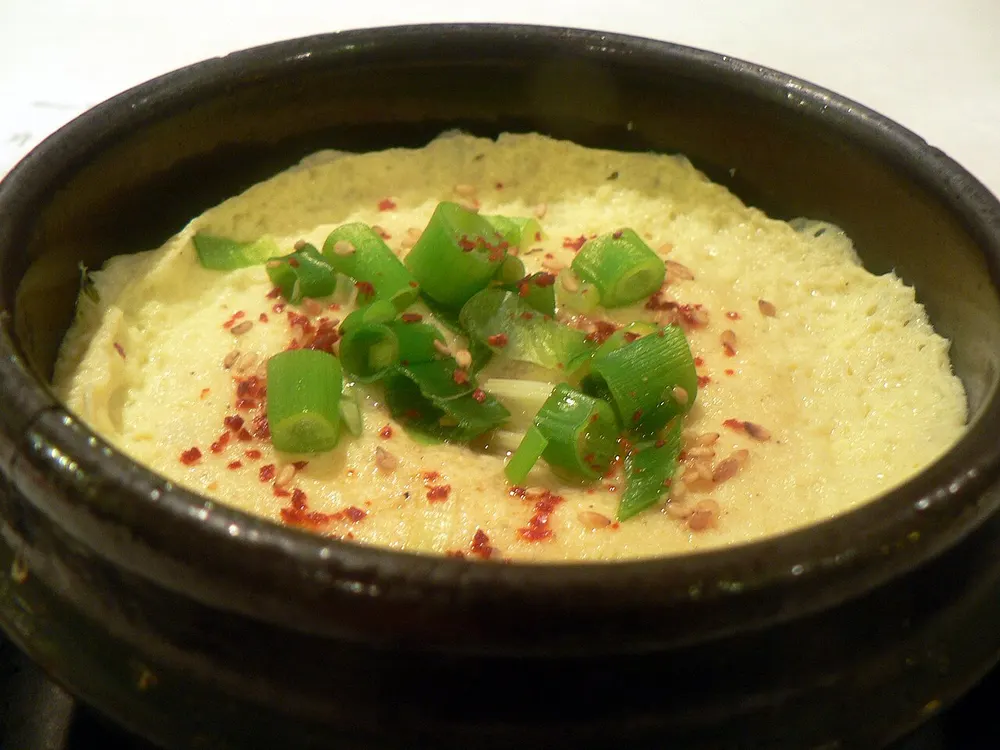
Not the smooth steamer version — the tall, souffléd one cooked directly over the flame. Scrape the base as it sets, then cap it with a second upturned ttukbaegi and let it climb.
Источник
Автор рецепта 백종원 · 👨🍳 Шеф-повар · Paik Jong-won — chef & restaurateur, 백종원의 요리비책
Имена поваров и авторов указаны только как ссылка на источник. More Recipes Please независима, не связана с ними, не одобрена и не спонсируется ими.
Paik Jong-won (요리비책) — Published by Paik Jong-won on his own YouTube channel as '뚝배기 계란찜 부풀어 오르는 결정적 한 끗 차이!', where he notes there are many kinds of gyeran-jjim and that this is the one boiled in a ttukbaegi directly over the flame rather than cooked in a steamer, adding that it is a dish you get better at the more you make it. The decisive detail of the title is the cap: a second, size-matched ttukbaegi is turned upside down over the first, giving the egg a tall dome of hot air to rise into. Only 60 ml of water goes into 6 eggs, and the seasoning is saeujeot rather than salt.
Повар: 백종원
Смотри, как это готовят · 3 видео
Slice the green onion into thin rounds and chop the saeujeot finely. Keep a small handful of the scallion back for garnish.
Chop the saeujeot properly fine — you should not be able to pick out a whole shrimp.
💡 Whole shrimp in a gyeran-jjim means one mouthful is a salt bomb and the rest is bland. Minced, it dissolves and seasons the entire bowl evenly.
Crack the eggs into a mixing bowl, add the chopped saeujeot and the sugar, and beat well.
Once that is properly combined, add the water and beat again until it is a uniform pale yellow with no stringy whites left.
💡 Beat the seasonings in BEFORE the water, in that order — it is how his method runs. Unbeaten strands of white set into rubbery ribbons that ruin the texture, so keep going until it looks like one liquid.
Pour the egg mixture into a ttukbaegi and set it over medium-low heat.
💡 Medium-LOW, and this is the whole difficulty of the dish. There is no water bath and no steamer between the flame and the egg — the only thing protecting it is the thickness of the earthenware and your patience. High heat gives you a burnt base under a raw middle.
As it heats, keep scraping the bottom and around the sides with a spoon so nothing welds itself to the earthenware.
💡 Do not walk away, not even briefly. Egg glues itself to hot earthenware in seconds and then scorches, and a burnt base flavours the entire pot. Constant scraping is not optional here — it is the technique.
Keep scraping and folding for roughly 5–7 minutes, until the egg goes from liquid to soft, cloud-like curds — thick enough that a spoon leaves a trail, but still wet.
When it is properly mongeul-mongeul like that, stir in the green onion.
Level the surface, then take a second ttukbaegi of a matching size, turn it upside down and cap the first one with it like a lid. Drop the heat to low.
💡 This is the trick the video is named for. A flat lid sits low and traps steam right on the surface; an upturned ttukbaegi gives the egg a tall dome of hot air to rise INTO. That headroom is the difference between a flat gyeran-jjim and one that climbs over the rim.
Leave it on low for about 4–6 minutes without lifting the cap. The trapped heat sets the top and the egg puffs up and rises above the rim.
💡 Resist peeking. Every lift releases the hot air holding it up and the dome sinks — and unlike a soufflé, it will not climb back a second time.
Lift the cap off. The gyeran-jjim should stand proud of the ttukbaegi, domed and set on top but still soft inside.
Scatter over the reserved green onion, drizzle with the sesame oil and sprinkle the sesame seeds. Bring it to the table in the ttukbaegi and eat it immediately.
💡 It starts sinking within a minute or two of leaving the heat — that is normal and happens to everyone, including him. Serve it at the table, not from the kitchen.
Korean
Источник: Традиционное
Korean
Источник: Домашняя кухня
Korean
Источник: Домашняя кухня
Korean
Источник: Традиционное
Приготовил? Поделись фото в галерее.
Покажи своё блюдо →