Новичок
Korean
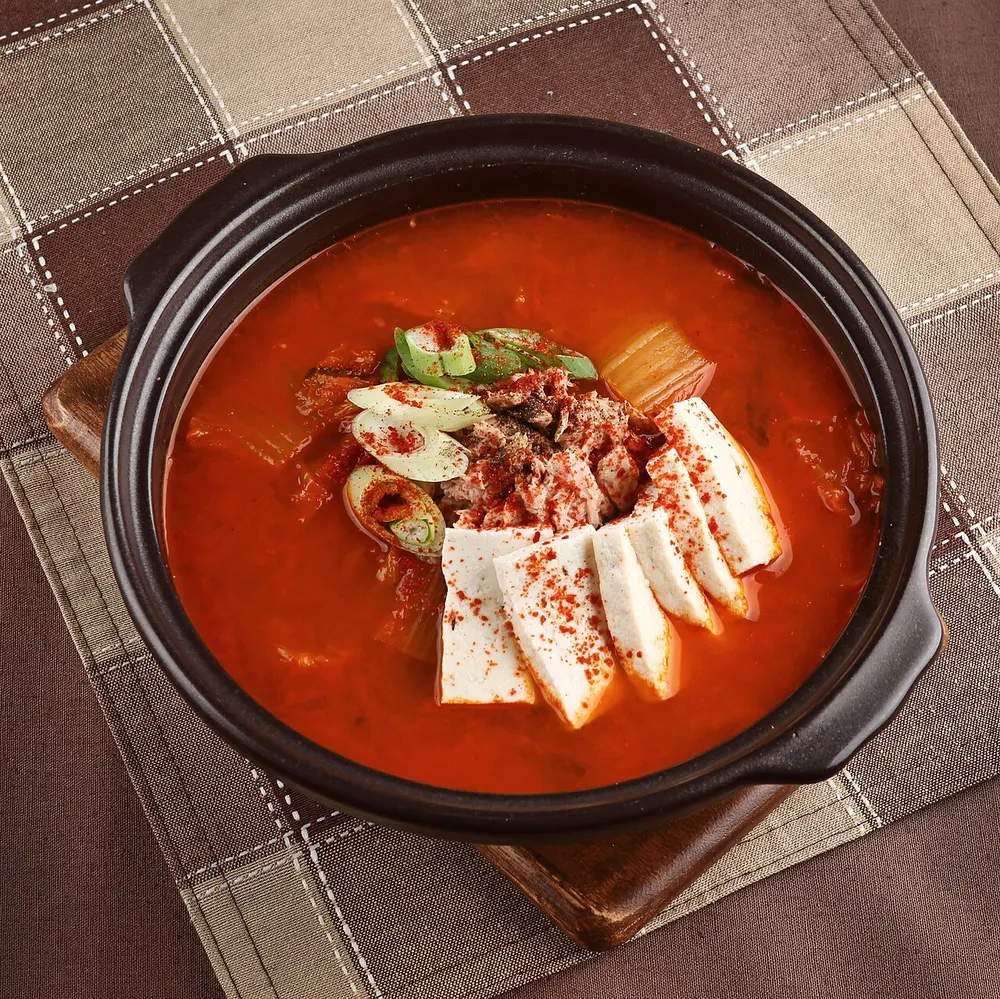
Kimchi Jjigae (Kimchi Stew)
Источник: Традиционное
30 мин3420 ккал
Без молочного🌶️🌶️
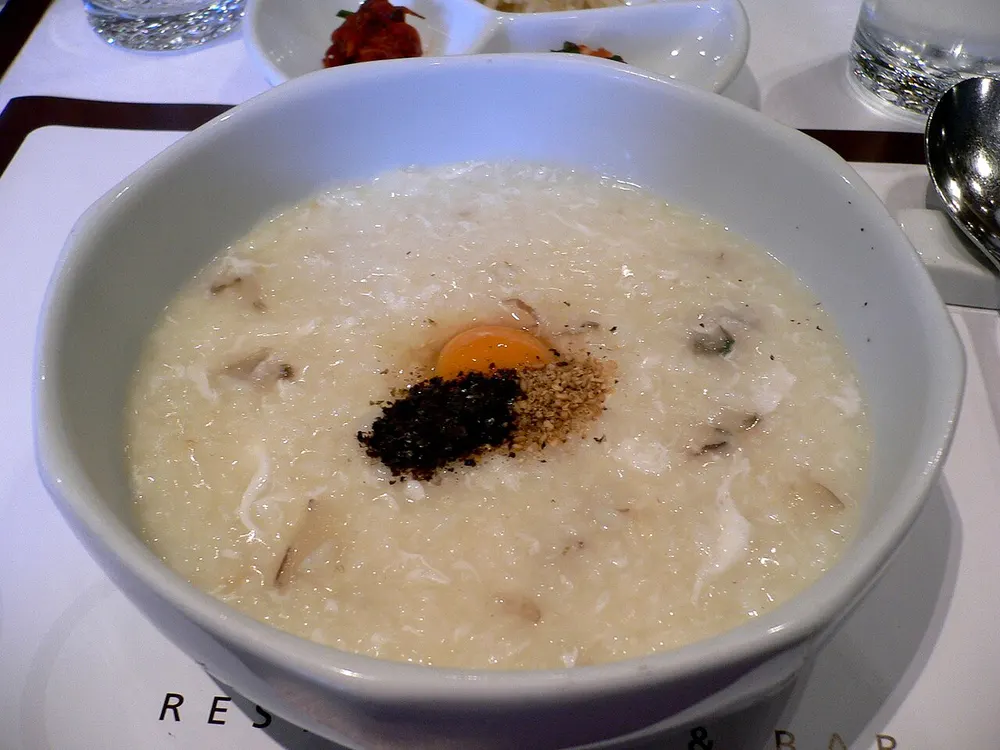
Juk is the food you eat when you are ill: white, plain, simmered for an hour. This one is red, has pork belly and two eggs in it, and takes ten minutes. It is porridge for people who are fine, actually.
Источник
Автор рецепта 자취요리신 (simple cooking) · 📱 Блогер · Korean YouTuber specialising in fast one-pot recipes aimed at people living alone; posts the written recipe under most of his videos
Имена поваров и авторов указаны только как ссылка на источник. More Recipes Please независима, не связана с ними, не одобрена и не спонсируется ими.
Recipe published by 자취요리신 / 자취요리신이 공개한 레시피 — He publishes the full written recipe with amounts in this video's description, headed 얼큰 계란죽을 만들어 보자. Distinctive: juk is white, bland, invalid food built from raw grain and an hour of stirring — this inverts every part of that. Pork belly and onion are fried first, gochujang and gochugaru are bloomed in the rendered fat, and only 180 ml of water goes in. The eggs are cracked in whole rather than beaten, and yesterday's cooked rice does the thickening in about three minutes. SERVINGS: he never writes a serving count. Our reading of 1 comes from his own scale — 100 g of pork, one cup of water, one bowl of rice, one ttukbaegi — and is not a figure he published.
Повар: 자취요리신 (simple cooking)
Смотри, как это готовят
Set a ttukbaegi or small heavy pot over medium-high heat, dry, with no oil.
Add the shaved pork belly and the handful of sliced onion together and fry them, pulling the pork ribbons apart as they loosen.
Keep going until the pork has no red left and the onion edges have turned translucent and started to catch gold.
💡 Let the fat come out properly. The next step fries the chili paste in that fat, and there is no oil in this recipe other than what the pork gives you.
Drop the heat to low. Everything that follows in the next 30 seconds burns easily.
Add the gochujang, oyster sauce, gochugaru, sugar and minced garlic straight into the fat and stir them without stopping.
💡 Beginner warning: gochugaru burns bitter in seconds on high heat and there is no fixing it afterwards. Low heat, spoon moving, eyes on the pot.
Fry the paste for under a minute — until it darkens, loses its raw edge and smells toasted rather than sharp, and the fat around it has gone clear red.
Pour in the 180 ml of water and turn the heat back up to medium-high.
💡 180 ml looks like a mistake for a porridge. It is not — a full bowl of rice is coming in shortly and it will drink most of this. Add more water 'to be safe' and you get soup.
When it boils, crack the two eggs straight in and leave them alone.
Let the whites set for a minute before you touch anything — you want ribbons and lumps of egg, not a uniform orange fog.
💡 This is why the eggs go in whole rather than beaten. Stir them in straight away and they emulsify into the broth and disappear; leave them, then break them up once, and you get texture.
Break the yolks with your spoon and fold them through once, no more than that.
Add the bowl of rice and press the lump against the side of the pot until it separates into grains.
Simmer for two or three minutes over medium heat, stirring. The rice swells, the starch comes out and the pot goes from wet to thick enough that a spoon leaves a track behind it.
Kill the heat, then add the seaweed flakes, the sesame oil and the sesame seeds.
💡 All three go on off the heat. Gim-garu cooked into a boiling pot turns to slime; scattered on at the end it stays as flakes and smells like the sea.
Stir once and eat immediately. Rice porridge stiffens as it cools, and this one has very little water to spare.
Korean
Источник: Традиционное
Korean
Источник: Домашняя кухня
Korean
Источник: Домашняя кухня
Korean
Источник: Традиционное
Приготовил? Поделись фото в галерее.
Покажи своё блюдо →