Mudah
Korean
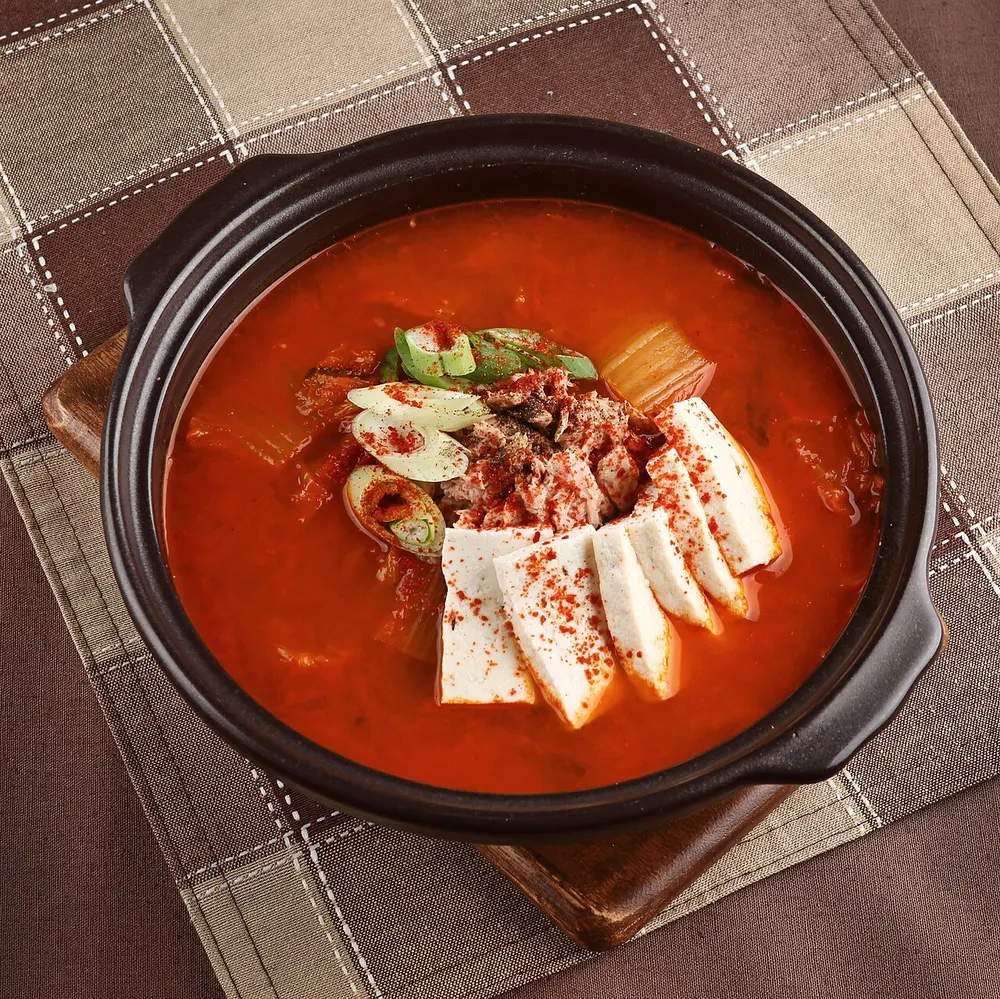
Kimchi Jjigae (Kimchi Stew)
Sumber: Tradisional
30 min3420 kcal
Bebas tenusu🌶️🌶️
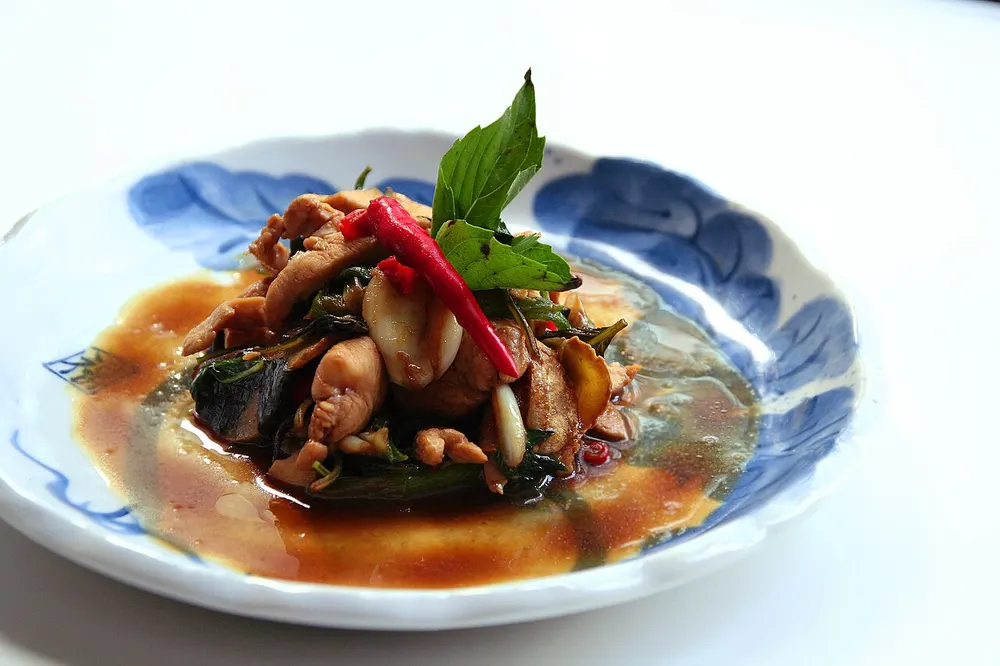
Named for its three liquids — soy sauce, rice wine and sesame oil — chicken simmered with a shocking quantity of ginger and whole garlic until the sauce reduces to a lacquer, then finished off the heat with a fistful of basil.
Sumber
Resipi oleh Taiwanese home kitchens · 🏺 Tradisional · Taiwanese household cooking — Hokkien roots, with a Japanese-era layer and a postwar mainland layer on top
Taiwanese home cooking · Hakka-descended dish — A traditional dish with no verifiable individual creator. The reference confirms the dish originates in Jiangxi province — specifically a speciality of Ningdu, whose population is Hakka — that its name comes from a cup each of soy sauce, rice wine and sesame oil per chicken, that it is cooked in an earthenware pot on high heat then low heat so the sauces are absorbed, and that it "has become especially popular in Taiwan, being introduced to the island by the Hakka people", with the Jiangxi style spicy and complex and the Taiwan variant simpler and non-spicy. This entry is written as the Taiwanese version and is filed under Taiwan for that reason; the mainland Jiangxi original is a different dish and is not in the book's Chinese files. Quantities are this book's own.
Tonton cara membuatnya · 3 video
Warm the black sesame oil in a heavy pot or clay pot over low heat and add the ginger. Fry it slowly for 5 to 6 minutes, until the slices curl at the edges and dry out slightly.
💡 Low heat, always. Black sesame oil scorches fast and turns bitter, and there is no rescuing a bitter pot.
Add the whole garlic cloves and the dried chillies and fry another 2 minutes, until the garlic is golden on the outside but still firm.
Turn the heat to high and add the chicken, skin side down. Leave it alone for 3 minutes to take colour, then turn the pieces and brown the other side.
Pour in both soy sauces, the rice wine and the rock sugar. Bring it to a boil, cover, and simmer over medium-low for 12 to 15 minutes, turning the pieces once halfway.
Take the lid off, raise the heat, and let it boil down for 5 to 8 minutes, spooning the sauce over the chicken as it thickens, until only a glossy dark syrup is left in the base of the pot.
💡 Stop while there is still a spoonful of sauce moving in the pan. It keeps tightening off the heat, and a dry pot means a dry dish.
Turn the heat off, throw in all the basil at once, and put the lid back on for 30 seconds. Open it, fold everything together, and take the pot straight to the table.
💡 The residual heat is enough. Basil cooked over a flame goes black and bitter — off the heat it stays green and perfumed.
Korean
Sumber: Tradisional
Korean
Sumber: Masakan rumah
Korean
Sumber: Masakan rumah
Korean
Sumber: Tradisional
Sudah cuba? Kongsi gambar di Pameran.
Kongsi hasil anda →