Mudah
Korean
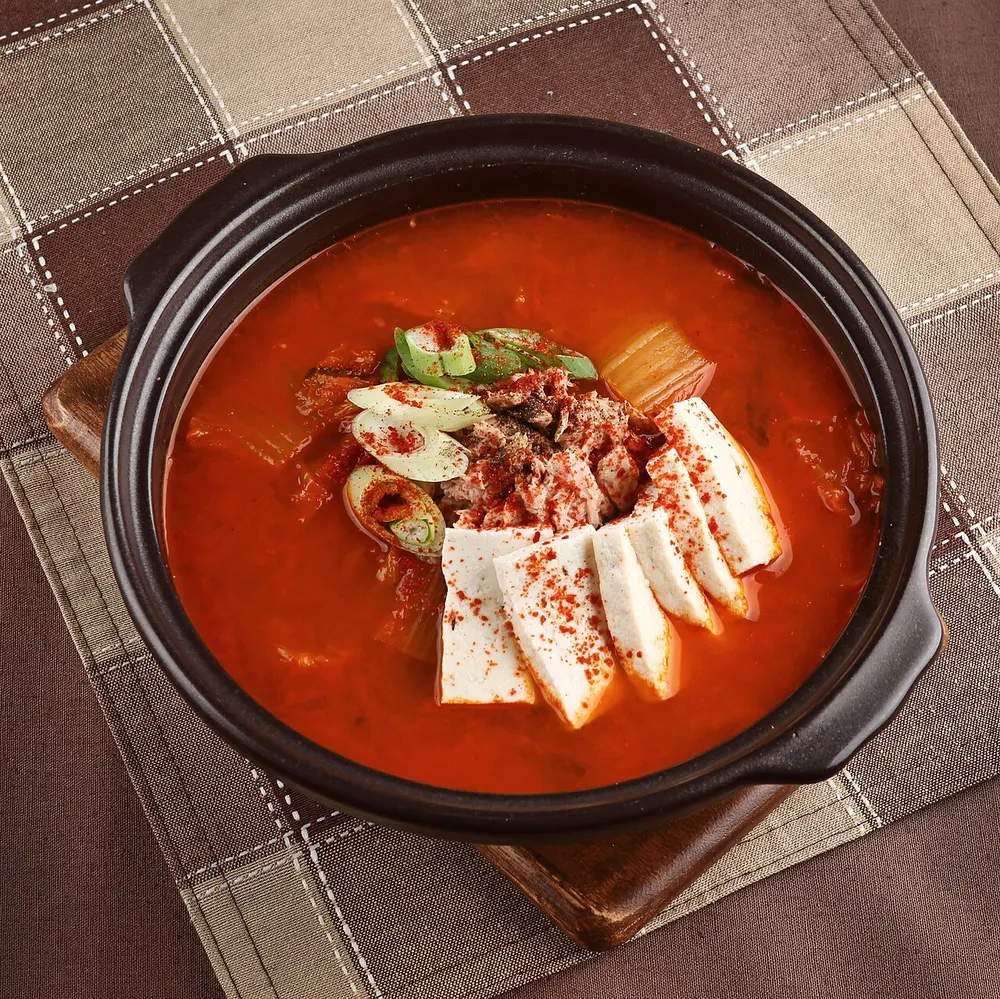
Kimchi Jjigae (Kimchi Stew)
Sumber: Tradisional
30 min3420 kcal
Bebas tenusu🌶️🌶️
His omurice argument is that ketchup should never touch it. A tomato base is built from half a can of tomatoes, then split: half is fried into the rice, half is thinned with water into a sauce. The egg is not wrapped — it is set soft and draped over.
Sumber
Resipi oleh リュウジ · 📱 Pempengaruh · Ryuji — cooking researcher (料理研究家) and YouTuber behind 料理研究家リュウジのバズレシピ, Japan's biggest cooking channel at ~5.6M subscribers. Known for fast, exactly-measured home recipes.
Nama tukang masak dan pencipta kandungan dipaparkan sebagai kredit sumber sahaja. More Recipes Please bebas dan tidak bergabung, tidak disokong, serta tidak ditaja oleh mereka.
Ryuji (バズレシピ) — Published by リュウジ on his own YouTube channel under a title that opens 【もうケチャップはいらない】 — 'you don't need ketchup any more' — and is headed 【ケチャップ使うな。至高を越えたオムライス】 in the description. The description carries the full ingredient list and his method as text, and that is the source of every quantity here. The defining move is that there is no ketchup anywhere: a tomato base is cooked down from half a can of tomatoes with butter, garlic and onion, then divided in two — one half is fried into the chicken rice, the other is loosened with 50 cc of water and consommé into the sauce that goes over the top. He also makes a point that two eggs are enough, and the egg is left half-set and draped over the rice rather than wrapped around it.
Tukang masak: リュウジ
Tonton cara membuatnya
Finely chop the garlic (10 g) and onion (60 g), and cut the chicken thigh (100 g) into small pieces.
Melt the butter (10 g) in a frying pan over medium heat and fry the garlic until it smells sweet, about 1 minute. Add the onion and cook 2–3 minutes, until translucent.
Add the canned tomatoes (1/2 can, 200 g) and cook them down 6–8 minutes over medium heat, crushing the pieces, until the mixture darkens to brick red and a spoon dragged through leaves a trail that holds. This is the tomato base.
💡 Do not stop early. This is the step that stands in for ketchup, and ketchup is already concentrated and sweetened — raw canned tomato is neither. If it still looks watery and tastes sharp, it is not done.
Scrape the tomato base out into a bowl and divide it into two equal halves.
Wipe the pan, add the olive oil (小さじ1) and fry the chicken, seasoned with salt and pepper, over medium-high heat for 3–4 minutes until cooked through and lightly browned.
Add half the tomato base, the rice (200 g), black pepper, consommé (小さじ1と1/3) and sugar (小さじ1). Stir-fry 2–3 minutes, breaking up the rice, until every grain is coloured and the pan is dry.
Mound the rice on a plate and shape it into an oval with the back of a spoon. Set it aside.
💡 Shape it now, while it is hot and pliable. The egg goes on top, so the rice underneath is the mould — a flat pile makes a flat omurice.
For the sauce: return the other half of the tomato base to the pan with the water (50 cc), consommé (小さじ1/2), sugar (小さじ1/2) and black pepper. Warm it through over low heat until it is a pourable sauce, then keep it warm.
Beat the eggs (2) with the salt (1つまみ), 1 shake of Aji-no-moto and the water (大さじ1) until fully combined.
Wipe the pan clean, add the butter (5 g) and olive oil (小さじ1) and set it over medium-low heat until the butter has melted and is foaming gently — not browning.
Pour in the egg and cook over medium-low heat, stirring the outside in with chopsticks for the first 10 seconds, then leaving it, until it is half-set — the base holds together but the top is still glossy and wet.
💡 Medium-LOW is the instruction and it is the hardest part of this recipe — it is why this one is rated intermediate rather than beginner. High heat sets the bottom into a rubbery sheet in seconds while the top is still liquid. If it is browning, the pan is too hot: take it off the heat entirely for a moment and let it come back.
Slide the half-set egg out of the pan and drape it over the mound of rice, letting it settle over the shape rather than wrapping it.
Pour the warm tomato sauce over the top and serve immediately.
💡 This is where a normal omurice gets its squiggle of ketchup. The whole recipe exists to put this sauce there instead — so do not top it with ketchup out of habit.
Korean
Sumber: Tradisional
Korean
Sumber: Masakan rumah
Korean
Sumber: Masakan rumah
Korean
Sumber: Tradisional
Sudah cuba? Kongsi gambar di Pameran.
Kongsi hasil anda →