Mudah
Korean
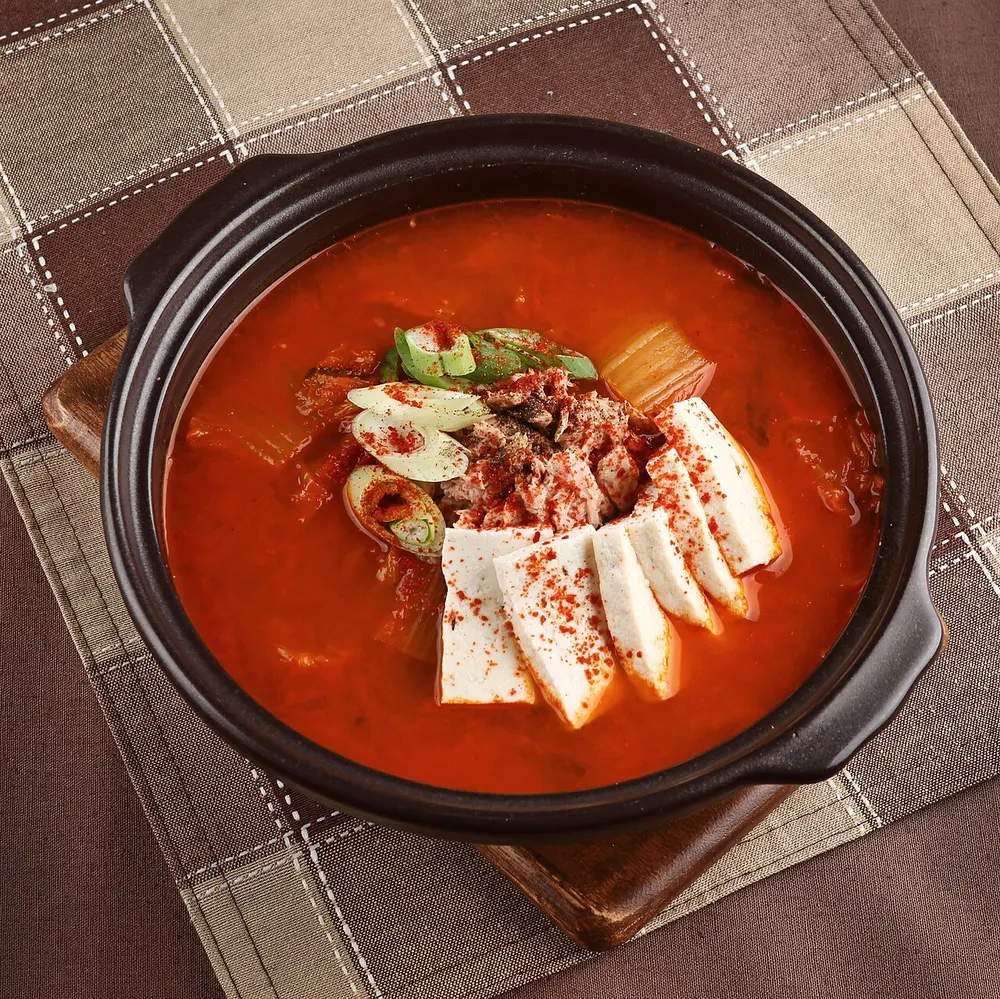
Kimchi Jjigae (Kimchi Stew)
Sumber: Tradisional
30 min3420 kcal
Bebas tenusu🌶️🌶️
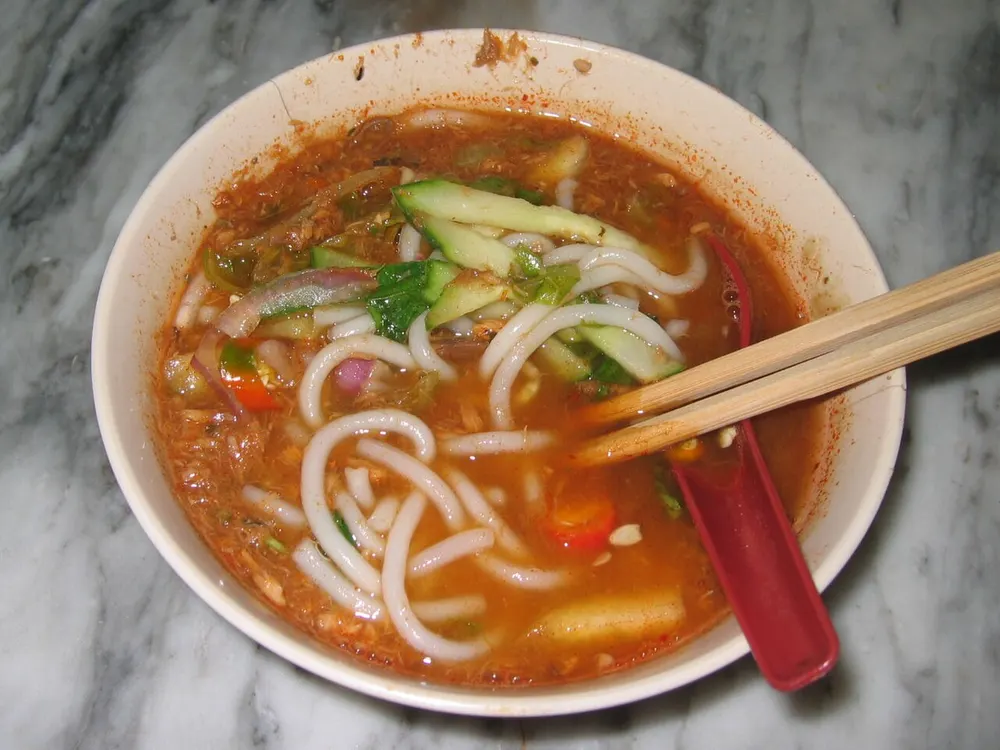
The sour laksa, not the creamy one: flaked mackerel in a tamarind broth sharpened with torch ginger and daun kesum, poured over thick rice noodles and finished with a black smear of shrimp paste.
Sumber
Resipi oleh Chinese-Malaysian kitchens · 🏺 Tradisional · Hokkien and Teochew Malaysian cooking, Penang and the Klang Valley
Penang hawker cooking · Peranakan-derived — An ownerless regional dish with no documented creator. The reference confirms Penang laksa's mackerel base, its defining tamarind (asam) sourness, and the torch ginger, daun kesum, pineapple and hae ko shrimp paste that go with it. Note: 'Asam laksa' is only a redirect on that site, so the canonical Laksa article is cited rather than a guessed URL. One honest gap — sources differ on whether hae ko is stirred in at the table or into the pot; table-side is what is described here and is the common Penang practice, but this book cannot prove it is universal.
Tonton cara membuatnya · 3 video
Poach the whole mackerel in 2 litres of lightly salted water for about 10 minutes, until the flesh comes away from the bone. Lift the fish out and keep every drop of that water — it is the base of the broth.
Flake the fish off the bones with your fingers, checking carefully as you go. Set the flesh aside; return the head and bones to the pot to keep simmering.
💡 Fingers find pin bones that eyes miss. This is worth doing slowly — a bone in a laksa bowl ruins the whole thing.
Blend the soaked chillies, shallots, lemongrass, galangal and belacan into a rough paste, then stir it into the simmering stock with the tamarind water, tamarind slices, torch ginger and palm sugar.
Simmer uncovered for 30 minutes. Add most of the flaked fish and the daun kesum, and cook 10 minutes more. Taste: it should be sour first, then salty, then faintly sweet, with the heat trailing behind.
💡 Sourness is the point of this laksa, so correct it upward with more tamarind rather than reaching for salt. If it tastes flat, it almost always needs acid, not seasoning.
Fish out the bones and stalks. Blanch the noodles briefly and divide them between bowls, then ladle the hot broth over them.
Pile the shredded pineapple, cucumber, red onion, mint and the rest of the fish on top. Add a teaspoon of hae ko to each bowl and let each person stir it in themselves.
💡 Hae ko is intensely fishy on its own and mild once stirred through. Letting people mix their own is not just tradition — it lets first-timers start with half a spoon.
Korean
Sumber: Tradisional
Korean
Sumber: Masakan rumah
Korean
Sumber: Masakan rumah
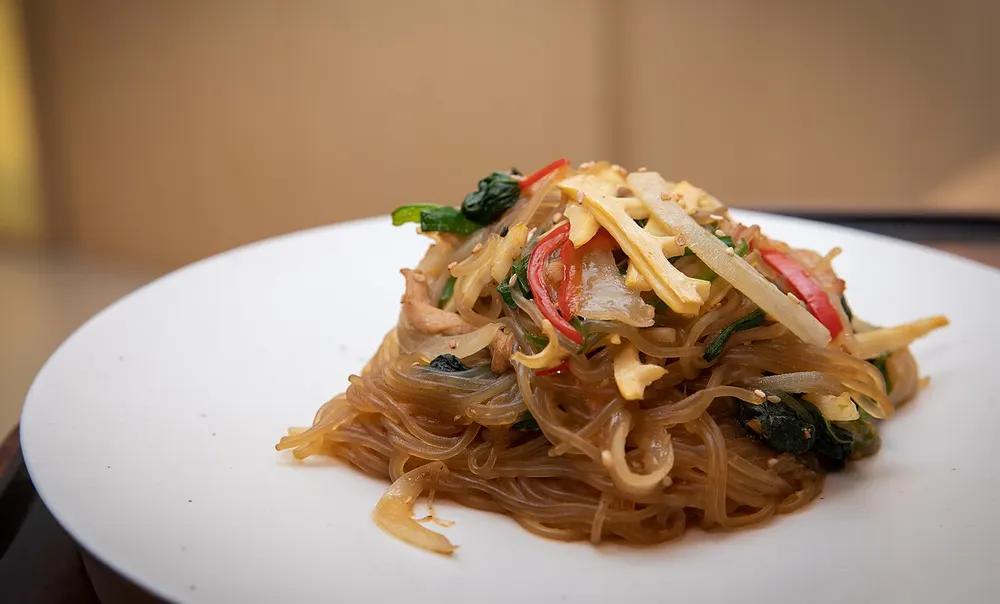
Korean
Sumber: Tradisional
Sudah cuba? Kongsi gambar di Pameran.
Kongsi hasil anda →