Mudah
Korean
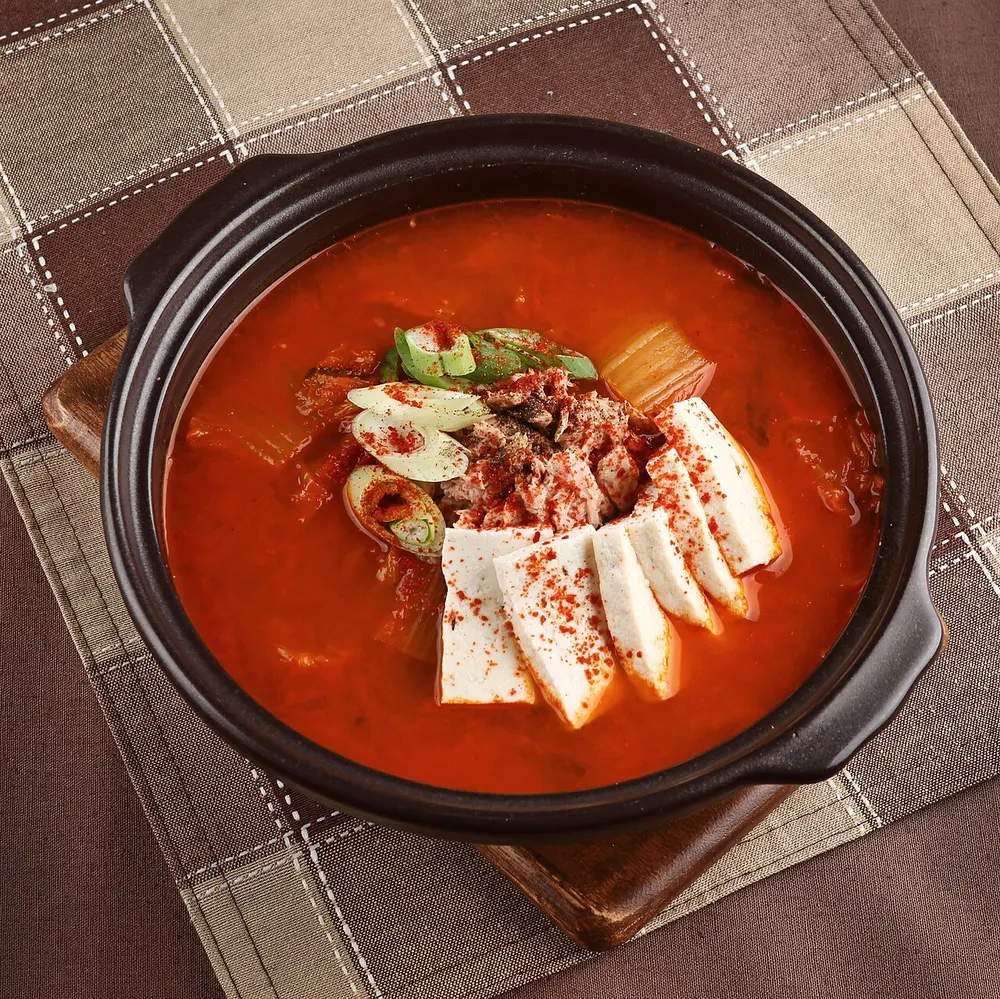
Kimchi Jjigae (Kimchi Stew)
Sumber: Tradisional
30 min3420 kcal
Bebas tenusu🌶️🌶️
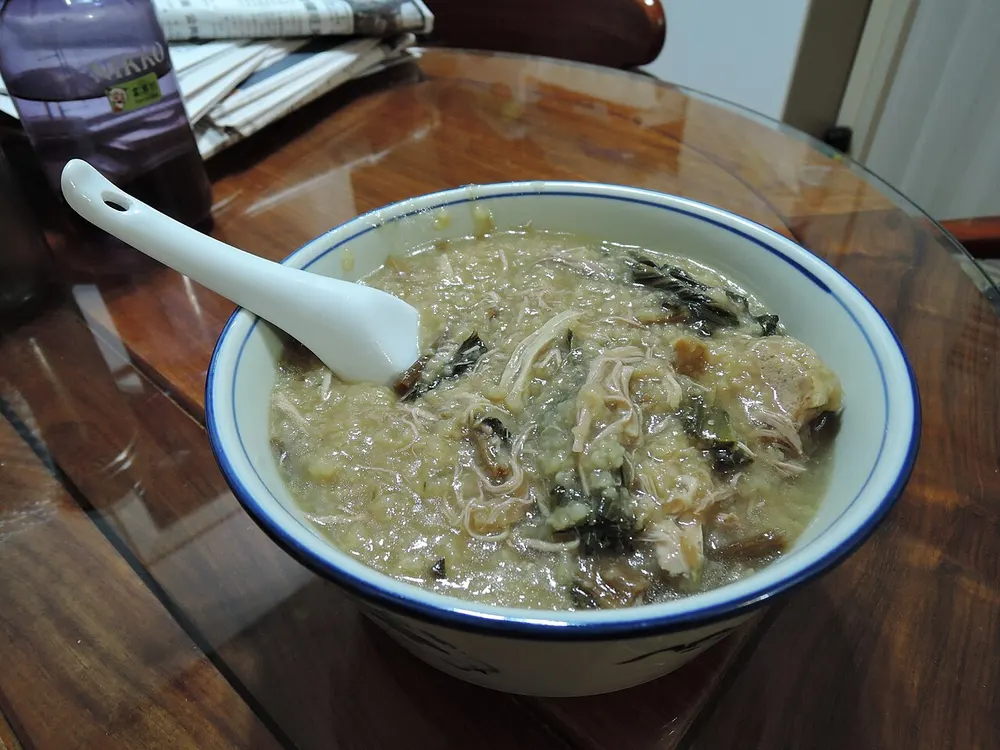
Eight parts water to one part rice, boiled hard for 25 minutes until the grains collapse — then the chicken goes in slice by slice over a full minute so it never clumps. Cantonese comfort food reduced to two rules.
Sumber
Resipi oleh Chung Sun Lau (Daddy Lau) · 👨🍳 Chef · Cantonese chef of 50+ years; his family publish his recipes in full at Made With Lau
Nama tukang masak dan pencipta kandungan dipaparkan sebagai kredit sumber sahaja. More Recipes Please bebas dan tidak bergabung, tidak disokong, serta tidak ditaja oleh mereka.
Made With Lau (madewithlau.com) — Published in full, free, on the Lau family's own site as 'The Congee My Dad's Made 100,000 Times'. Chung Lau is a Cantonese chef of over 50 years. Two rules define his version, and the write-up states both outright: the water-to-rice ratio is 8 to 1, and the rice must never go into the pot before the water is boiling. The third is a warning rather than a rule — the marinated chicken has to be added slowly over 30–60 seconds with constant stirring, or it clumps. He is also relaxed about the finish, saying you can stop at 25 minutes or simply cook it longer for a smoother jook. The amounts, yield and timings above are theirs, taken from the structured recipe data on the page.
Tukang masak: Chung Sun Lau (Daddy Lau)
Tonton cara membuatnya
Wash the rice cup of white rice in a bowl, changing the water until it runs mostly clear.
Put 8 cups of water on to boil in a separate kettle or pot. Chung Lau's water-to-rice ratio for jook is 8 to 1.
💡 Eight to one sounds like far too much water, and it is exactly right. Congee is not rice with liquid around it — the grains have to burst and dissolve, and they need that much water to do it.
Cut the 12 oz of chicken into thin slices and put them in a bowl.
Marinate the chicken: add the 2 tsp cornstarch, 1 tbsp oyster sauce, 2 tbsp water, 0.5 tsp chicken bouillon and 2 tbsp vegetable oil, and mix until every slice is coated. Leave it while the rice cooks.
💡 The cornstarch and oil are doing the real work here. They form a coat that keeps the chicken tender in a boiling pot — without it, thin slices go stringy in seconds.
Pour the boiled water into your pot, set it over high heat, and wait until it is properly boiling before you add the rice.
💡 Do not add the rice before the pot is boiling — the Laus call this out specifically. Rice that starts in cool water sinks and welds itself to the bottom before the water ever gets hot enough to move it.
Add the washed rice. Once the pot comes back to a boil, cover it partially and cook at medium heat for 25 minutes.
Partially covered means leave a real gap. Stir it now and then to check nothing is sticking.
💡 A fully covered pot of congee will boil over — there is starch in that water and it foams. A fully uncovered one loses too much liquid. The gap is the compromise.
At 25 minutes, taste it. The grains should have broken down into something thick and creamy. If you want it silkier still, the Laus say simply cook it longer.
💡 There is no wrong answer here, only preference. Twenty-five minutes gives a jook with some grain still visible; an hour gives the smooth, almost soupy version served in Guangzhou tea houses.
Turn the stove to high. Add the marinated chicken slowly — spread it in over a full 30 to 60 seconds, stirring constantly as you go.
💡 This is the step the dish lives or dies on. Tip the whole bowl in at once and the slices bond into one grey lump you cannot separate — the Laus warn about exactly this. Slow and stirring, every time.
Add the ginger strips, the 1 tsp of salt and the 1 tsp of chicken bouillon, and stir everything for 20–30 seconds.
Turn off the heat, ladle the jook into bowls and garnish with the green onion and cilantro. Serve hot.
💡 The chicken is thin and it is already cooked by the residual heat of the pot — chasing it with more time on the stove is how you end up with rubber in your bowl.
Korean
Sumber: Tradisional
Korean
Sumber: Masakan rumah
Korean
Sumber: Masakan rumah
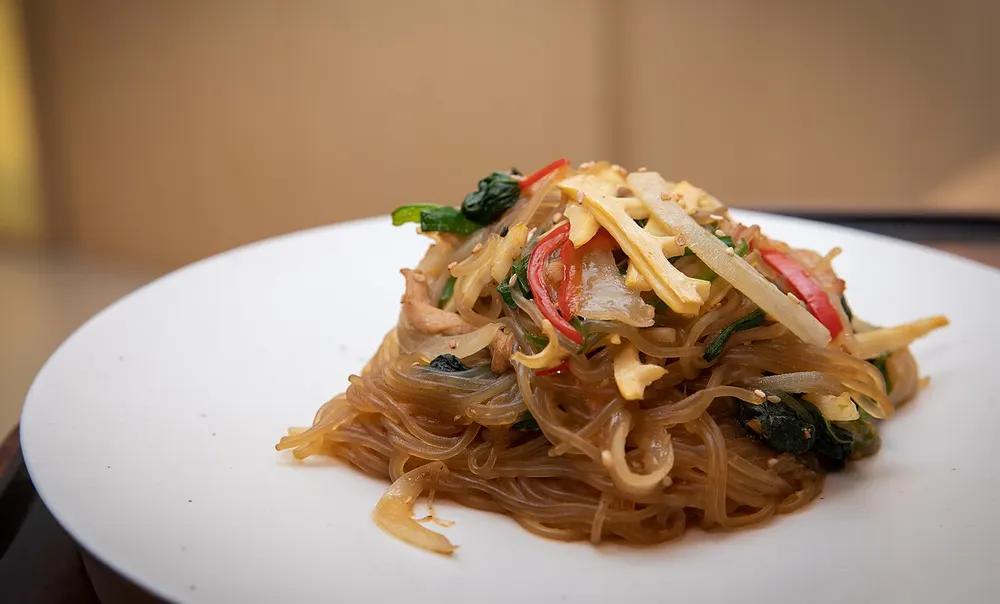
Korean
Sumber: Tradisional
Sudah cuba? Kongsi gambar di Pameran.
Kongsi hasil anda →