Mudah
Korean
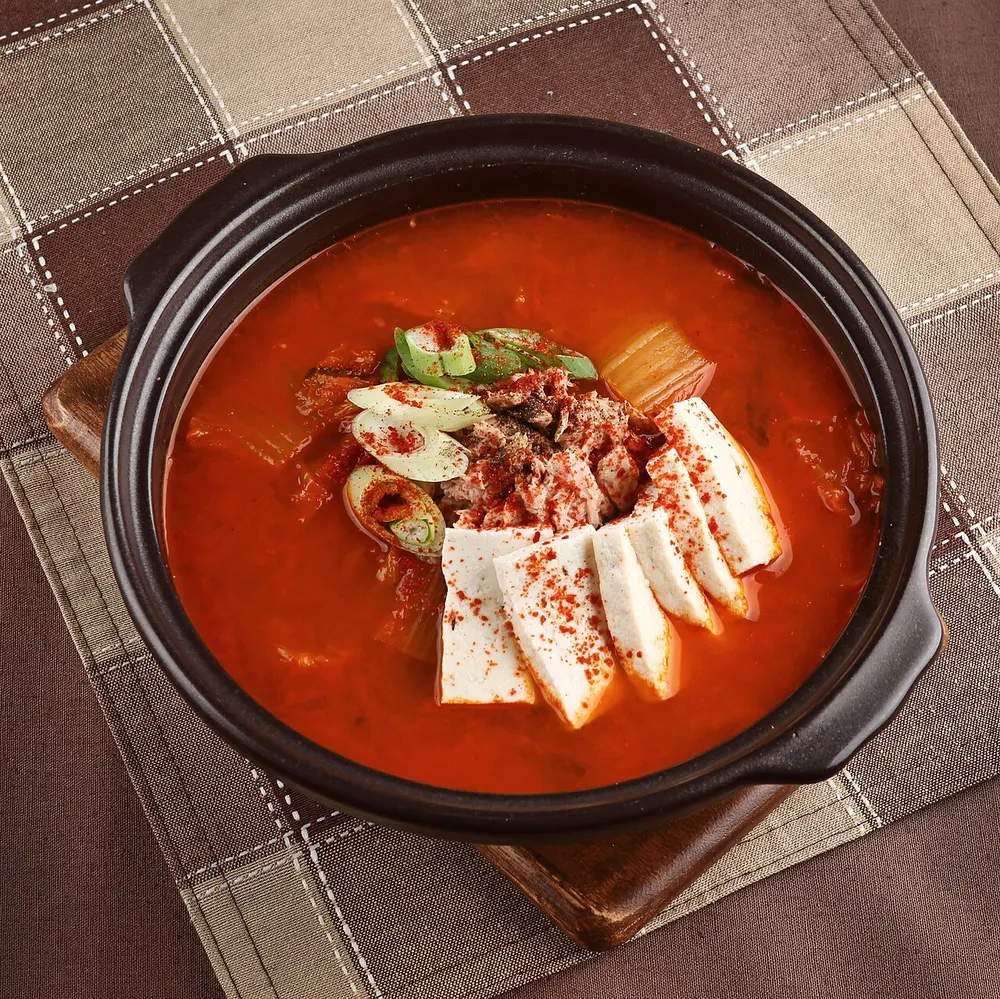
Kimchi Jjigae (Kimchi Stew)
Sumber: Tradisional
30 min3420 kcal
Bebas tenusu🌶️🌶️
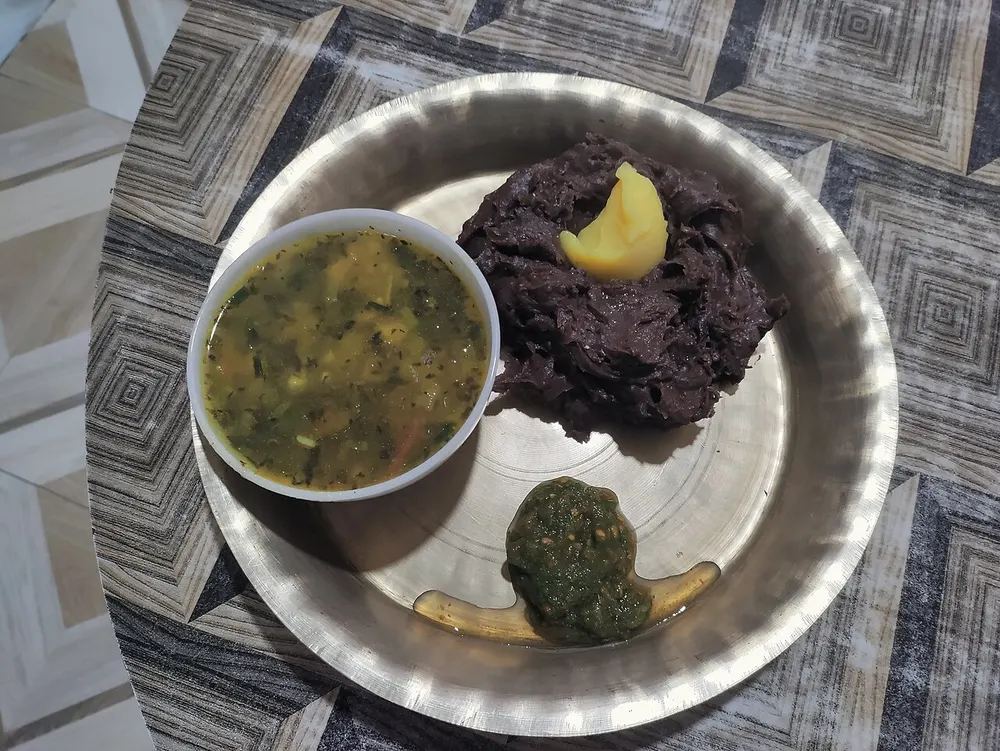
Buckwheat or millet flour beaten into boiling water until it turns into a smooth, dense mound — the hill food Nepal ate before rice reached the ridges, and now eats by choice.
Sumber
Resipi oleh Nepali home kitchens · 🏺 Tradisional · Everyday Nepali cooking — rice and lentils twice a day, a seasonal vegetable beside them, and a fermented something sharp enough to cut through both.
Nepali · hill staple — An ownerless traditional dish, so no cook is credited. The cited article confirms the method — flour added gradually to boiling water and stirred — the buckwheat and millet flours used, and that it is eaten with soup or curry rather than alone. Quantities and the serving instructions are this book's own.
Tonton cara membuatnya · 3 video
Bring the water and salt to a hard boil in a heavy pan. Keep a sturdy wooden spoon or a dhindo stick to hand.
Sprinkle in a third of the flour and beat it smooth. Do not dump it all in at once.
💡 The whole dish is one technique: add flour in stages, beat it against the side of the pan, and never let a lump survive a stage.
Keep the heat low and work in the rest of the flour a handful at a time, beating hard between each addition. It will fight back.
After 10 minutes of beating it pulls away from the pan in one mass and looks glossy. That is done.
Wet a bowl, press the dhindo into it, and turn it out onto a plate as a smooth mound. Press a hollow in the top and pour in the ghee.
Eat it by pinching off small pieces with your fingers and dipping them into gundruk soup or a curry. It is not chewed so much as swallowed.
Korean
Sumber: Tradisional
Korean
Sumber: Masakan rumah
Korean
Sumber: Masakan rumah
Korean
Sumber: Tradisional
Sudah cuba? Kongsi gambar di Pameran.
Kongsi hasil anda →