Mudah
Korean
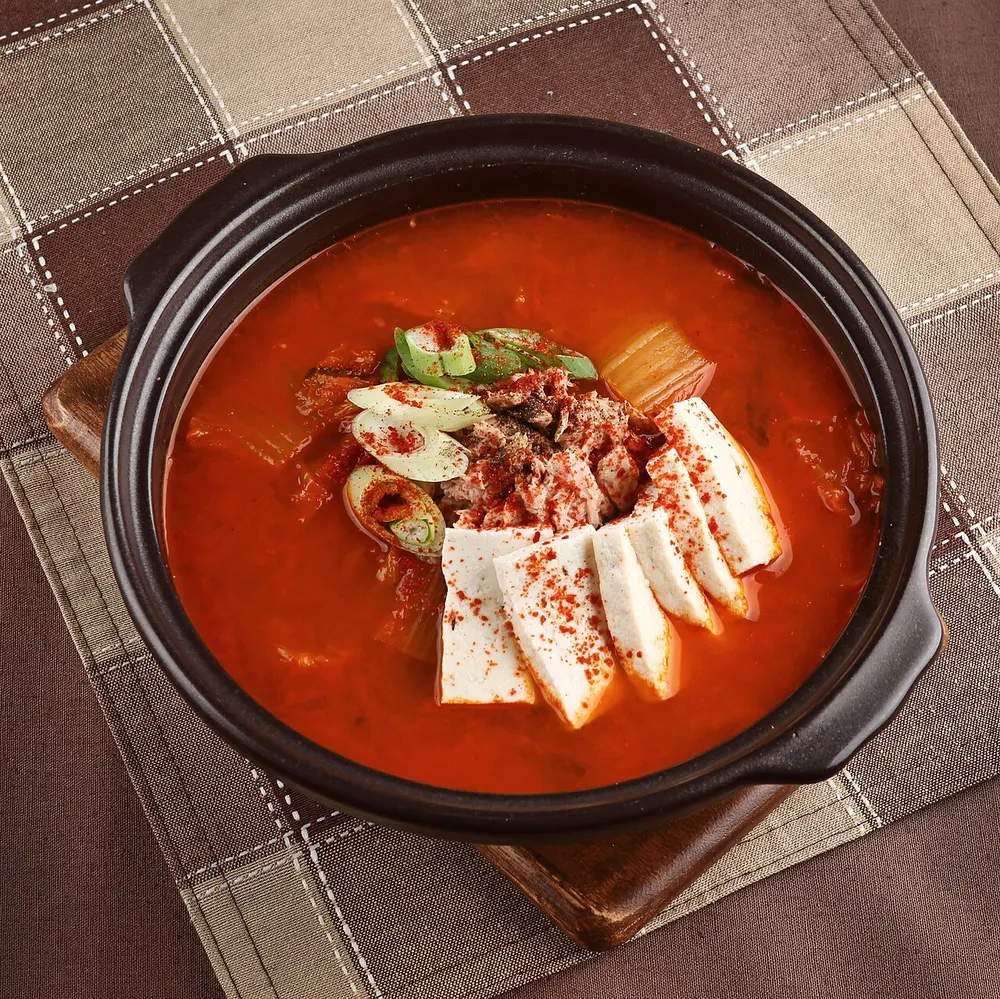
Kimchi Jjigae (Kimchi Stew)
Sumber: Tradisional
30 min3420 kcal
Bebas tenusu🌶️🌶️
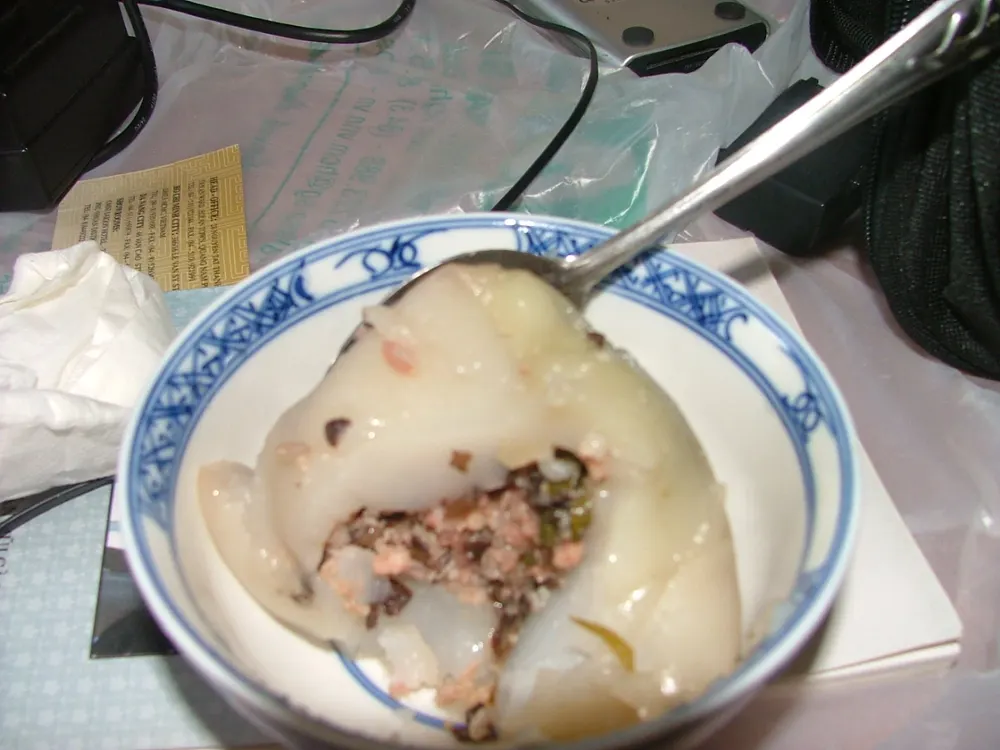
A pyramid of banana leaf hiding a soft, wobbly rice-flour dough around a heart of minced pork, wood-ear mushroom and shallot. Steamed, sold warm from a cart at seven in the morning, eaten with a spoon and a shake of chilli sauce. The Hanoi breakfast that never made it onto tourist menus.
Sumber
Resipi oleh Hanoi kitchens and street stalls · 🏺 Tradisional · Northern Vietnamese cooking — Hanoi households and the pavement stalls of the Old Quarter
Hanoi · the breakfast pyramid — An ownerless traditional dish, so no cook is credited. The cited article confirms bánh giò as a Vietnamese steamed pyramid-shaped savory rice cake with a filling of ground pork, wood-ear mushrooms and onions under a thin layer of rice-flour dough, wrapped in banana leaves and steamed, eaten plain or with soy or chilli sauce, from northern Vietnam and sold warm from carts as breakfast. The pre-cooked dough method, the quail egg, timings and quantities are this book's own.
Tonton cara membuatnya · 3 video
Filling: fry the shallots in 1 tablespoon of oil 2 minutes, add the pork and break it up, then the mushrooms, fish sauce and pepper. Cook 5 minutes until dry. Cool.
Dough: whisk the rice flour, tapioca starch, stock, salt and remaining oil in a pan until smooth. Cook over medium-low heat, stirring constantly with a spatula, 8–10 minutes until it thickens to a smooth, glossy paste that just holds a trail — like thick porridge, not a dough.
💡 Stop while it still pours slowly. Cook it stiff and the finished cake is rubbery; the wobble is the whole point of bánh giò.
Fold each banana leaf into a cone (two leaves crossed for strength). Spoon in 2 tablespoons of dough, a spoon of filling and a quail egg, then more dough to cover. Fold the leaf over into a pyramid and tie with string.
Steam 25–30 minutes over a rolling boil. Rest 5 minutes before unwrapping — the dough sets a little as it cools.
Unwrap onto a plate. Eat warm with chilli sauce or soy, and a few slices of cucumber or chả lụa on the side the way the carts do.
Korean
Sumber: Tradisional
Korean
Sumber: Masakan rumah
Korean
Sumber: Masakan rumah
Korean
Sumber: Tradisional
Sudah cuba? Kongsi gambar di Pameran.
Kongsi hasil anda →