Mudah
Korean
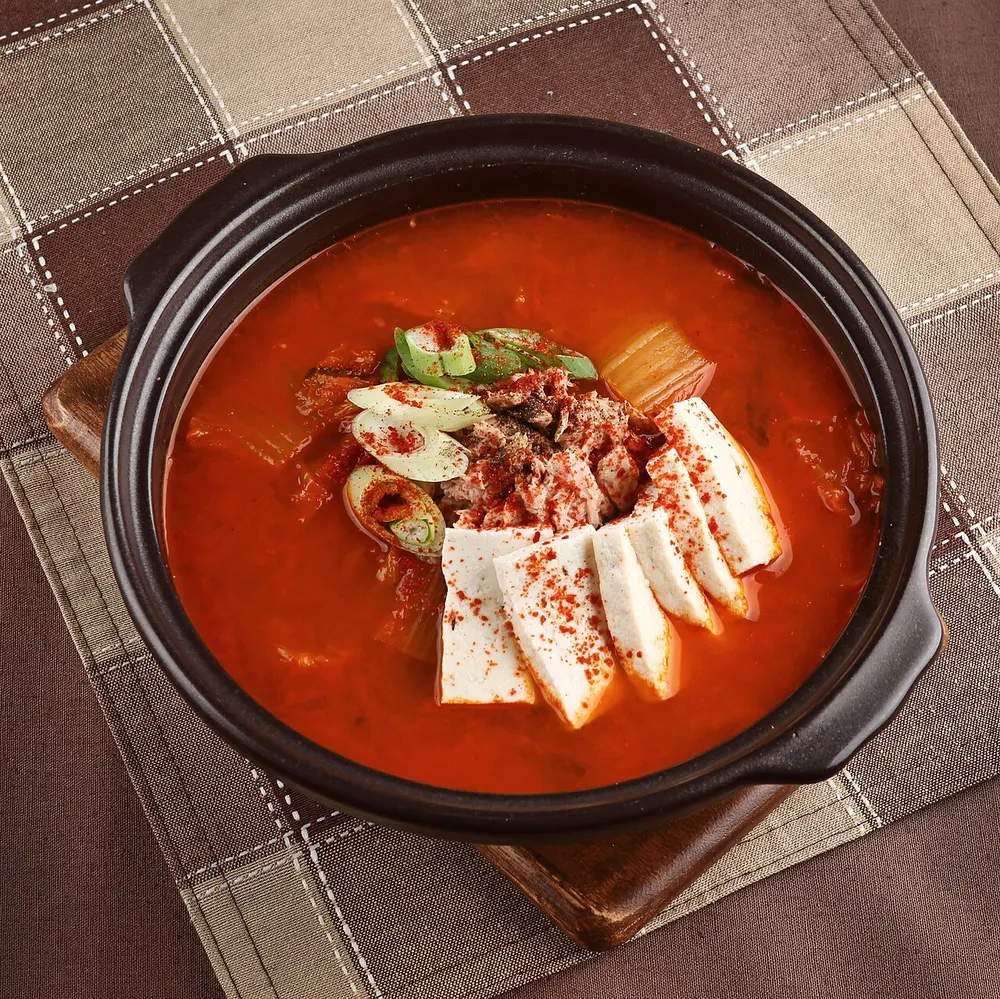
Kimchi Jjigae (Kimchi Stew)
Sumber: Tradisional
30 min3420 kcal
Bebas tenusu🌶️🌶️
A Chinese-cuisine master's stir-fry timed in seconds, not minutes: chicken 30 seconds in hot oil, vegetables 5–10 seconds, everything strained out, then a 5-second aromatic base and a pre-mixed sauce that goes in and comes straight back off.
Sumber
Resipi oleh 여경옥 · 👨🍳 Chef · Yeo Gyeong-ok — chef (셰프); Altoran's own video title introduces him as a master of Chinese cuisine, '중화요리 대가 … 여경옥 셰프'
Nama tukang masak dan pencipta kandungan dipaparkan sebagai kredit sumber sahaja. More Recipes Please bebas dan tidak bergabung, tidak disokong, serta tidak ditaja oleh mereka.
MBN Altoran (알토란) — Published by MBN on Altoran's own channel (알토란 - 집밥 레시피, @Recipe_MBN), whose description carries the ingredient table and method and credits it as 'Altoran episode 102 … #여경옥'; the channel's own title introduces him as a master of Chinese cuisine, '중화요리 대가의 비법! 여경옥 셰프'. Broadcaster-published text, not a viewer's write-up. What marks his version out: everything is timed in seconds — chicken 30, vegetables 5–10, aromatics 5 — the chicken is velveted in potato starch and passed through 200 mL of oil rather than fried in it, the whole lot is strained, and the sauce carries its own starch so it sets on contact. Two flaws in his published text are carried honestly rather than fixed: the aubergine is missing from the ingredient list entirely despite being in the dish's name, and his 2 tbsp of cheongju does not match the 1½ tsp + 1 tbsp his steps actually spend.
Tukang masak: 여경옥
Tonton cara membuatnya
Skin the chicken thigh and cut the 300 g into 1.5 cm pieces — his figure.
Marinate the chicken with 1 tsp soy sauce, 1½ tsp cheongju, a pinch of pepper and 1 tsp potato starch.
💡 The starch is doing velveting — it seals the surface so the chicken stays juicy through the oil. This is the same technique behind restaurant Chinese chicken, and it is why 30 seconds is enough.
Cut the aubergine and the bell pepper into bite-size pieces and have the 20 peanuts to hand. Slice the half daepa, the 2 garlic cloves and the ginger.
Mix the sauce in a small bowl BEFORE you light the pan: 2½ tbsp water, 1 tsp jin-ganjang, 1 tbsp oyster sauce, 1 tbsp sugar, 1 tsp doubanjiang, 1 tsp pepper and 1 tsp potato starch.
💡 He lists the starch straight into the sauce rather than as a separate slurry. It means the sauce thickens the instant it hits the hot pan — which is exactly why it must be mixed and waiting, not measured mid-cook.
Heat the 200 ml of cooking oil in a pan until it shimmers.
Add the marinated chicken and the 5 dried chilies and stir-fry 30 seconds over medium heat — his figure.
💡 Thirty seconds does not fully cook the chicken and is not meant to. The pieces are 1.5 cm and they finish in the sauce at the end — this pass is only to set the starch coat.
Add the aubergine, bell pepper and peanuts and stir-fry just 5–10 seconds — his figure.
Tip the whole lot — chicken, vegetables, oil — into a sieve set over a bowl, and let the oil drain away.
💡 This is the Chinese technique of passing food through oil rather than frying it. The oil is a heat medium, not an ingredient — leave it in and you get a greasy dish instead of a glossy one.
Wipe the pan, heat 2 tbsp of fresh chili oil in it, and fry the daepa, garlic and ginger for 5 seconds — his figure.
Splash in 1 tbsp of cheongju and let it hiss off against the hot pan.
💡 Five seconds on aromatics is not stinginess — garlic and ginger in chili oil go bitter in about ten. The wine hitting the pan is your cue that the base is done, not a step to linger on.
Return the drained chicken and vegetables to the pan.
Pour the pre-mixed sauce in and stir-fry over high heat until it thickens and coats everything — then it is done.
💡 It will thicken in seconds because the starch was already in the sauce. Keep everything moving and get it out of the pan the moment it glosses — this dish has no slack in it anywhere.
Korean
Sumber: Tradisional
Korean
Sumber: Masakan rumah
Korean
Sumber: Masakan rumah
Korean
Sumber: Tradisional
Sudah cuba? Kongsi gambar di Pameran.
Kongsi hasil anda →