Principiante
Korean
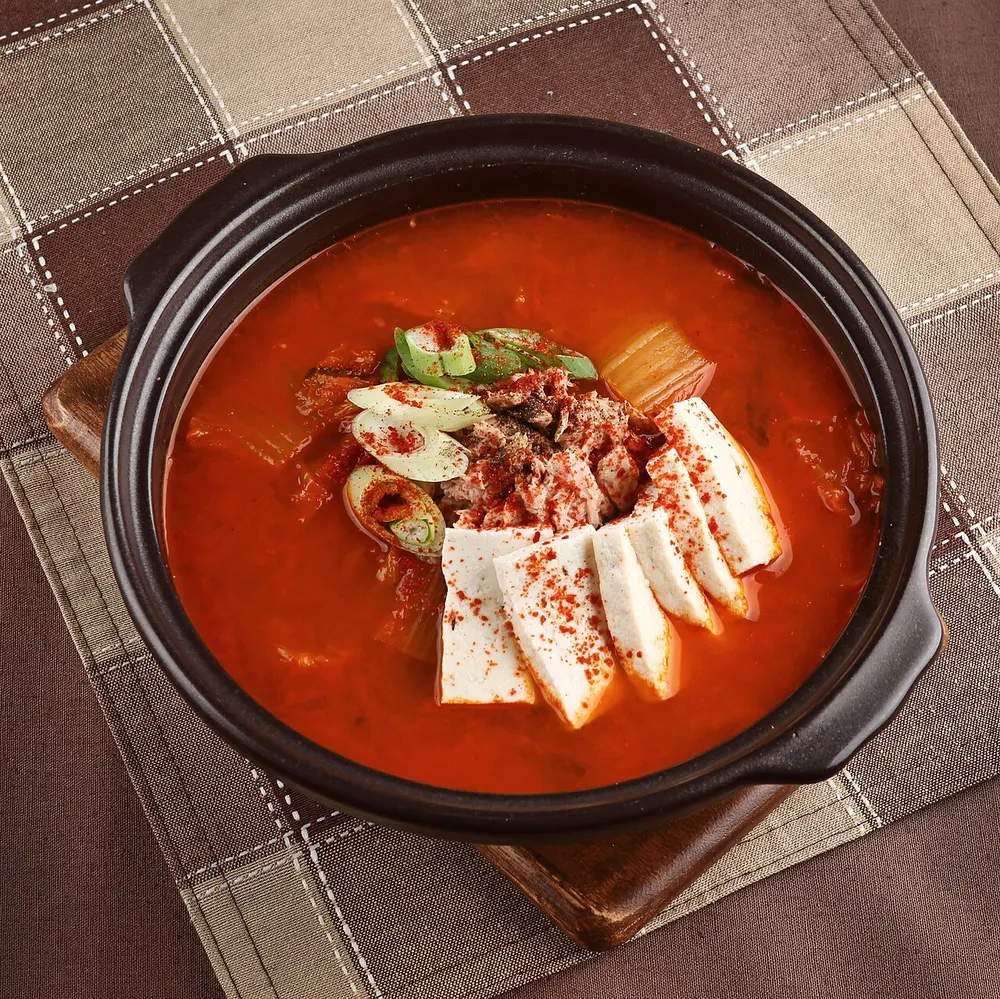
Kimchi Jjigae (Kimchi Stew)
Fonte: Tradizionale
30 min3420 kcal
Senza latticini🌶️🌶️
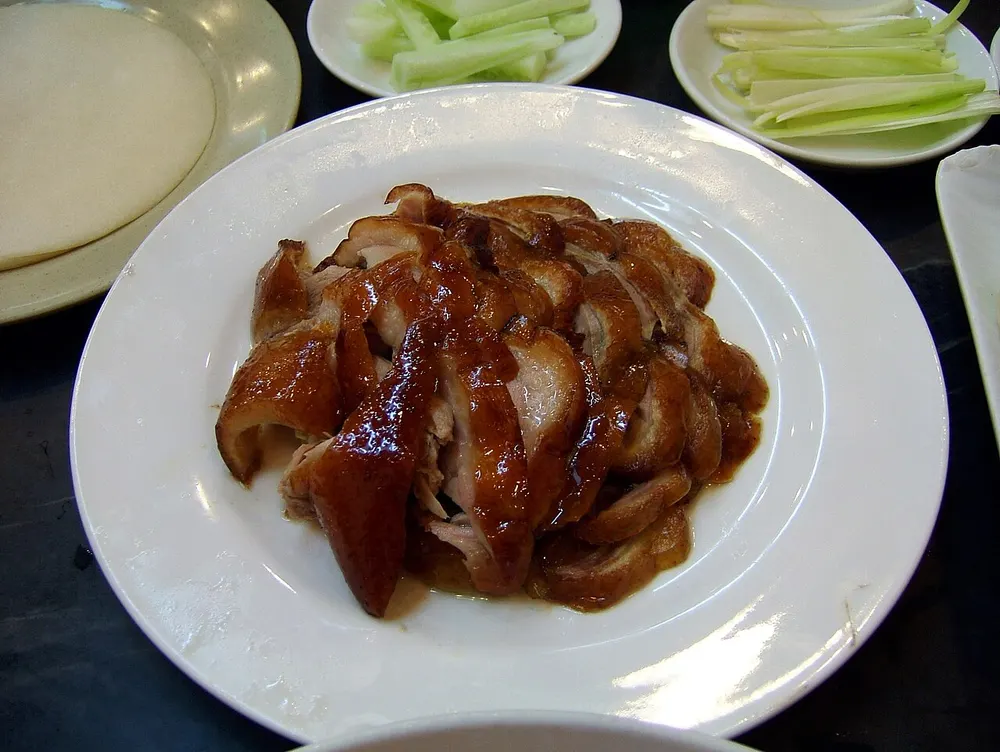
A duck scalded, lacquered with maltose and air-dried for a day, then roasted until the skin shatters — carved onto thin pancakes with scallion, cucumber and sweet bean sauce.
Fonte
Ricetta di Beijing roast-duck kitchens · 🏺 Tradizionale · An imperial-era Beijing dish; this is an honest home-oven adaptation
Beijing imperial-era dish / 北京名菜 — Ducks have been roasted in China since the Southern and Northern dynasties, and a roast-duck dish called shao yazi is recorded in a 1330 imperial kitchen manual; the Peking duck now known by that name took its full form in the later Ming, when it became a fixture of imperial court menus. Bianyifang, founded near Qianmen in 1416, was the first restaurant to specialise in it and still uses the older closed-oven method; Quanjude, founded in 1864, adopted the hung-oven technique of roasting the birds over open fruitwood fires. It is traditionally served in three stages: skin, then meat with pancakes, cucumber and sweet bean sauce, then the carcass made into soup.
Watch it being made · 3 videos
Start a day ahead. Rinse the duck, pull out any loose fat from the cavity, and pat it bone dry inside and out.
💡 There is no shortcut around the day. Everything about the crackling skin comes from drying, and no oven setting substitutes for 24 hours of air.
Rub the salt and five-spice around the inside cavity only, then stuff it with ginger, scallion and star anise and splash in the Shaoxing wine.
💡 Never salt the skin. Salt draws moisture out to the surface, which is the opposite of what you want — the skin must go into the oven parched.
Sew or skewer the cavity shut and truss the legs so the duck holds a compact shape.
Hang the duck over the sink by the neck or a hook and pour the 2 L of boiling water slowly over the skin, turning as you go.
💡 Watch the skin as the water hits it — it tightens visibly and the pores close up. That contraction separates the skin from the fat underneath, which is what lets it puff and crisp instead of sitting soggy on the meat.
Mix the maltose with the vinegar and 60 ml of hot water until it pours freely, then brush it over the whole duck in a thin, even coat.
Hang the duck in front of a fan in the fridge, or on a rack in the coldest airy place you have, for 12–24 hours, uncovered.
💡 It is ready when the skin feels like parchment or a drum — dry, taut and papery, with no tackiness left. If it still feels damp after 12 hours, keep going; this is the single step that decides whether you get crackling or leather.
Heat the oven to 200°C. Set the duck breast-up on a rack over a deep tray with 2 cm of water in the bottom.
Roast 30 minutes, then turn the duck breast-down and roast another 30.
💡 The tray of water catches the rendering fat. Without it the fat pools, smokes, and can genuinely catch fire — a duck sheds a startling amount.
Turn it breast-up again, raise the oven to 230°C, and give it a final 15–20 minutes to blister and darken.
💡 Stand at the door for these last minutes. The skin goes from mahogany to black faster than seems reasonable, and there is no recovering it.
Check the thigh with a thermometer: 74°C at the thickest part, away from the bone.
Rest the duck 10 minutes. Meanwhile steam the pancakes for 3–4 minutes and cut the scallion and cucumber into fine batons.
Carve the skin off first in wide, flat pieces and set them on their own plate.
💡 In Beijing the skin is served first and alone, sometimes just with a dip in sugar — it is treated as the finest part of the bird, and this is why the whole 24-hour process exists.
Then slice the breast and leg meat thin and arrange it beside the skin.
Let everyone build their own: a pancake, a smear of sweet bean sauce, scallion, cucumber, a piece of skin, a slice of meat, then roll and eat with your hands.
Korean
Fonte: Tradizionale
Korean
Fonte: Cucina casalinga
Korean
Fonte: Cucina casalinga
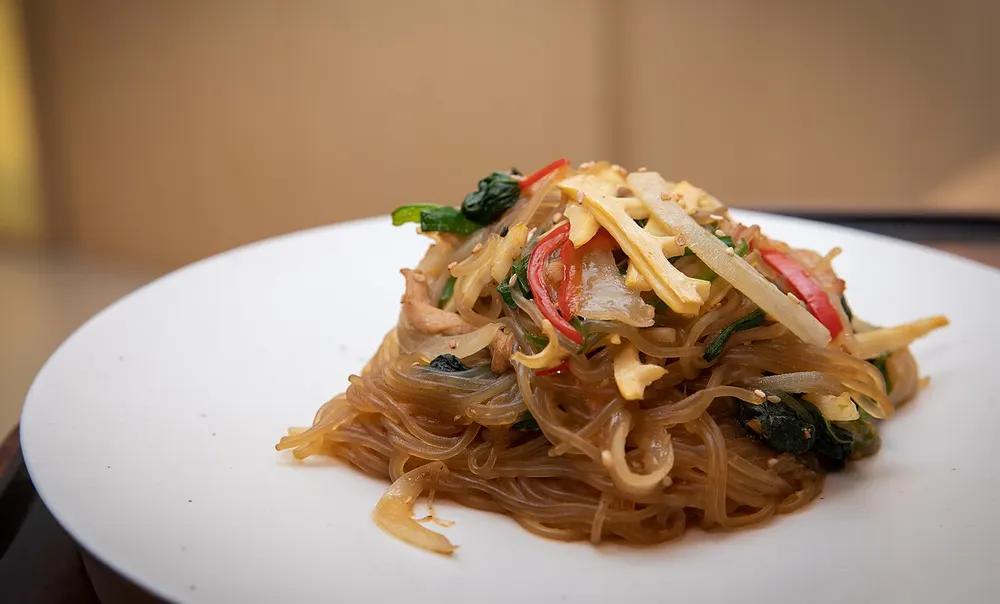
Korean
Fonte: Tradizionale
L'hai preparato? Condividi una foto in Vetrina.
Condividi la tua creazione →