Principiante
Korean
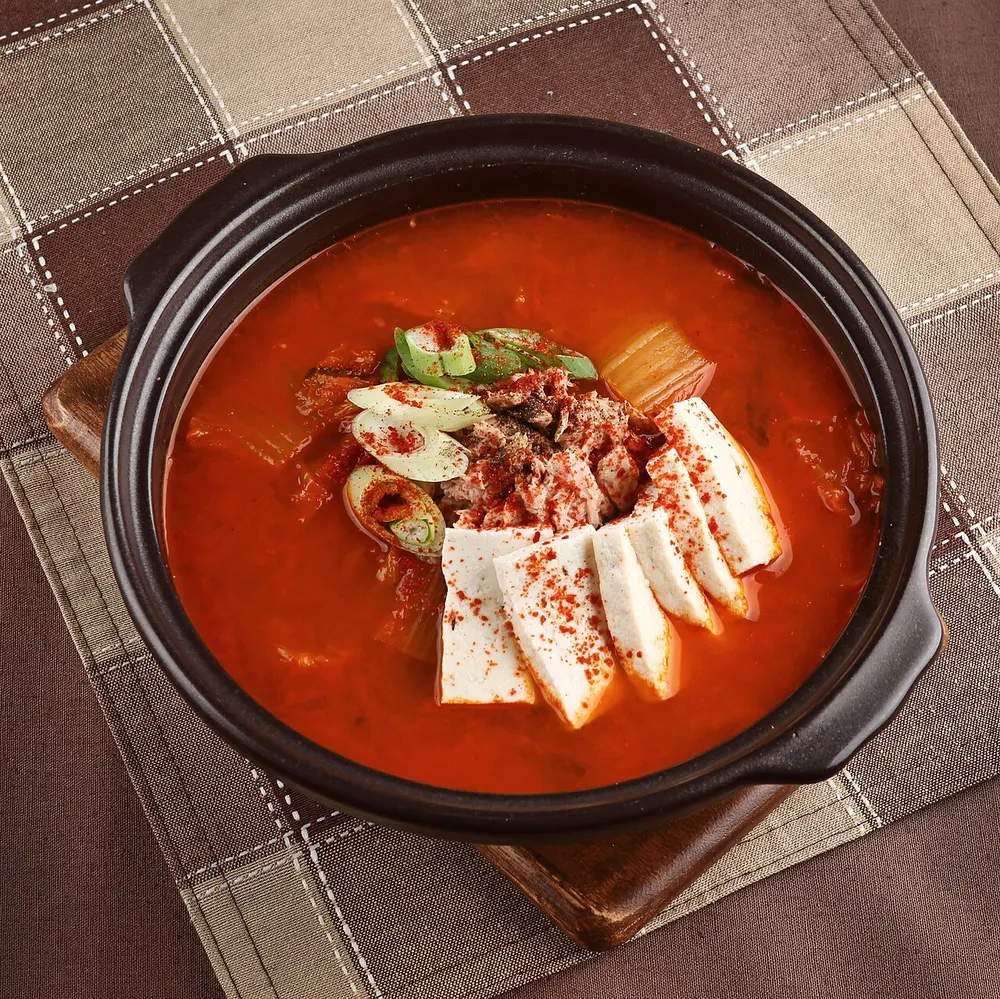
Kimchi Jjigae (Kimchi Stew)
Fonte: Tradizionale
30 min3420 kcal
Senza latticini🌶️🌶️
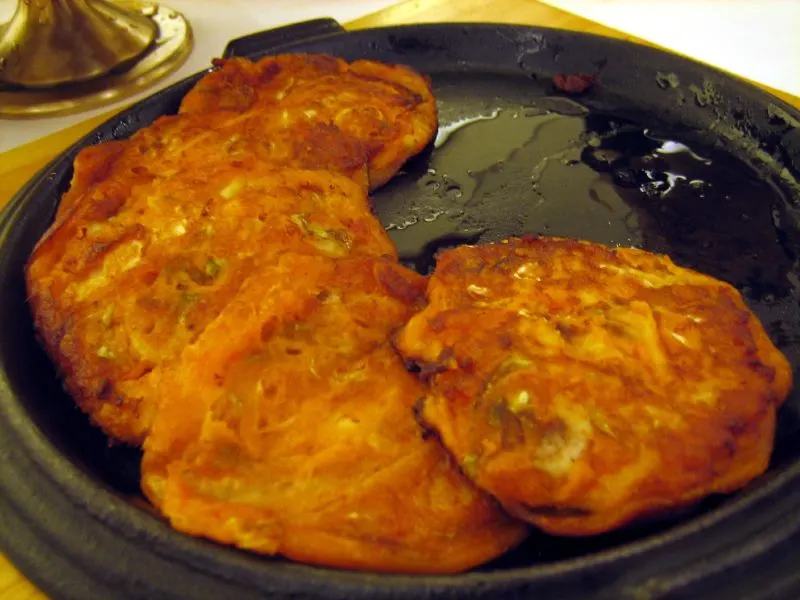
Chewy in the middle, shattering at the edge. Thin sausage goes into the batter, the pan gets a generous slick of oil, and you tilt it so the oil runs back underneath the pancake as it fries.
Fonte
Ricetta di 백종원 · 👨🍳 Chef · Paik Jong-won — chef & restaurateur, 백종원의 요리비책
I nomi di cuochi e creator compaiono solo come indicazione della fonte. More Recipes Please è indipendente e non è affiliata, approvata né sponsorizzata da loro.
Paik Jong-won (요리비책) — Published by Paik Jong-won on his own YouTube channel as '김치전을 바삭바삭하게!' (Make kimchi-jeon crispy!), which he introduces as a late-night snack that is chewy in the centre and crisp at the edge. Two things set his version apart from a standard kimchi pancake: thinly sliced sausage goes into the batter, and rather than leaving the pancake to sit, he tilts and swirls the pan throughout so the oil keeps running back underneath it. He also notes that if your kimchi is not sour enough you should add brewed vinegar.
Cuoco: 백종원
Watch it being made · 3 videos
Snip the sour kimchi small with kitchen scissors, straight into a large bowl.
💡 Scissors, not a knife and board — the same move he uses for kimchi fried rice. Less washing up, and you can cut it far smaller, so no single bite is all kimchi.
Taste a piece. If your kimchi is not properly sour yet, add a splash of brewed vinegar to the bowl.
💡 This is his own fix, stated in the recipe. Kimchi-jeon lives on sourness — fresh kimchi gives you a pancake that tastes flat and vaguely sweet, and vinegar is the shortcut back.
Slice the green onion and Cheongyang chilies into thin rounds, and slice the sausages as thinly as you can manage.
Tip the green onion, chilies and sausage into the bowl with the kimchi and mix.
💡 Sausage in kimchi-jeon is his call and it is not traditional. Sliced paper-thin it renders a little fat and crisps into the pancake, giving salty, meaty pockets — think of it the way you would bacon.
Add the fine gochugaru, the brown sugar, the buchimgaru and the water to the same bowl.
Mix until the batter is smooth and loose, with no dry pockets and no flour lumps. It should pour, not plop.
💡 Beginner warning: everything goes in one bowl, all at once — there is no separate wet-and-dry step here. But stop mixing as soon as the lumps are gone; over-working batter builds gluten and gives you a tough, bready pancake instead of a crisp one.
Heat a frying pan over medium-high, then pour in a generous amount of cooking oil — enough to move and pool when you tilt the pan.
Ladle in the batter and spread it out THIN with the back of the ladle.
💡 Thin is the entire point of the dish. A thick pancake steams itself from the inside and goes soggy; a thin one gives you the chewy centre and shattering edge his title promises.
As the batter starts to set, tilt and swirl the pan so the oil runs back in underneath the pancake.
💡 This is his signature move and the reason this version is crisp. The pancake drinks the oil at the rim first and the middle sits dry on the metal; swirling keeps feeding oil back under the centre so the whole thing fries rather than half-frying and half-baking.
Fry until the top edge of the rim starts to look cooked and set — the wet gloss goes matte and the underside is deep golden when you lift a corner.
Flip it, then keep swirling the pan on this side too so the oil works its way under again.
When it is cooked through, flip it once more and give it a final blast on the first side, then serve it straight out of the pan while the edges are still audibly crisp.
💡 That third flip is in his method, not padding. The last short blast on the already-cooked side drives off the steam it picked up while face-down and re-crisps the crust.
Korean
Fonte: Tradizionale
Korean
Fonte: Cucina casalinga
Korean
Fonte: Cucina casalinga
Korean
Fonte: Tradizionale
L'hai preparato? Condividi una foto in Vetrina.
Condividi la tua creazione →