Principiante
Korean
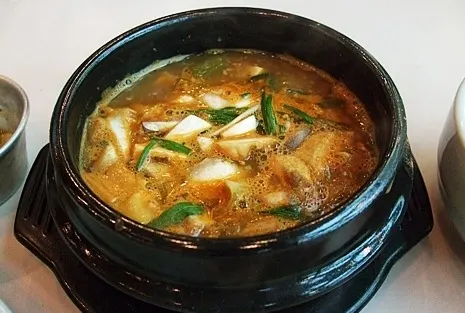
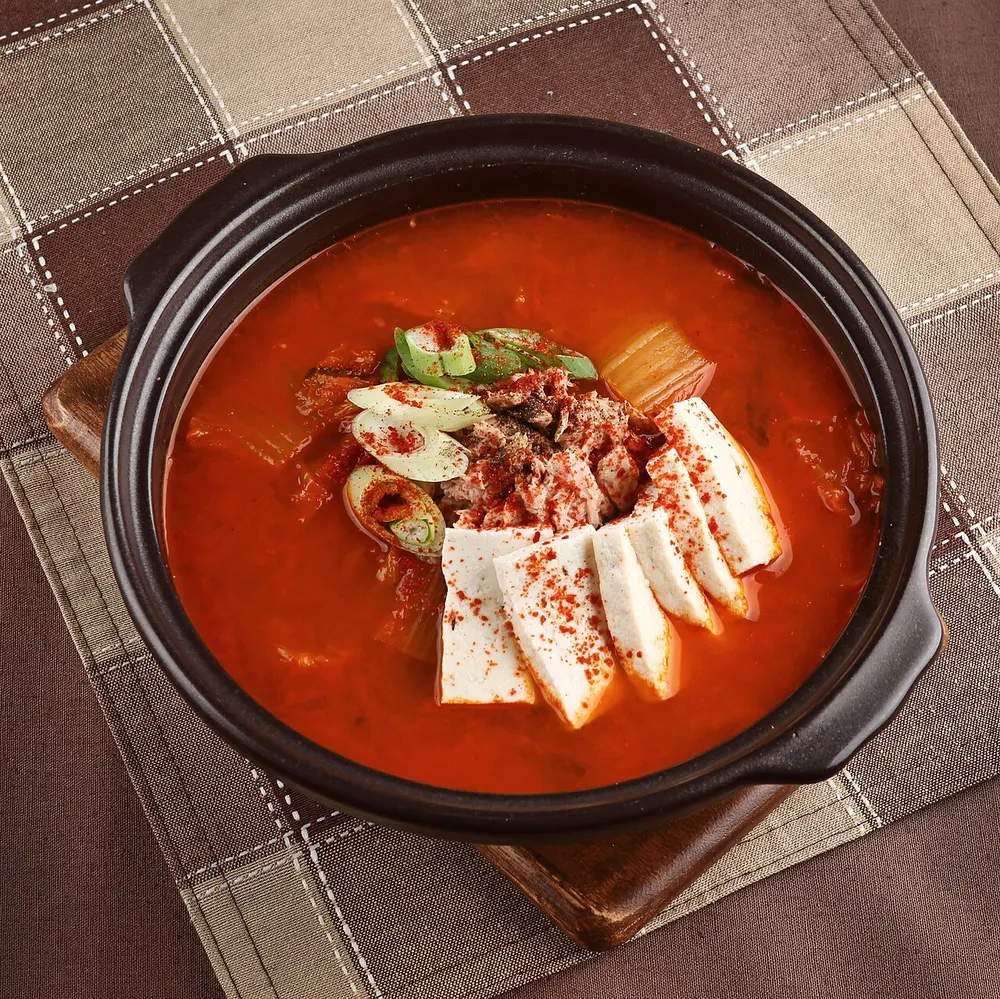
Kimchi Jjigae (Kimchi Stew)
Fonte: Tradizionale
30 min3420 kcal
Senza latticini🌶️🌶️
The stew Paik calls easier than kimchi-jjigae: ten whole anchovies torn up and boiled straight into the pot, a generous 60 g of doenjang, and tofu slipped in for the last minute only.
Fonte
Ricetta di 백종원 · 👨🍳 Chef · Paik Jong-won — chef & restaurateur, 백종원의 요리비책
I nomi di cuochi e creator compaiono solo come indicazione della fonte. More Recipes Please è indipendente e non è affiliata, approvata né sponsorizzata da loro.
Paik Jong-won (요리비책) — Published by Paik Jong-won on his own YouTube channel, where he introduces doenjang-jjigae as easier to cook than kimchi-jjigae and as the basic of Korean home cooking. His version takes the short route to stock — trimmed dried anchovies are boiled straight in the pot with the onion and left there — and the tofu goes in only for the final minute.
Cuoco: 백종원
Watch it being made
Cut the Korean zucchini, onion and tofu into bite-size pieces and set the tofu aside on its own — it goes in last.
Tear the oyster mushrooms into strips with your fingers instead of cutting them.
💡 Torn edges are ragged, so they grip the broth and keep a springy bite. A knife gives you slick, flat faces that taste bland.
Cut the Cheongyang chilies, red chili and green onion into rounds about 1 cm thick.
Prepare the anchovies: pinch off the heads and pull out the dark guts, then tear each body into about three pieces.
💡 The guts are the bitter part. Skipping this two-minute job is the most common reason a home doenjang-jjigae tastes faintly bitter and fishy.
Put the trimmed anchovies, the water and the onion into a pot and bring to a boil over high heat.
Boil 5–7 minutes, until the water turns pale gold and smells of the sea rather than of raw fish.
💡 He leaves the anchovies in for the whole cook rather than straining them out. Left in, they keep giving; at 20 g across 750 ml they will not overpower the doenjang.
Once the stock is boiling, add the oyster mushrooms, the zucchini, the minced garlic and the doenjang.
Press the doenjang against the side of the pot with your spoon or ladle until it dissolves completely and no paste lumps remain floating.
💡 Undissolved lumps mean some mouthfuls are salt-bombs and the rest is watery. Take the extra fifteen seconds.
Let it come back to a rolling boil over medium-high heat and cook 5–6 minutes, until the zucchini turns from opaque to slightly translucent and yields when pressed.
When the doenjang broth is boiling again, add the green onion, the Cheongyang chilies and the red chili.
Slide the tofu in gently and boil for just about 1 minute more, only long enough to heat it through.
💡 Tofu is already cooked — you are only warming it. Boil it hard and it turns spongy and full of holes, and it will break apart if you stir.
Taste, and only add salt if it genuinely needs it. Serve bubbling hot with rice.
💡 Doenjang is already salty and every brand differs — this is why he gives an exact 60 g rather than 'to taste'.
Korean
Fonte: Tradizionale
Korean
Fonte: Cucina casalinga
Korean
Fonte: Cucina casalinga
Korean
Fonte: Tradizionale
L'hai preparato? Condividi una foto in Vetrina.
Condividi la tua creazione →