Principiante
Korean
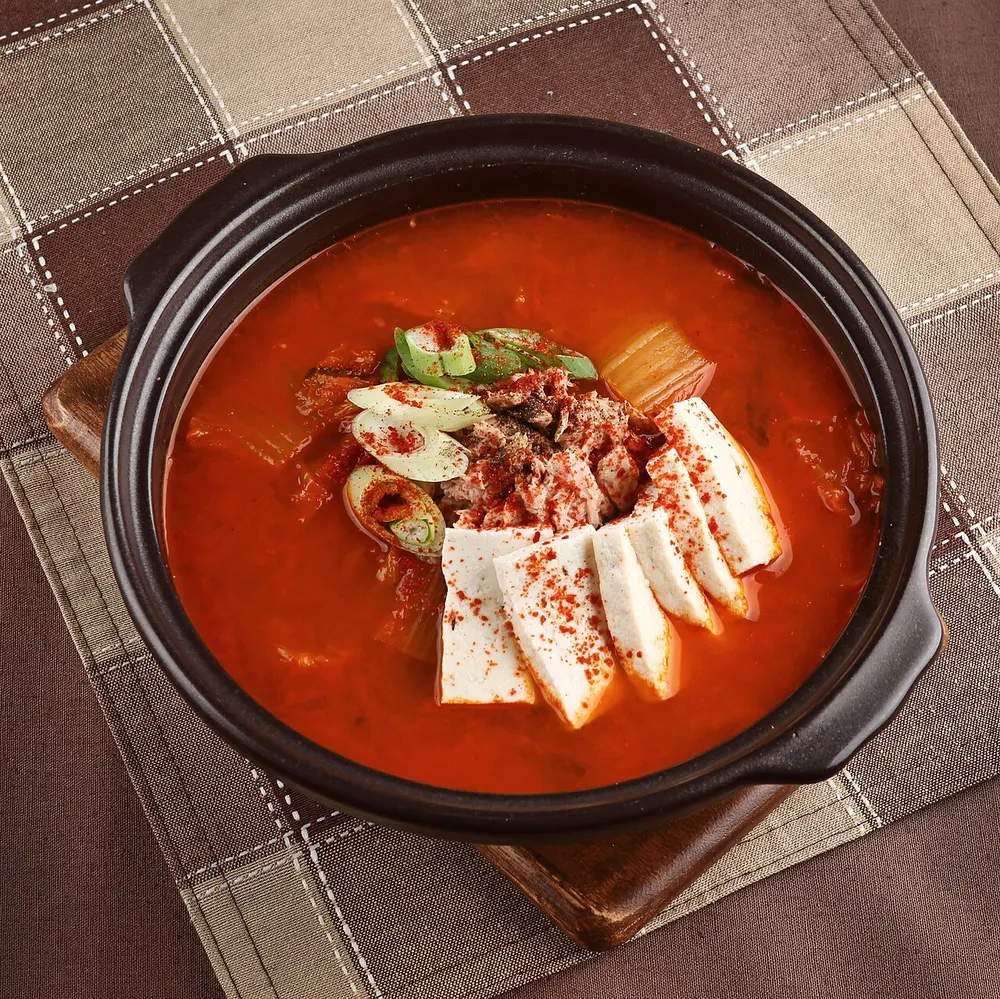
Kimchi Jjigae (Kimchi Stew)
Fonte: Tradizionale
30 min3420 kcal
Senza latticini🌶️🌶️
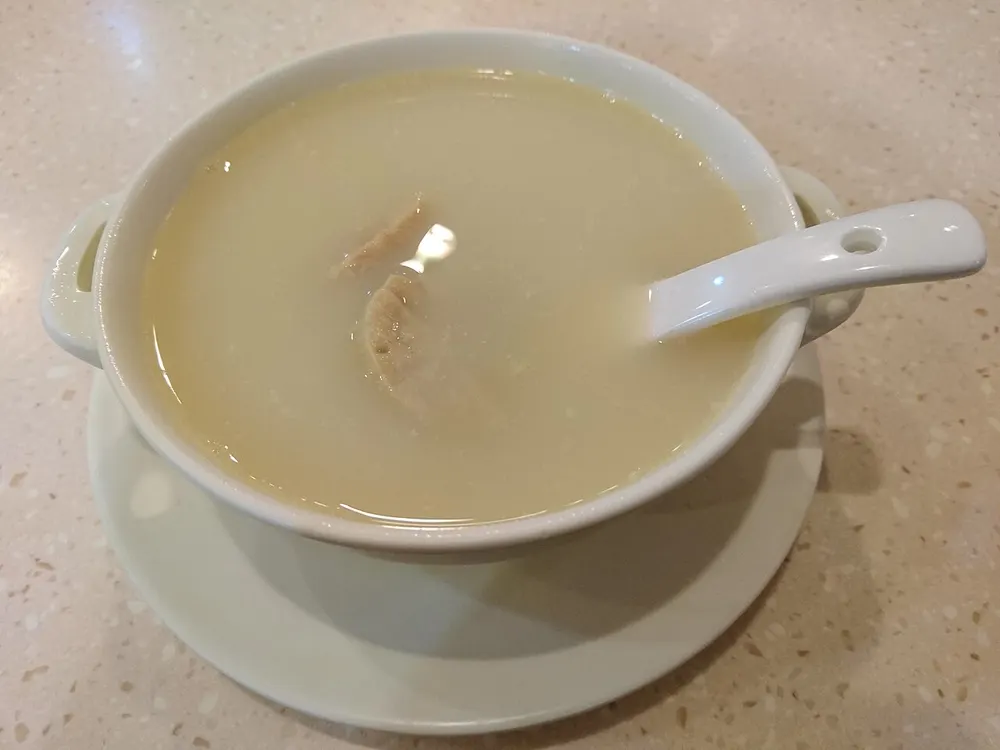
Pork bones, carrot, daikon and dried apricot kernels simmered for three unhurried hours into a clear, sweet, restorative broth — the soup a Cantonese household drinks before the meal, not after.
Fonte
Ricetta di Cantonese home kitchens · 🏠 Cucina casalinga · A daily habit of Cantonese households — no single author, and no fixed recipe
Cantonese home-style / 廣東家常湯水 — Lao huo tang — also called bou tong, 'pot-boiled soup' — is one of the defining features of Cantonese cooking and a daily habit rather than an occasion dish. It is usually explained by the climate of Lingnan, the hot and humid south, where households drink long-boiled restorative soups as a matter of routine. Vegetables, fruit, meat and Chinese herbs are simmered for several hours in a clay pot, steel pot, pressure cooker or electric crock, and the combination is chosen for the season and for whoever is drinking it.
Watch it being made · 3 videos
Put the pork bones in a pot of cold water with a slice of ginger, bring to a boil, and let it bubble 3–4 minutes.
Pour it all away and rinse each bone under warm running water, rubbing off any clinging brown scum.
💡 This blanch is what makes the difference between a clear soup and a cloudy one. Cantonese slow-boiled soup is judged on clarity, and every speck of scum you leave now will be suspended in the bowl three hours later.
Rinse the apricot kernels, honey dates and longan, and cut the carrot and daikon into large chunks.
Put everything into a big pot — bones, vegetables, kernels, dates, ginger — and pour in the 2.5 L of water.
💡 Everything starts together and nothing is added later. This is the opposite of a European stock, where you stage the ingredients — here the long, even boil is meant to draw everything out at once.
Bring it to a full boil over high heat, then immediately drop it to the lowest simmer your stove will hold.
Skim the surface once more as it comes up, then put the lid on ajar and leave it for 3 hours.
💡 Lid ajar, never sealed. A tight lid raises the pressure and agitates the pot into a rolling boil that emulsifies the fat and turns the soup milky white — which is delicious, but it is a different soup and not what you are making.
Check on it once an hour. It should never do more than send up a lazy bubble every few seconds.
At three hours the broth should be reduced by about a third to a half, and coloured pale amber and slightly sweet-smelling.
Taste it, unsalted, first. It should already be sweet from the carrot, daikon and dates before any salt goes anywhere near it.
💡 If it tastes of nothing, the fix is more time, not more salt. Cantonese cooks describe good lao huo tang as 出味 — 'the flavour has come out' — and that is a function of hours, not seasoning.
Lift out the bones and the spent vegetables with a slotted spoon and set them on a plate.
Salt the broth lightly, only now, and ladle it into bowls to drink.
💡 Salting early would have drawn moisture out of the meat and vegetables over three hours and made the broth taste harsher and flatter. Season at the end, in the bowl, and season lightly.
Serve the drained solids on the side with a dish of soy sauce for dipping — this is the 湯渣, and it is eaten with the meal.
💡 Nothing is thrown away. The Cantonese eat the soup solids as a side dish with soy sauce, and treating three hours of boiled pork and carrot as rubbish would strike a Cantonese household as genuinely odd.
Korean
Fonte: Tradizionale
Korean
Fonte: Cucina casalinga
Korean
Fonte: Cucina casalinga
Korean
Fonte: Tradizionale
L'hai preparato? Condividi una foto in Vetrina.
Condividi la tua creazione →