Principiante
Korean
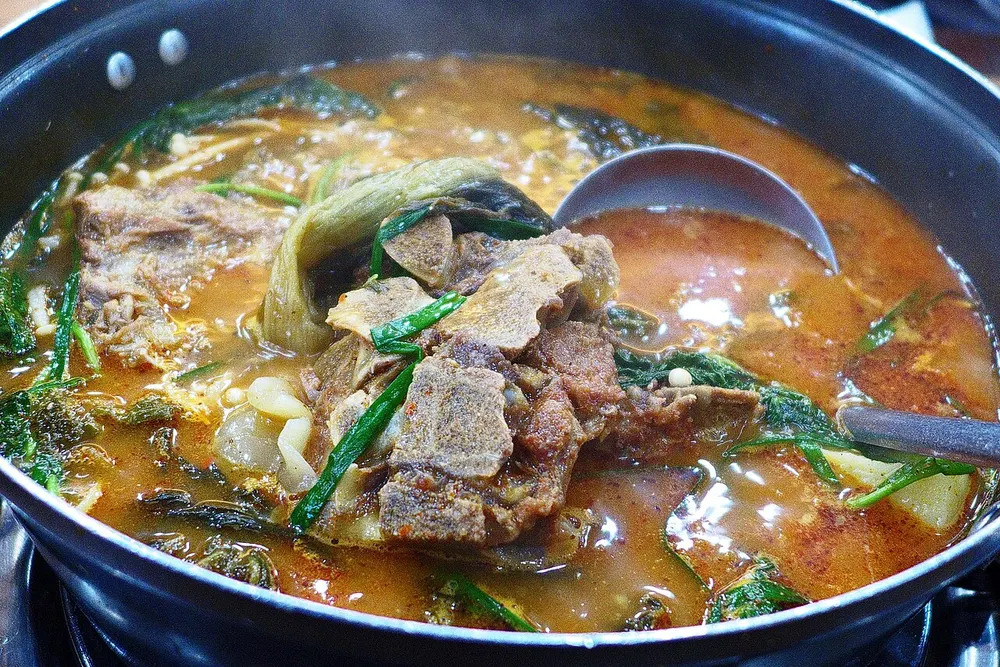
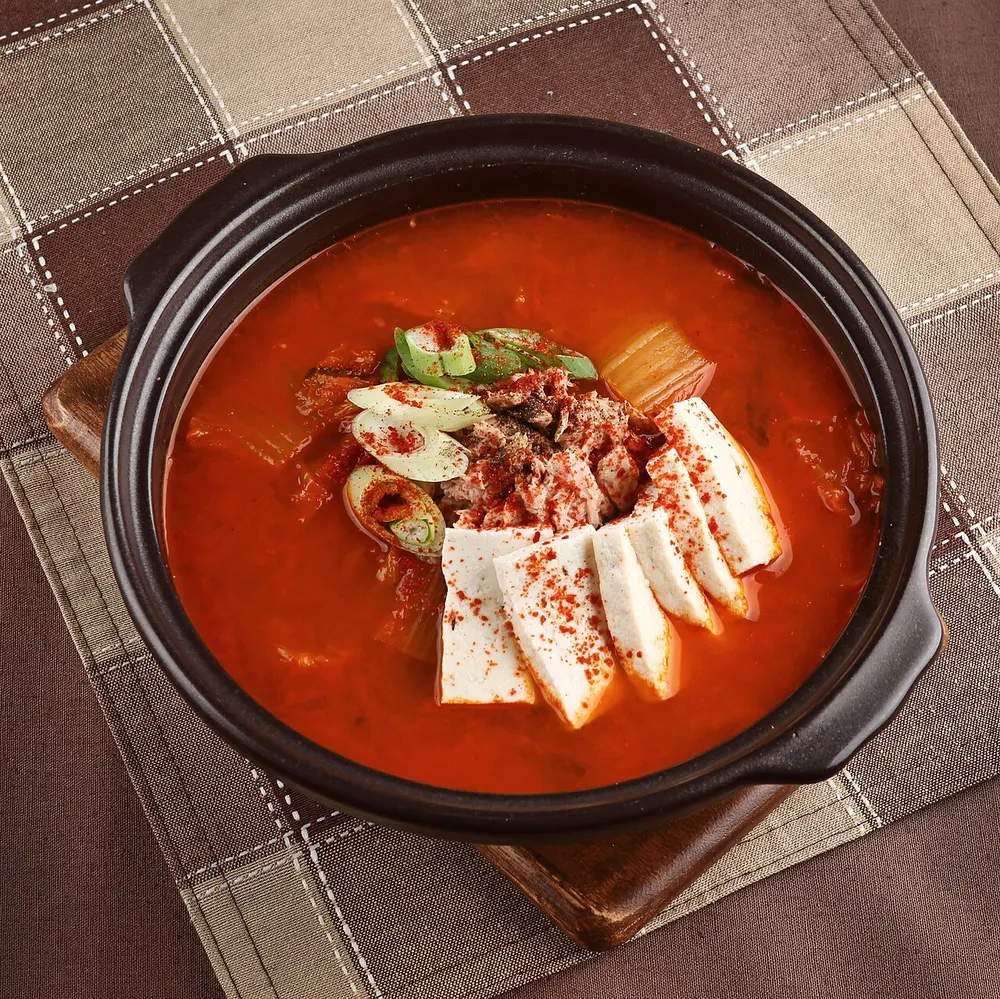
Kimchi Jjigae (Kimchi Stew)
Fonte: Tradizionale
30 min3420 kcal
Senza latticini🌶️🌶️
The gamja-tang her staff went wild for, at about ₩15,000 for ten servings. The bones are drawn in sugar water, blanched, then boiled naked with aromatics — and the siraegi is dressed in the sauce in a separate bowl before it ever meets the pot.
Fonte
Ricetta di 김진순 · 📱 Influencer · Kim Jin-sun — Korean cooking YouTuber, '김진순의 점심시간'; former side-dish shop (반찬가게) owner
I nomi di cuochi e creator compaiono solo come indicazione della fonte. More Recipes Please è indipendente e non è affiliata, approvata né sponsorizzata da loro.
Kim Jin-sun's Lunchtime (김진순의 점심시간) — Published by Kim Jin-sun on her own YouTube channel 김진순의 점심시간 as '직원들이 열광했던 감자탕 레시피, 1.5만원으로 10번 먹을 수 있어요‼️', with the full ingredient list and numbered method in the video description. Her 3 kg batch is used here — the 1.5 kg batch in the same description has an internal inconsistency in the green onion count, which the tips flag. What marks her version out is the sugar-water blood draw followed by a discarded blanch, and dressing the siraegi in the sauce in a separate bowl before it goes into the pot. She cooks it in a low-pressure pot, so her 20-minute timing runs from when the weight starts turning.
Cuoco: 김진순
Watch it being made · 2 videos
Rinse the pork back bones two or three times under cold water, rubbing off every trace of bone dust.
💡 Bone dust from the butcher's saw is what makes a home gamja-tang taste faintly gritty and grey. Two or three rinses, and use your fingers.
Dissolve 4 tbsp of sugar in 4 L of cold water, submerge the bones, and leave them 30 minutes to draw the blood out.
Meanwhile, bring a second pot with 4 L of water to a rolling boil.
Give the soaked bones one more rinse in cold water, then drop them into the boiling water and blanch 5–10 minutes, skimming off the grey scum as it rises.
Tip the blanching water away and rinse the par-boiled bones under cold water again.
💡 The blanching water is pure scum and fat — everything you were trying to remove is now dissolved in it. Keeping it to 'save flavour' is exactly how you get a murky, porky stew.
Put the bones into a clean pot with a fresh 4 L of water, add 2 whole green onion stalks and the whole onion, put the lid on and boil hard for 30 minutes.
While that boils, trim the siraegi and leave it soaking in water. Peel the potatoes and cut the remaining 3 green onion stalks.
💡 Siraegi needs the outer skin stripped off each stem if it is at all tough — that papery layer never softens, and it is the reason people think they dislike siraegi.
Mix the sauce in a bowl: gochujang, doenjang, gochugaru, fish sauce, minced garlic, minced ginger, beef dasida and black pepper.
After 30 minutes, turn the heat off for a moment and fish out the boiled onion and the 2 green onion stalks. Discard them.
Drop the potatoes into the pot.
In a separate bowl, toss the drained siraegi with the sauce until every strand is coated, then add it to the pot along with the 3 remaining green onion stalks.
💡 Dressing the siraegi in a bowl first, rather than stirring the paste into the broth, is the move worth stealing. Siraegi is fibrous and bland; rubbed in the sauce it carries the seasoning into the middle of the pot instead of letting it sink to the bottom and scorch.
Lid on, high heat. Once the pressure weight starts to turn, boil 20 minutes.
💡 She cooks this in a low-pressure pot, which is why the timing starts from the weight turning. In an ordinary lidded pot, count 20 minutes from a hard rolling boil and expect to add time at step 14 — unlike her galbijjim video, this description gives no stated conversion for a normal pot.
Turn the heat off and check the potatoes — a skewer should slide in with only slight resistance.
Now taste the broth and adjust with salt.
💡 Salt at the END, and only now. Fish sauce, doenjang and dasida have all brought their own salt and none of them is predictable — she puts this step here on purpose, after everything has reduced.
Lid back on and cook a final 10–15 minutes on medium-low. Serve with the perilla powder to stir in at the table.
Korean
Fonte: Tradizionale
Korean
Fonte: Cucina casalinga
Korean
Fonte: Cucina casalinga
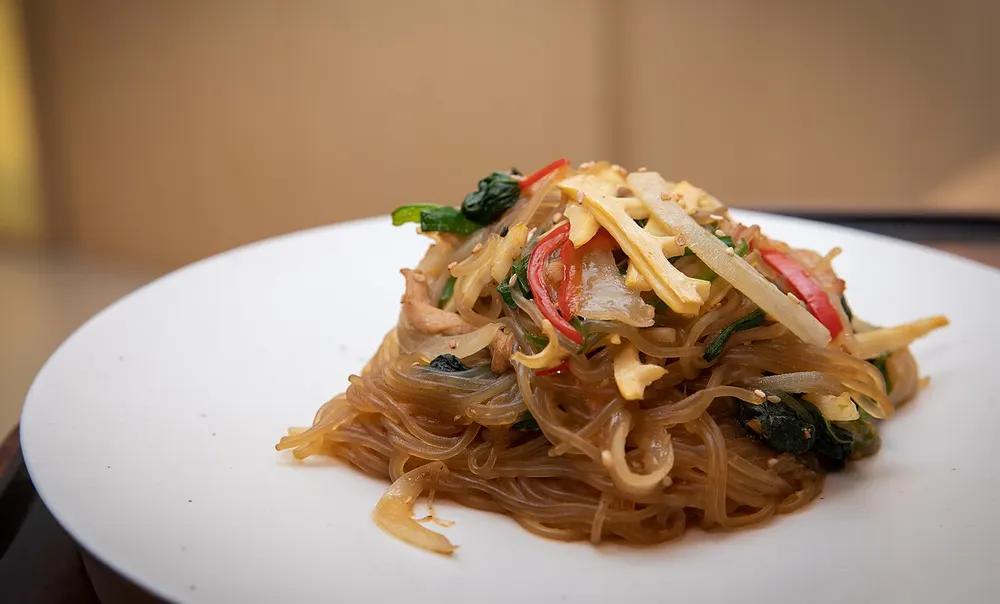
Korean
Fonte: Tradizionale
L'hai preparato? Condividi una foto in Vetrina.
Condividi la tua creazione →