Principiante
Korean
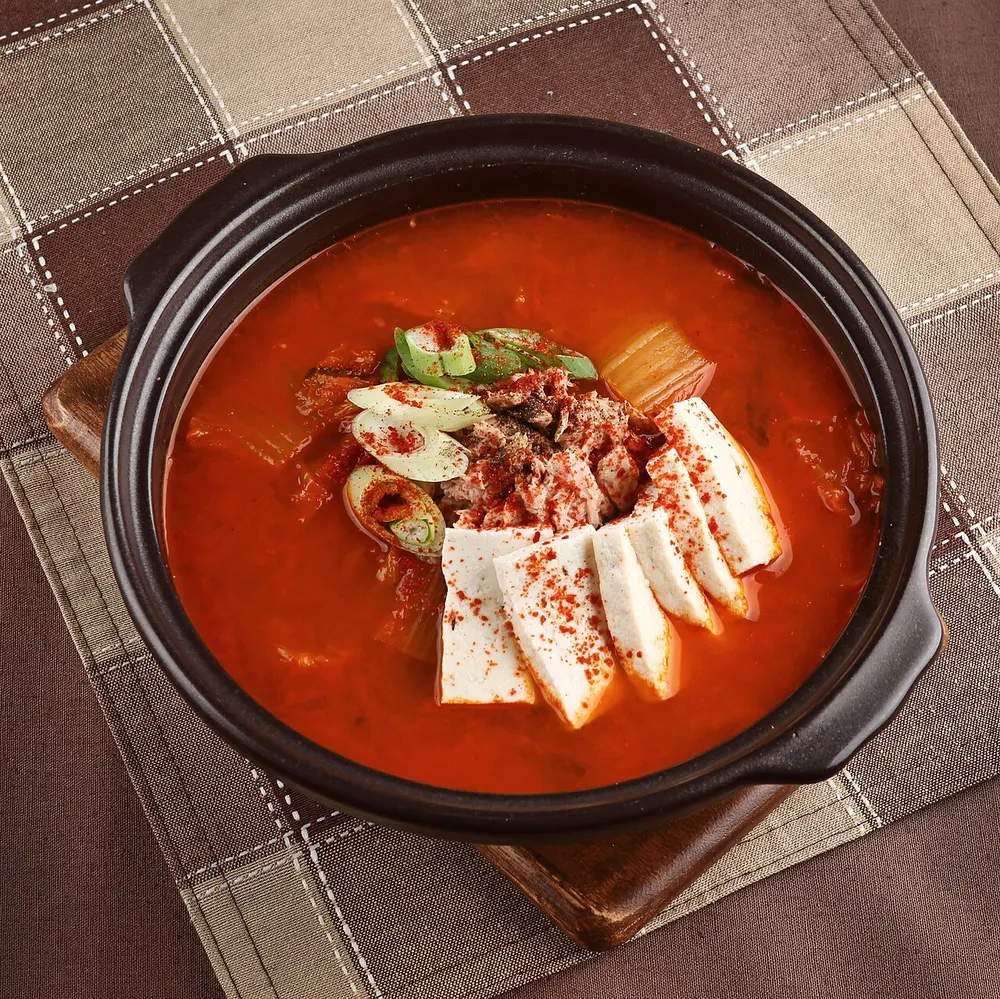
Kimchi Jjigae (Kimchi Stew)
Fonte: Tradizionale
30 min3420 kcal
Senza latticini🌶️🌶️
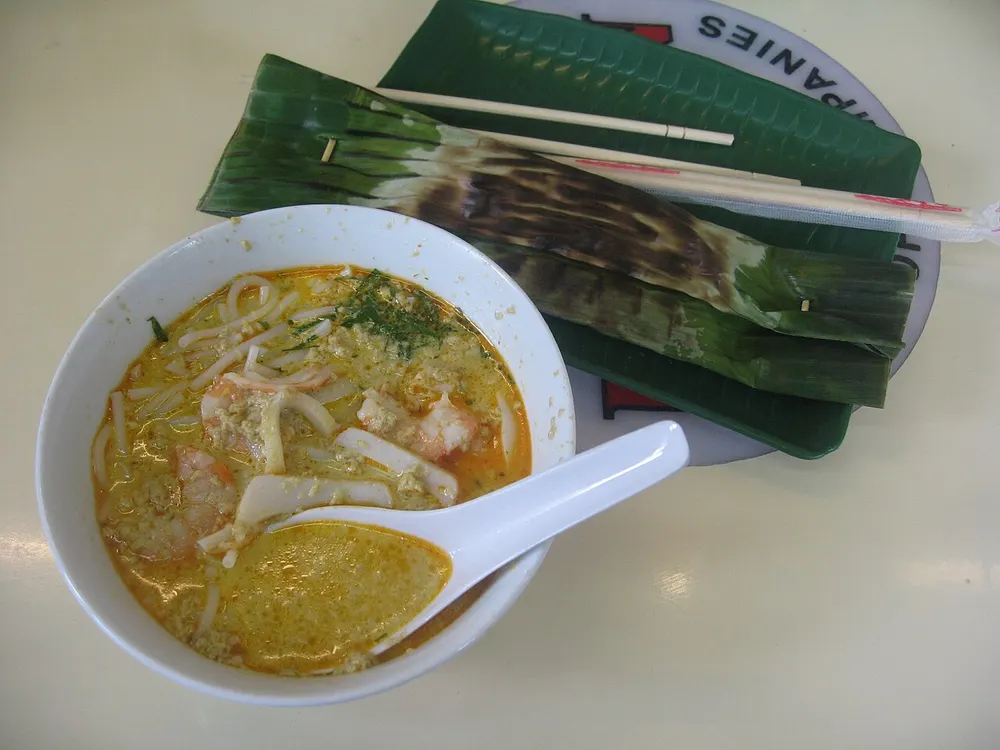
The Singapore laksa whose noodles are cut into short lengths so the whole bowl can be eaten with a spoon alone — thick rice noodles in an orange coconut-and-dried-prawn gravy, with cockles, prawns and a fistful of laksa leaf.
Fonte
Ricetta di Singapore Peranakan (Nyonya) kitchens · 🏺 Tradizionale · Peranakan home cooking in Singapore — Chinese settler households remade with Malay spice, around Katong and Joo Chiat
Singapore Peranakan dish · Katong, Marine Parade — An ownerless dish, so no cook is credited. The canonical reference confirms the defining feature — 'the entire dish can be eaten with a spoon alone, without chopsticks or a fork, as the noodles are normally cut up into smaller pieces' — and that Katong is a residential precinct in Marine Parade, central Singapore. It describes the orange-yellow spicy stock flavoured with coconut milk and dried shrimp, and notes that 'laksa' may derive from a Chinese term meaning 'spicy sand', after the gritty texture the ground dried shrimp give. It also records that brothers Ng Juat Swee (known as 'Janggut') and Ng Chwee Seng hawked Peranakan-style laksa from the 1940s and moved into a coffee shop at 49 East Coast Road in 1950; that is recorded as the local origin story and is stated here as such, not as a claim of sole authorship — several Katong stalls dispute which is the original. Quantities are this book's own.
Watch it being made · 3 videos
Fry the prawn shells and heads in 2 tablespoons of oil until they turn deep orange and smell sweet, about 4 minutes. Add 1.2 litres of water, simmer 25 minutes, then strain and press the shells hard.
💡 This stock is the difference between a decent laksa and a memorable one, and it costs you nothing but the shells you were going to bin.
Blend the soaked chillies, shallots, garlic, lemongrass, galangal, turmeric, candlenuts, belacan and drained dried shrimp into a fine paste.
💡 Blend it finer than feels necessary. A coarse rempah leaves fibrous threads of lemongrass in a gravy that is meant to be spooned.
Fry the paste in the remaining oil over medium-low heat for 20 minutes, until it darkens to brick red and a pool of red oil separates at the edge of the pan.
💡 That separated oil is the finish line. Until you see it, the rempah still tastes raw underneath the coconut milk.
Pour in the prawn stock, simmer 10 minutes, then add the coconut milk, salt and sugar. Keep it just below a simmer for 5 minutes and do not let it boil.
💡 Boiled coconut milk splits into oil and curd. Once it is in, the pot never gets a rolling boil again.
Poach the prawns and fishcake in the gravy for 2 minutes and lift them out. Blanch the bean sprouts 20 seconds and the cockles 20 seconds separately.
Cook the noodles, drain, and cut them into 4 cm lengths with scissors. Divide between four bowls, ladle the gravy over, and top with prawns, fishcake, cockles, sprouts, half an egg, a heap of shredded laksa leaf and a teaspoon of sambal.
💡 Hand out spoons and no chopsticks. That is not a gimmick — it is the whole identity of this particular laksa.
Korean
Fonte: Tradizionale
Korean
Fonte: Cucina casalinga
Korean
Fonte: Cucina casalinga
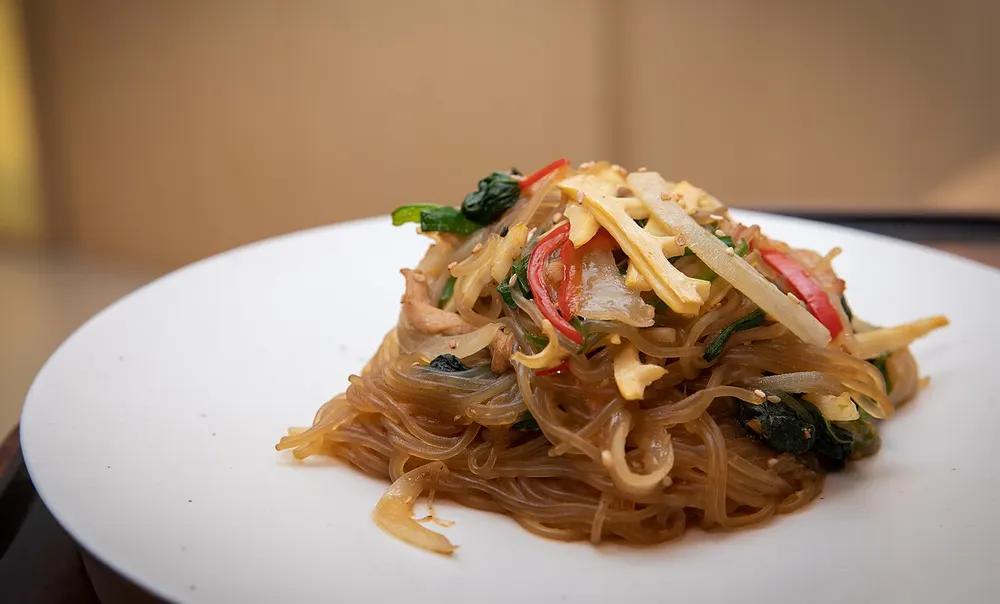
Korean
Fonte: Tradizionale
L'hai preparato? Condividi una foto in Vetrina.
Condividi la tua creazione →