Principiante
Korean
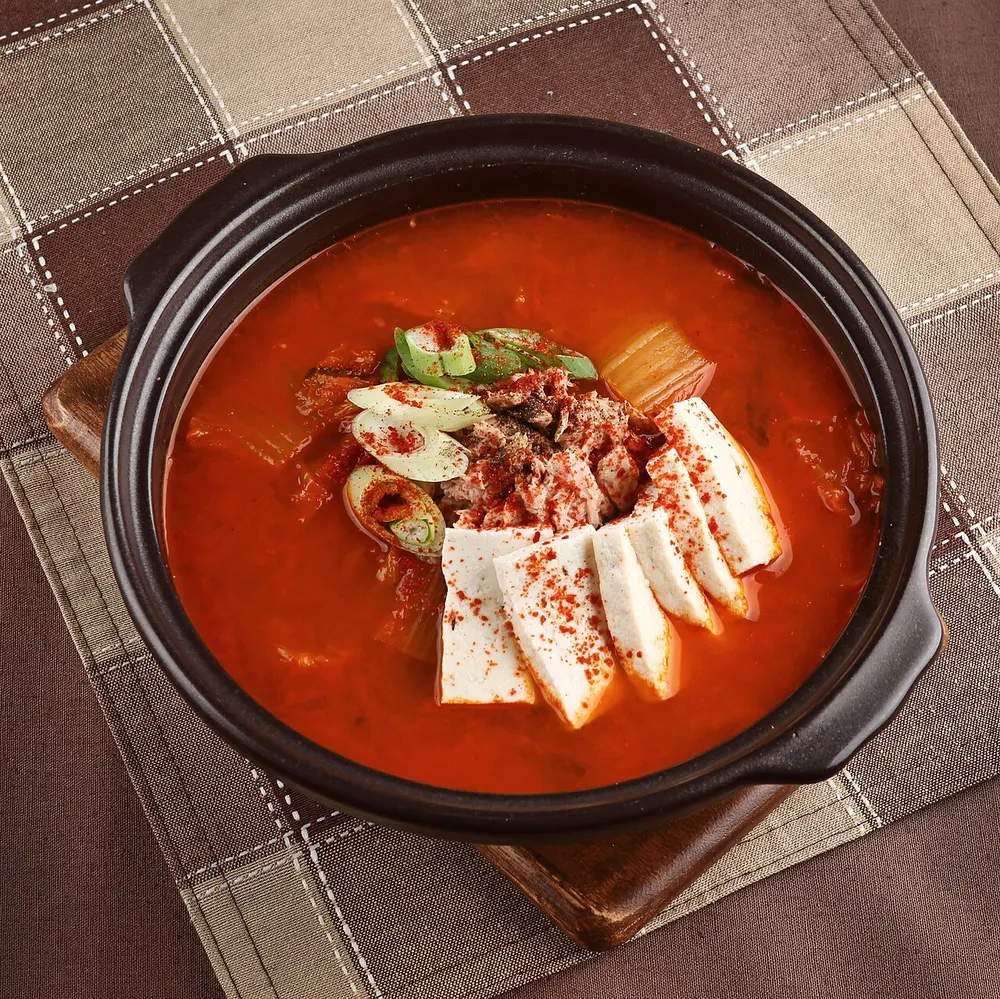
Kimchi Jjigae (Kimchi Stew)
Fonte: Tradizionale
30 min3420 kcal
Senza latticini🌶️🌶️
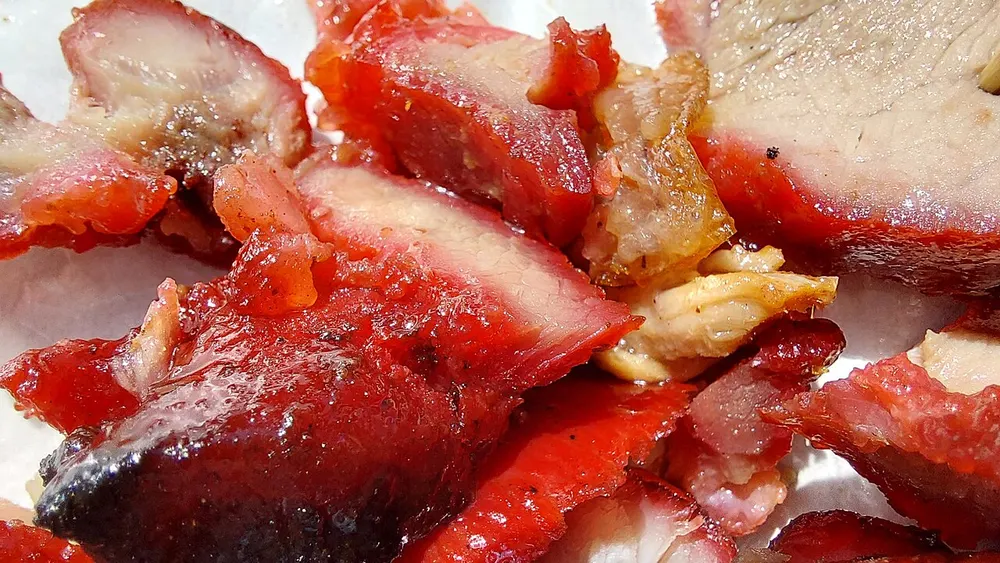
Pork shoulder steeped overnight in hoisin, five-spice and rose wine, then roasted and lacquered with honey until the edges char black and the inside stays juicy.
Fonte
Ricetta di Cantonese siu mei kitchens · 🏺 Tradizionale · From Guangdong's roast-meat (siu mei) tradition — no single author
Cantonese roast meats / 廣東燒味 — Char siu literally means 'fork roasted', after the long forks or skewers the strips were traditionally hung on over the fire. It comes from Guangdong and is a pillar of the siu mei roast-meat counter, usually made from boneless pork collar and marinated with hoisin, soy, Chinese wine and five-spice before being glazed with maltose or honey. The signature red once came from red fermented bean curd and red yeast rice; commercial shops now mostly use red food colouring.
Watch it being made · 3 videos
Cut the pork shoulder along the grain into long strips about 5 cm thick, so each piece has fat running through it.
💡 Long strips, not a whole roast. The strip shape gives you the ratio char siu is built on — a large charred surface against a small interior — which a single big joint cannot do.
Whisk together the hoisin, both soys, rose wine, 30 g of the honey, sugar, five-spice, garlic, white pepper and the mashed fermented bean curd if using.
Reserve 3 tablespoons of the marinade in a separate covered container and refrigerate it — that is your basting sauce.
💡 Take this out before the raw pork goes in. Basting with marinade that has held raw meat is a genuine food-safety problem, and the fix costs nothing if you do it now.
Put the pork in the remaining marinade, rub it into every surface, and refrigerate at least 4 hours — overnight is far better.
💡 Overnight is not fussiness. Salt and sugar need hours to travel into a 5 cm strip; four hours flavours the surface, twelve flavours the middle.
Take the pork out 30 minutes before roasting and let it come to room temperature. Heat the oven to 220°C.
Line a deep tray with foil and pour in a cup of water, then set a rack over it and lay the pork strips on the rack, not touching each other.
💡 The water is doing two jobs: it catches the sugary drips before they carbonise into smoke, and it keeps the oven humid so the pork does not dry out. It also saves you scrubbing the tray.
Roast 15 minutes, then take the tray out and turn every strip over.
Brush with the reserved marinade and roast another 15 minutes.
Turn and baste again, then roast a final 10–15 minutes, until the edges are properly blackened in patches.
💡 Those black patches are the dish, not a mistake. Char siu literally means 'fork roasted', and the burnt sugar at the edges is what people reach for first — a uniformly brown piece has been underdone.
Check with a thermometer if you have one: 63–68°C in the thickest part. Otherwise cut into the fattest strip and look for juice running clear with no pink at the centre.
Thin the remaining 30 g of honey with a tablespoon of hot water and brush it over the hot pork so it goes glassy.
💡 Glaze at the end, off the heat. Honey brushed on early simply burns black long before the pork is cooked, and burnt honey is bitter, not caramel.
Rest the pork 10 minutes before slicing — then cut across the grain into 5 mm slices and serve over rice with the tray juices.
Korean
Fonte: Tradizionale
Korean
Fonte: Cucina casalinga
Korean
Fonte: Cucina casalinga
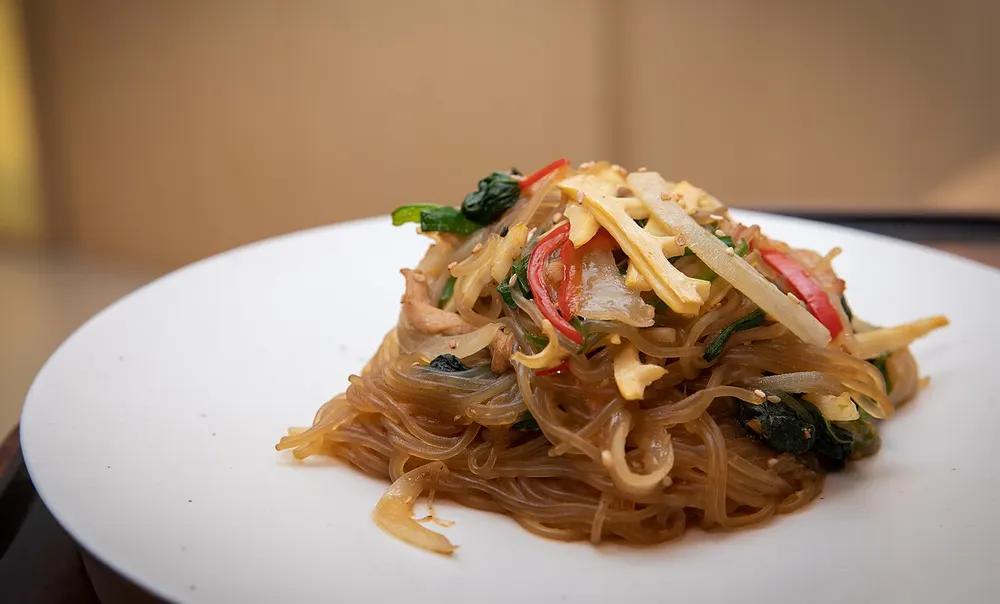
Korean
Fonte: Tradizionale
L'hai preparato? Condividi una foto in Vetrina.
Condividi la tua creazione →