Principiante
Korean
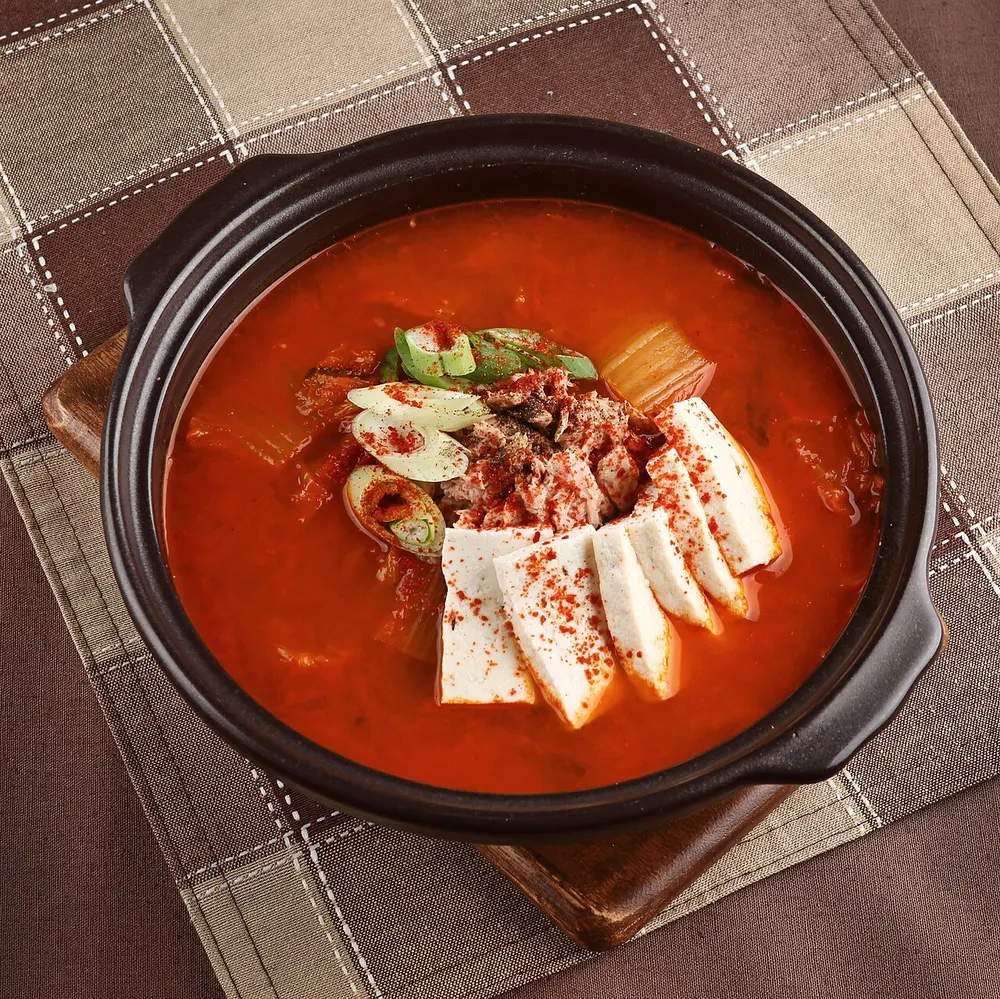
Kimchi Jjigae (Kimchi Stew)
Fonte: Tradizionale
30 min3420 kcal
Senza latticini🌶️🌶️
A whole tilapia boiled for barely two minutes in water perfumed with ginger, tsaoko and Sichuan peppercorn — almost no seasoning at all. All the flavour lives in the 蘸水 beside it: herbs and garlic scalded with smoking chili oil, then let down with a ladle of the fish's own broth.
Fonte
Ricetta di Chinese Cooking Demystified · 📱 Influencer · Steph & Chris — a China-based cooking channel that publishes every recipe in full, free, on its Substack
I nomi di cuochi e creator compaiono solo come indicazione della fonte. More Recipes Please è indipendente e non è affiliata, approvata né sponsorizzata da loro.
Chinese Cooking Demystified (Substack) — Published free by Chinese Cooking Demystified on their own Substack. They place the dish in Xinping, Yunnan, and are careful to distinguish two local versions: Xinping itself serves it with the sizzling chili oil dip written here, while an hour down the mountains in the tropical Red River town of Gasa — Dai country — they were served a nutty, herbaceous dip that they say was personally their favourite. What makes the dish distinctive is the inversion: the fish is boiled barely 2 minutes in a litre of water seasoned with only 1/4 tsp of salt, and all the flavour is carried by the 蘸水 beside it, which is finished with a ladle of that same broth. The amounts above are theirs, unchanged, and this entry follows their whole-tilapia version. Their post does not state a yield: the 4-serving figure is ours, read off the 750 g whole fish as a shared table dish.
Cuoco: Chinese Cooking Demystified (Steph & Chris)
Watch it being made · 2 videos
Have a fishmonger prepare the 750 g tilapia, then chop it into roughly 4 cm (1.5 inch) sections.
Thinly slice the 40 g of carrot into sheets and set aside.
Make the spice mix: smash the ginger, peel the tsaoko and keep only its peel — throw the seeds away — and measure out the 1 tsp of Sichuan peppercorn.
💡 Keeping only the tsaoko husk is CCD's own instruction and worth following. The seeds inside are camphorous and medicinal — it is the papery peel that carries the smoky, faintly citrus note this broth wants.
In a pot or wok, warm the 1.5 tbsp of oil (lard, really preferably) and fry the ginger, tsaoko peel and Sichuan peppercorn over a medium-low flame until fragrant — about 1 minute.
💡 This one minute is the only seasoning the fish will ever get, so do not rush it — but do not brown the spices either. You want them fragrant, not toasted.
Add the 1 litre of cool water, then the fish and the carrot.
Bring it up to a boil, then boil for just about 2 minutes.
💡 Two minutes is not an error. Tilapia in 4 cm sections cooks through almost instantly, and this dish is built around fish that is barely set — boil it like a stew and you will have cotton wool in a bowl.
Season the pot with 1/4 tsp salt, 1/4 tsp MSG and 1/8 tsp chicken bouillon powder.
Drop in the 6 pieces of romaine lettuce if you are using them. The moment they have barely wilted, take everything out into a big serving bowl — fish, vegetables and broth together.
💡 Taste the broth now and it will seem shockingly plain. That is correct and deliberate: it is a clean backdrop, and the dip is where the volume is.
Now the dip. Into a bowl put the 6 g mint, 6 g cilantro, 6 g culantro, the 2 minced chilis, the minced clove of garlic, 1/4 tsp MSG, 1/8 tsp salt, 1/8 tsp chicken bouillon powder and 1/2 tbsp soy sauce.
Heat the 2 tbsp of oil until it is smoking — around 220°C — then shut the heat off and let it fall back to roughly 180°C.
💡 Both numbers matter. Chili powder hitting 220°C oil burns black in about a second; 180°C blooms it instead. Roughly 30 seconds off the heat gets you there.
Toss the 1/2 tbsp of chili flakes and the 1/2 tbsp of red chili powder into the oil and stir quickly.
Pour the chili oil straight over the herbs in the bowl — it should sizzle hard — and mix well.
💡 The sizzle is the cooking. Hot oil on raw mint, cilantro and garlic flash-wilts them and pulls their aroma out all at once — which is why the herbs go in raw and the oil comes to them, never the other way round.
Stir in about 2 ladles — roughly 1/4 cup — of the fish broth from the pot. If the dip tastes too salty, add more broth; if it is not salty enough, add a little salt.
💡 This is the move that ties the two halves together. The dip is not a sauce you bought — it is finished with the same broth the fish is sitting in, so everything on the table tastes like it belongs to everything else.
Serve the bowl of fish and broth with the dip alongside. Everyone fishes out a piece and dips it themselves.
💡 Do not be tempted to tip the dip into the pot. The whole architecture is plain fish, loud sauce, and the diner deciding the ratio bite by bite.
Korean
Fonte: Tradizionale
Korean
Fonte: Cucina casalinga
Korean
Fonte: Cucina casalinga
Korean
Fonte: Tradizionale
L'hai preparato? Condividi una foto in Vetrina.
Condividi la tua creazione →