Principiante
Korean
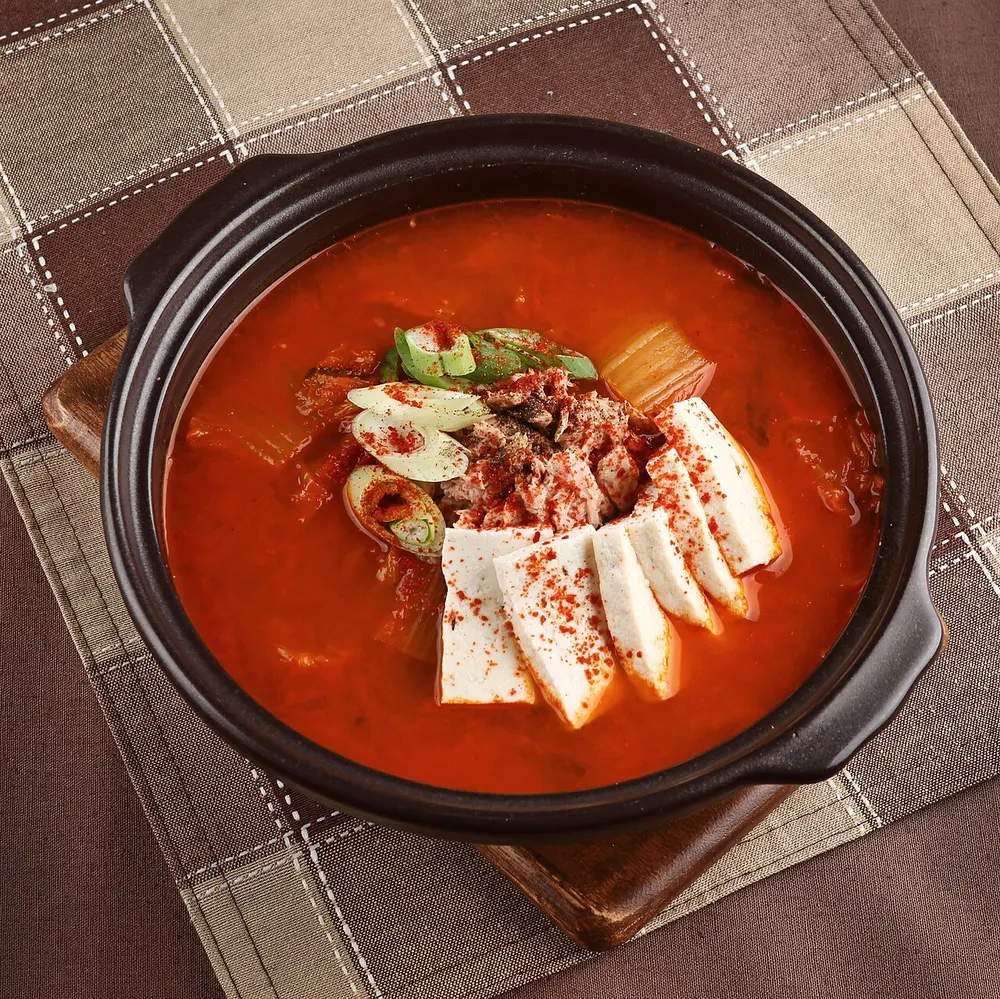
Kimchi Jjigae (Kimchi Stew)
Fonte: Tradizionale
30 min3420 kcal
Senza latticini🌶️🌶️
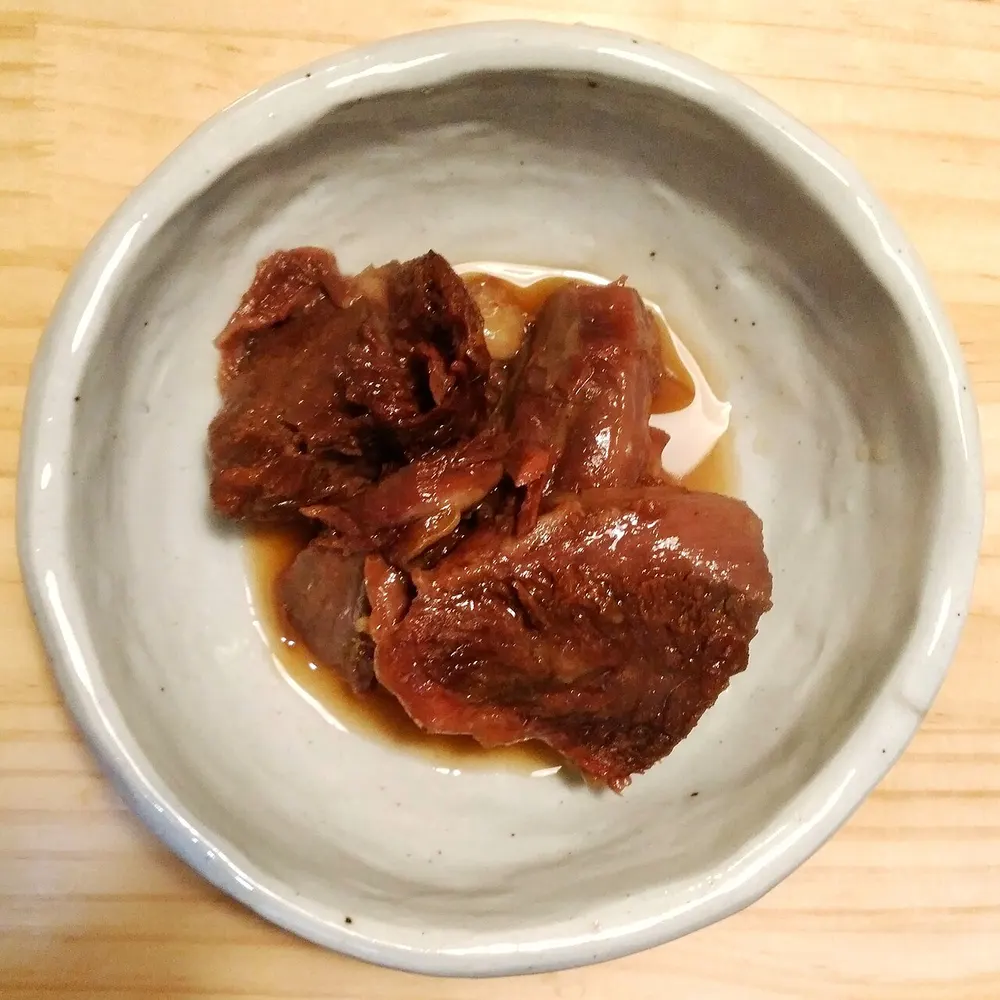
The actor's version treats jangjorim like a stock-first dish: eye of round is blanched clean, then simmered 40 minutes in a vegetable stock built in a bag with bay leaf and peppercorns — and the soy sauce only goes in once that stock exists.
Fonte
Ricetta di 서태화 · ⭐ Celebrità · Seo Tae-hwa — actor (배우); Altoran's own video titles call him '배우 서태화', and he cooks his own dishes on air
I nomi di cuochi e creator compaiono solo come indicazione della fonte. More Recipes Please è indipendente e non è affiliata, approvata né sponsorizzata da loro.
MBN Altoran (알토란) — Published by MBN on Altoran's own channel (알토란 - 집밥 레시피, @Recipe_MBN), whose description carries the full ingredient table and method and heads it 'Altoran episode 358, Seo Tae-hwa's recipe'. The channel's own titles elsewhere introduce him as '배우 서태화' — an actor cooking his own dish on air, not a professional cook. What marks his version out: the beef is soaked 30 minutes, blanched with salt and soju, then simmered 40 minutes in a bagged vegetable stock carrying bay leaf and whole peppercorns — the soy sauce is not allowed in until that stock is finished; the kelp is pulled after exactly 10 minutes; and the 3 dried shiitake are cooked loose so they can be sliced and eaten with the beef.
Cuoco: 서태화
Watch it being made
Cut the 600 g of eye of round into 7–8 pieces and soak them in cold water for 30 minutes to draw the blood out.
💡 Change the water once halfway if it goes deep red. Blood left in the meat is what makes a jangjorim broth taste metallic and look cloudy.
Bring a pot of water to the boil, add 1 tsp salt and 3 tbsp soju, then blanch the drained beef for 2 minutes — his figure.
Rinse the blanched beef under cold water and set it in a sieve to drain.
💡 Rinse it properly — you are washing off the coagulated scum the blanch just brought to the surface. Skip this and it all goes back into your stock.
Load a stock bag with ¼ onion, 1 daepa white, 5 garlic cloves, 15 g sliced ginger, 2 bay leaves, 1 quartered Cheongyang chili and 1 tsp of whole peppercorns.
Put 1.6 L of water in a pot with the stock bag and the 3 washed dried shiitake — the mushrooms go loose in the pot, not in the bag — and boil hard for 10 minutes.
💡 The shiitake stay loose deliberately: everything in the bag gets thrown away, but the mushrooms are food. They come out at the end, get sliced, and go back in.
Once the stock is boiling, add the blanched beef and the 2 sheets of kelp, drop to medium and cook 40 minutes — his figure.
Fish the kelp out after 10 minutes of that 40 — his instruction — and leave the rest to carry on.
💡 Kelp past about 10 minutes starts giving off a slippery, faintly bitter edge instead of umami. Set a timer — this is the easiest instruction in the recipe to forget.
After the 40 minutes, lift the stock bag out and discard it.
Now season the stock: add 100 ml matganjang, 2 tbsp guk-ganjang, 3 tbsp cheongju, 4 tbsp brown sugar, the 30 boiled quail eggs and the 10 whole garlic cloves, and cook 10 minutes — his figure.
💡 Soy sauce arriving this late is the whole design. Salt from the start tightens beef fibres and stops them softening — 40 minutes of unsalted simmering is what makes the meat shred rather than resist.
Add the halved kkwari-gochu (100 g) and the red chili cut into 2 cm lengths, and cook 5 minutes more — his figure.
Lift the beef and the shiitake out of the braising liquid and let the beef cool until you can handle it.
Tear the cooled beef into thin strips along the grain, and cut each shiitake into 2–4 pieces.
💡 Along the grain, not across it. Jangjorim is one of the few Korean beef dishes where you deliberately follow the fibres — that is what gives the long, stringy shreds that soak up the sauce and land properly on rice.
Return the shredded beef and the cut mushrooms to the pot and simmer briefly, just long enough for the seasoning to take hold in the torn surfaces.
Cool completely before storing. It keeps refrigerated for about a week and firms up as it sits.
Korean
Fonte: Tradizionale
Korean
Fonte: Cucina casalinga
Korean
Fonte: Cucina casalinga
Korean
Fonte: Tradizionale
L'hai preparato? Condividi una foto in Vetrina.
Condividi la tua creazione →