Pemula
Korean
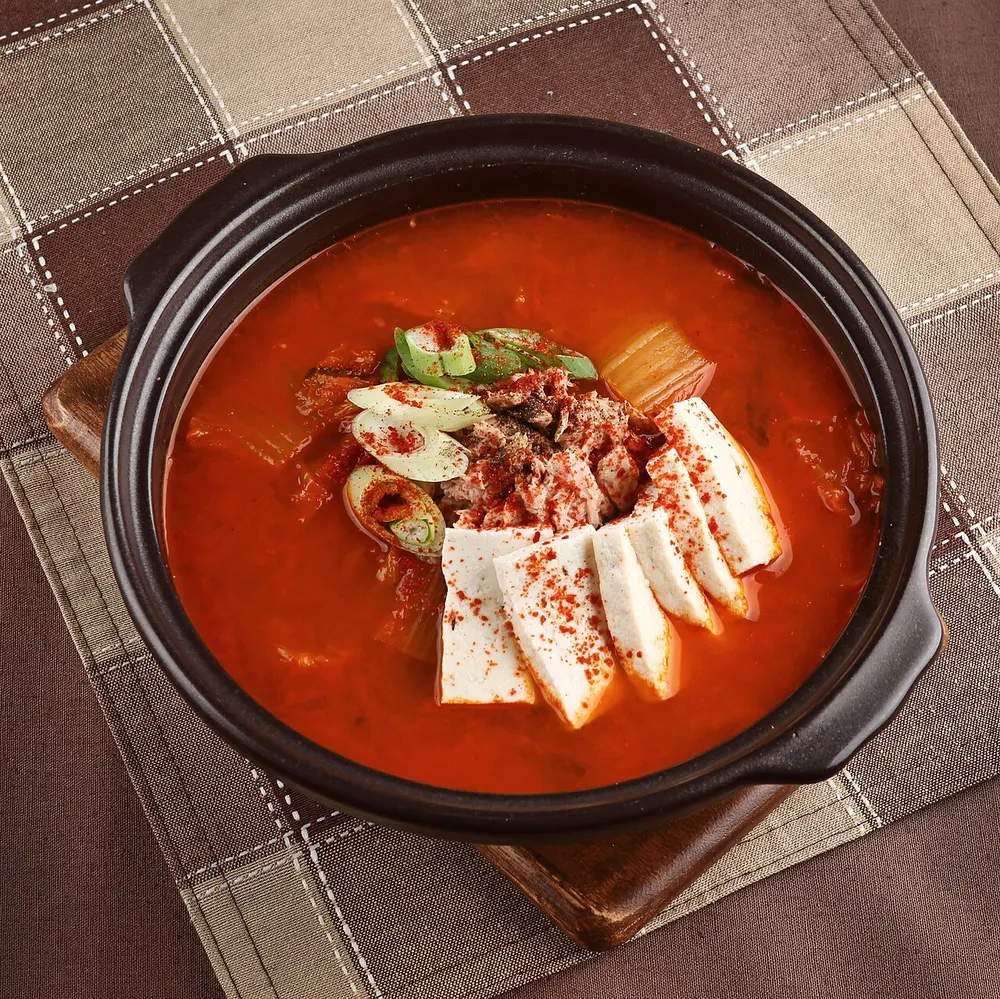
Kimchi Jjigae (Kimchi Stew)
Sumber: Tradisional
30 mnt3420 kkal
Bebas susu🌶️🌶️
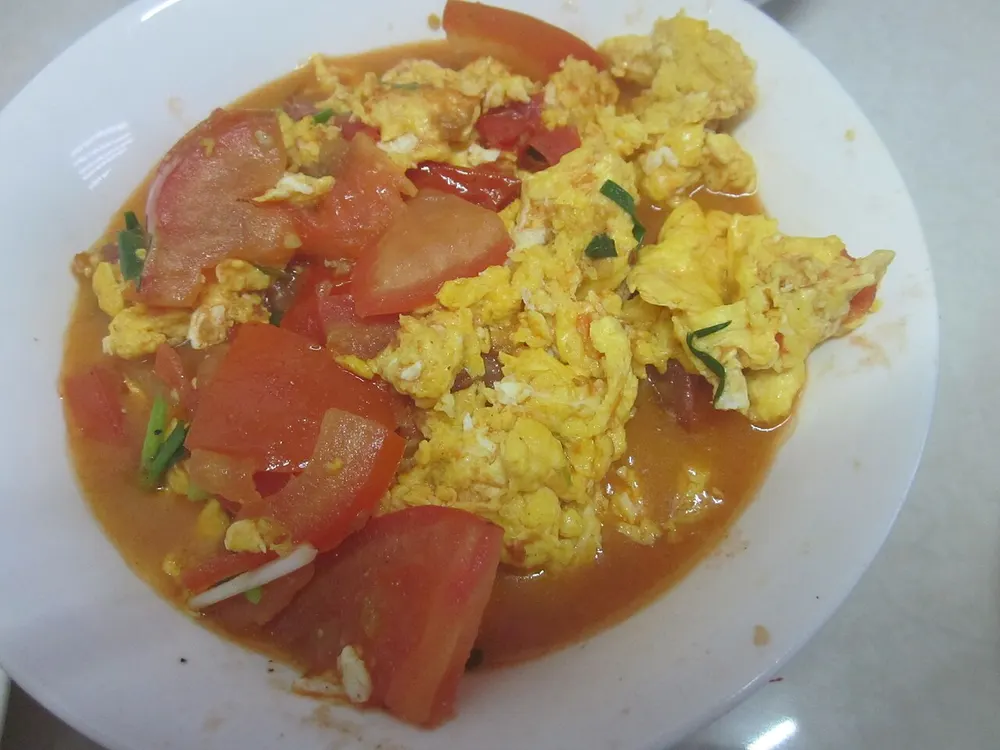
Softly scrambled egg folded back into tomatoes cooked down to a sweet-sour sauce — the first dish most Chinese kids learn and the one they cook for the rest of their lives.
Sumber
Resep oleh Chinese home kitchens · 🏠 Masakan rumahan · The most-cooked home dish in China — no single author
Chinese home-style / 中國家常菜 — Stir-fried tomato and scrambled eggs is a common household dish in China, usually served as a main course, and its popularity rests on how simple it is and how widely available the two ingredients are. It is routinely the first dish Chinese children are taught to cook, and whether it should lean sweet or savoury is a long-running regional disagreement rather than a settled question.
Watch it being made
Cut the tomatoes into 6 wedges each. If the skins bother you, score a cross in the base and dunk them in boiling water for 20 seconds — the skins will slip off.
💡 Peeling is genuinely optional and plenty of Chinese homes do not bother — the skins curl up in the wok but nobody minds. Do it if you like a smooth sauce, skip it on a weeknight.
Beat the eggs with a pinch of salt and the Shaoxing wine until the yolks and whites are fully combined and slightly frothy.
💡 Beat them properly. Streaks of unmixed white cook into rubbery white patches, and this dish has nowhere to hide them.
Heat 30 ml of the oil in a wok over high until it shimmers and just begins to smoke.
Pour in the eggs all at once. They should puff up and set at the edges within seconds.
💡 If the egg does not puff and sizzle immediately, the oil was too cool — that is the difference between fluffy Chinese scrambled egg and a flat, greasy omelette.
Let them sit 10 seconds, then push them around with a spatula in big folds for about 20 seconds, until just barely set and still visibly wet.
Scoop the eggs straight out onto a plate while they still look underdone. Do not finish cooking them.
💡 This is the whole trick of the dish and the step everyone gets wrong. The eggs go back into a hot wok later and finish there. Cooking them fully now is exactly how you end up with the dry, brown, squeaky egg of a bad canteen version.
Add the remaining 15 ml of oil to the wok, drop the heat to medium, and fry the scallion whites for 15 seconds.
Add the tomato wedges and the rest of the salt, and cook 3–4 minutes, pressing them with the spatula as they soften.
💡 The salt is doing work here, not just seasoning — it pulls the water out of the tomatoes and that liquid becomes your sauce. There is no stock in this dish; the tomatoes make their own.
Add the sugar (and the ketchup if you are using it) and keep cooking until the tomatoes collapse into a loose, glossy red sauce with some wedges still holding shape.
💡 Taste it now. It should be sweet-sour and rounded, not sharp. If it still bites, add another teaspoon of sugar — ripe tomatoes need less, winter ones need more.
Turn the heat back to high, tip the eggs back in, and fold them through the sauce for 30 seconds — no more.
💡 Fold, do not stir. You want distinct yellow curds sitting in red sauce, not an orange scramble — chopping the egg up with the spatula is the other classic way to ruin this.
Throw in the scallion greens, give it one last fold, and get it onto a plate over hot rice.
Korean
Sumber: Tradisional
Korean
Sumber: Masakan rumahan
Korean
Sumber: Masakan rumahan
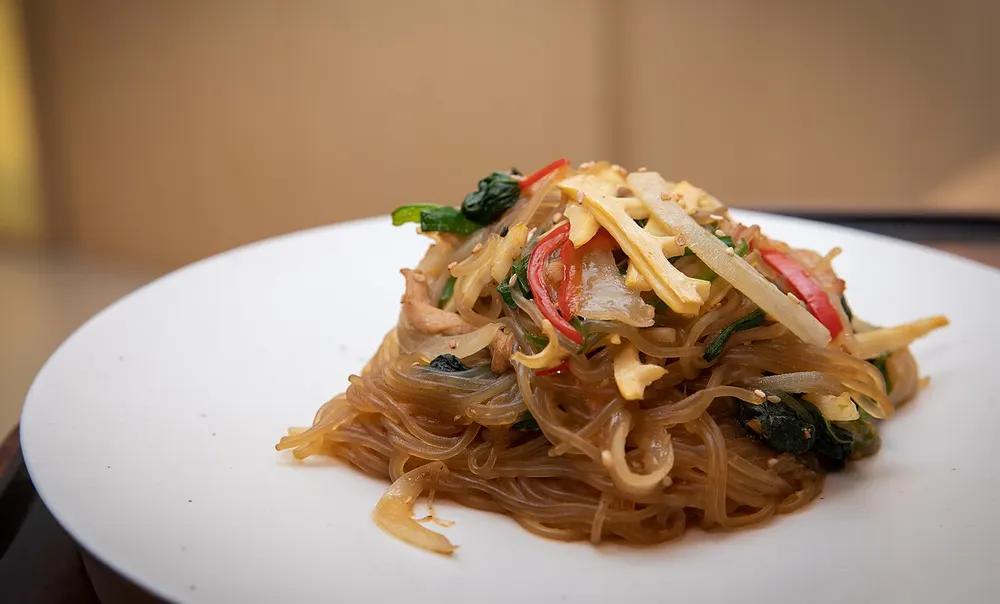
Korean
Sumber: Tradisional
Sudah coba bikin? Bagikan fotonya di Etalase.
Bagikan hasil masakanmu →