Pemula
Korean
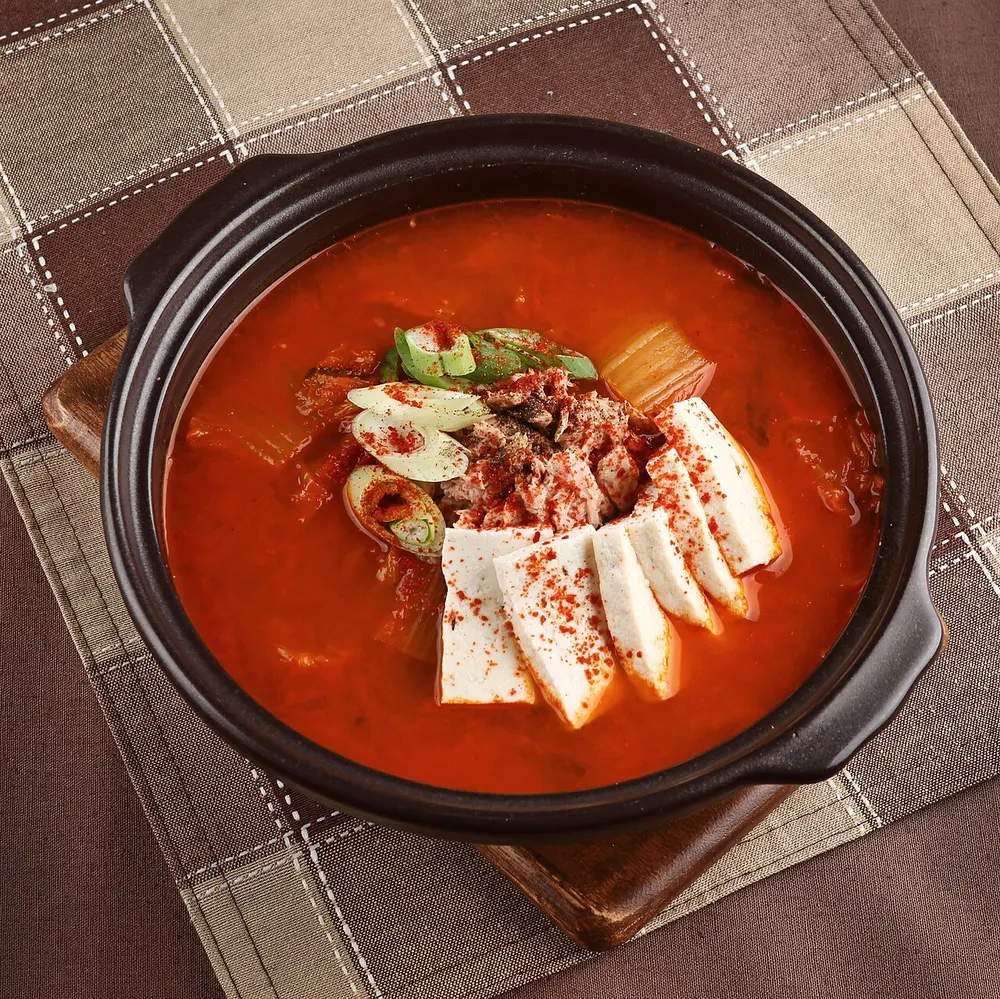
Kimchi Jjigae (Kimchi Stew)
Sumber: Tradisional
30 mnt3420 kkal
Bebas susu🌶️🌶️
Hilsa is the most delicious and most bone-ridden fish in the Irrawaddy. Burma's answer is to seal it with soy, vinegar, tomato and lemongrass and cook it for hours until every bone has softened into the flesh and the whole fish can be eaten.
Sumber
Resep oleh Burmese home kitchens · 🏺 Tradisional · Cooking built on three things — a pot of oil-slicked onion and garlic base, fermented fish or shrimp for depth, and a table where everything arrives at once and is shared.
Myanmar · hilsa cooked until boneless — An ownerless traditional dish, so no cook is credited. The cited article confirms nga thalaut paung as a Burmese hilsa dish cooked for hours with soy sauce, vinegar, tomatoes and lemongrass until the bones melt away. The layering, the no-stir rule, the pressure-cooker alternative, timings and quantities are this book's own.
Lihat cara membuatnya · 3 video
Rub the fish steaks with turmeric and a little salt and leave 15 minutes.
In a heavy pot with a tight lid, lay half the onions, tomatoes, garlic, ginger and lemongrass on the bottom. Set the fish on top in one layer, then cover with the rest of the vegetables and the dried chillies.
💡 Vegetables under the fish, always. They keep it off the metal, and a fish that touches the bottom for three hours is a fish stuck to the bottom.
Mix the soy, vinegar, oil, sugar and water and pour it over. It should come about halfway up.
Bring to a boil, then drop to the lowest possible heat, put the lid on, and cook 3 hours without stirring. A pressure cooker does the same in 50 minutes.
💡 Never stir. The fish is only held together by the low heat and stillness; move it and you have hilsa soup. Check by pressing a bone with a spoon — it should crush like a cooked lentil.
Uncover and, if the sauce is thin, raise the heat for 5 minutes to reduce it around the fish.
Serve with rice. Eat the fish whole — that is the entire reason for the method.
Korean
Sumber: Tradisional
Korean
Sumber: Masakan rumahan
Korean
Sumber: Masakan rumahan
Korean
Sumber: Tradisional
Sudah coba bikin? Bagikan fotonya di Etalase.
Bagikan hasil masakanmu →