Pemula
Korean
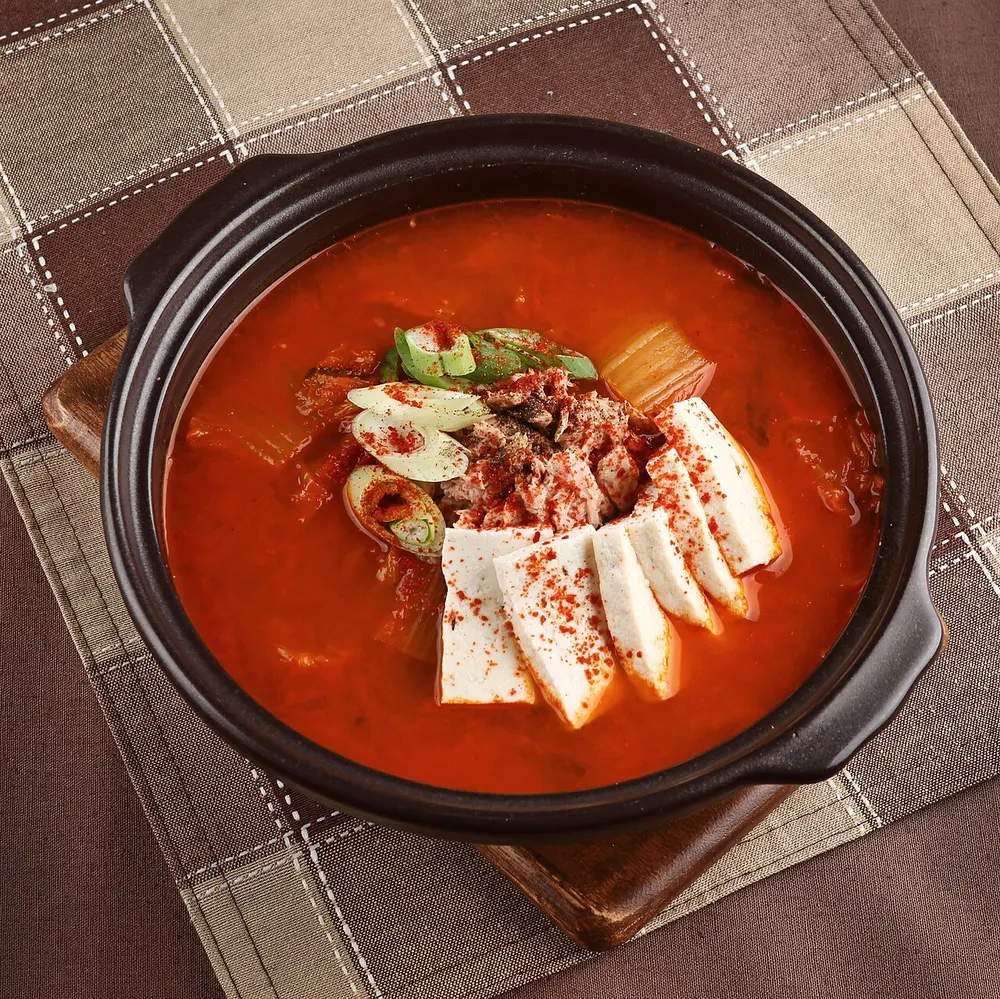
Kimchi Jjigae (Kimchi Stew)
Sumber: Tradisional
30 mnt3420 kkal
Bebas susu🌶️🌶️
The Korean lunchbox staple, with the trick that makes it work: the dried squid is tossed in mayonnaise and left for 5 minutes before it ever meets the pan, so it stays soft instead of setting into jerky.
Sumber
Resep oleh 1인분레시피 · 📱 Influencer · Korean YouTuber who cooks strictly for one: his channel bio describes it as "simple, tasty recipes tailored to one serving, for single-person households", and he publishes each ingredient list with amounts plus a numbered method
Nama juru masak dan kreator hanya dicantumkan sebagai kredit sumber. More Recipes Please independen dan tidak berafiliasi, tidak didukung, serta tidak disponsori oleh mereka.
Recipe published by 1인분레시피 — The creator publishes TWO complete versions in this one description — a 간장 양념 (soy) and a 빨간 양념 (gochujang) one, each with its own amounts and its own numbered method. The soy version, which he lists first, is the recipe built above; his red version is reproduced in full in the tips with his amounts intact. Two honest notes: his soy method numbers its steps 1, 2, 3, 5, 6 — it skips 4, and no step is missing from the sense of it, so nothing was invented to fill the gap. And he states no serving count: servings: 2 is OUR reading of 100 g of dried squid eaten as a banchan.
Koki: 1인분레시피
Watch it being made · 3 videos
Cut the jinmichae into bite-size lengths with scissors.
💡 Scissors, not a knife — his instruction. Dried squid is springy and slides away from a blade, and the strands are already long and tangled. Cut them straight over the bowl.
Put the strands in a bowl, add the 2 tbsp of mayonnaise and toss until every strand is coated.
Leave it to sit for 5 minutes.
💡 This is the trick the whole recipe turns on. Jinmichae is bone dry, and mayonnaise is oil, egg and vinegar — it softens the strands and gives them fat to hold, so they stay tender in the pan instead of hardening into chew. Skip these 5 minutes and you will make squid jerky.
Meanwhile, measure out the soy sauce and the water — once the pan is hot this moves quickly.
Warm a pan over LOW heat and add the mayonnaise-coated squid.
Fry it gently for 2 minutes, turning it through the pan. It will loosen, warm through and start to smell toasty and sweet.
💡 Low heat, and add no oil — the mayonnaise is already the fat. On high heat the mayo splits and the squid tightens before the seasoning ever arrives.
Add the 2 tbsp of soy sauce and the 1/4 cup of water.
Keep frying until the water has gone. The liquid bubbles, thickens, turns glossy and then vanishes into the strands.
💡 The water is not padding. Soy sauce alone would season the outside and scorch; diluted, it has time to soak into every strand before it reduces away.
It is done when the pan is dry and the strands look glazed and dark amber rather than wet.
Turn the heat off, then scatter over the sesame oil and the sesame seeds and toss it all through once more.
💡 Off the heat for both. Sesame oil cooked in the pan loses its aroma, and sesame seeds burn and turn bitter in seconds.
Let it cool to room temperature before you put it away — it firms up slightly and the glaze sets as it cools.
Eat it with rice, or pack it — it keeps in the fridge for several days and is a lunchbox banchan by design.
Korean
Sumber: Tradisional
Korean
Sumber: Masakan rumahan
Korean
Sumber: Masakan rumahan
Korean
Sumber: Tradisional
Sudah coba bikin? Bagikan fotonya di Etalase.
Bagikan hasil masakanmu →