Pemula
Korean
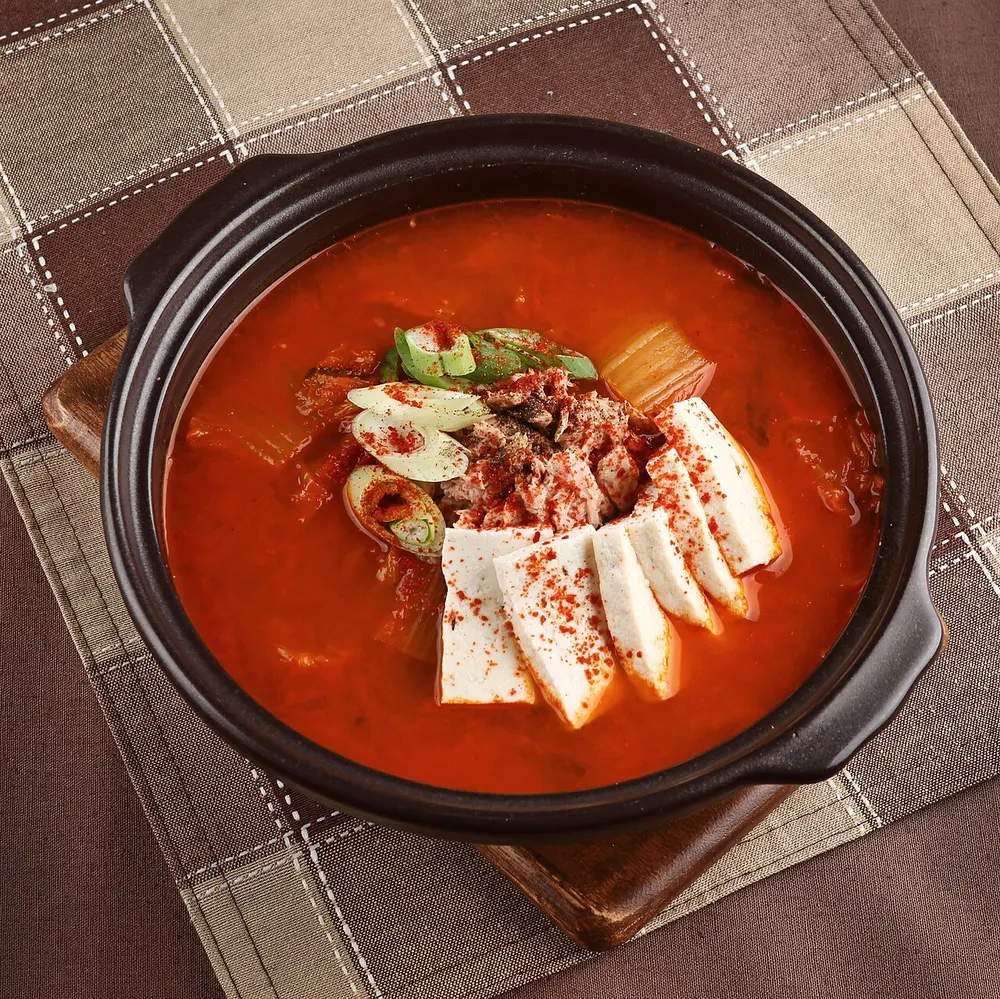
Kimchi Jjigae (Kimchi Stew)
Sumber: Tradisional
30 mnt3420 kkal
Bebas susu🌶️🌶️
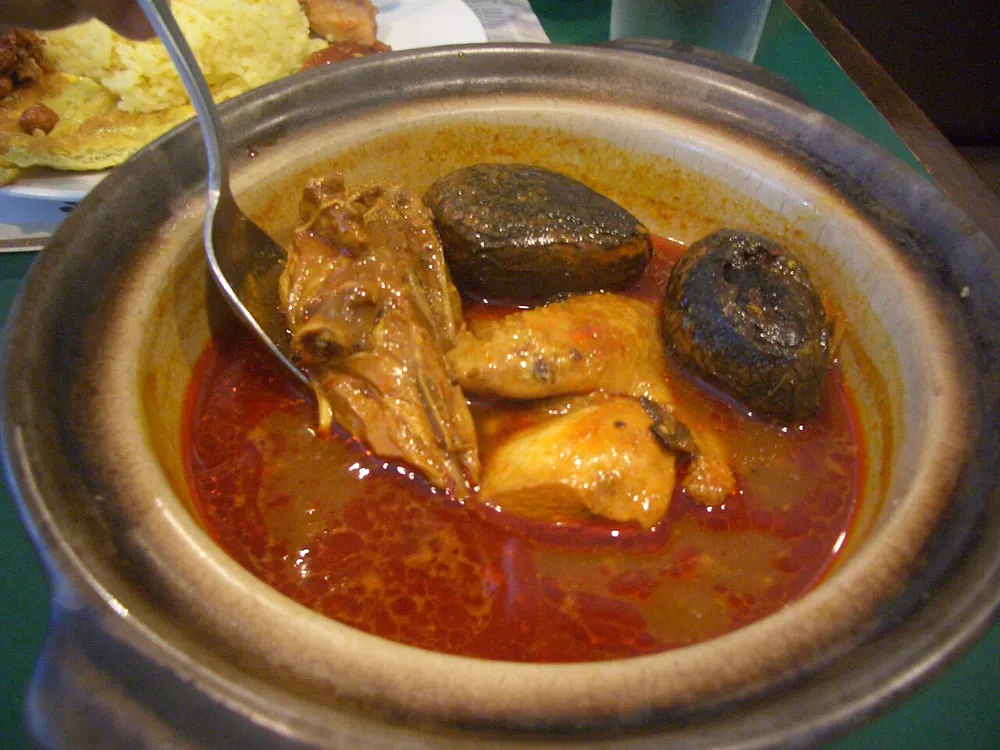
Ayam yang dimasak dengan rempah asam dan buah keluak hitam — isi buahnya dikeruk, dibumbui, lalu dimasukkan kembali ke dalam cangkangnya.
Sumber
Resep oleh Singapore Peranakan (Nyonya) kitchens · 🏺 Tradisional · Peranakan home cooking in Singapore — Chinese settler households remade with Malay spice, around Katong and Joo Chiat
Peranakan (Nyonya) dish · Singapore, Malacca and Penang — An ownerless Peranakan dish, so no cook is credited. The canonical reference confirms that keluak originates in Indonesia's mangrove swamps and was brought to Malacca from Java and Sumatra during the 15th-century trading era; that the spicy gravy is built on candlenuts, turmeric, chilli, galangal and belacan with lemongrass and the keluak flesh added once the rempah is fragrant; and that 'Peranakans usually remove the flesh from the nut, mix it with chicken, fill them back into the nut and then cook them in curry', which is exactly the method taught here. HONEST GAP: that page does not discuss the nut's toxicity, so the safety tip is sourced separately from the Pangium article (https://en.wikipedia.org/wiki/Pangium, fetched, HTTP 200), which states the fresh fruit and seeds 'contain hydrogen cyanide, and are thus deadly poisonous if consumed without prior preparation', and describes the boiling and forty-day burial in ash, banana leaves and earth. The dish is shared with Malaysia's Peranakan communities; Singapore is not claimed as its birthplace. Quantities are this book's own.
Watch it being made · 3 videos
Start three days ahead. Scrub the nuts under running water with a brush, then soak them in a large bowl of water for 3 days, changing the water morning and evening.
💡 The soak softens the flesh and washes out bitterness. Skipping days gives you a hard, acrid nut and there is no rescuing it later.
Chip a hole in the flat side of each shell with the back of a heavy cleaver or a nutcracker, and dig the black flesh out with a narrow spoon or a chopstick. Keep the emptied shells.
💡 Taste a crumb of one nut. If it is bitter and biting rather than earthy, discard that nut — a single bad keluak taints the whole pot.
Mash the flesh smooth with the minced chicken, a spoonful of tamarind water, a teaspoon of palm sugar and a pinch of salt. Pack the mixture back into the shells through the hole and set them aside.
💡 Do not pack them completely full. The filling swells slightly in the braise and needs somewhere to go.
Blend the chillies, shallots, garlic, candlenuts, turmeric, galangal, two lemongrass stalks and belacan into a fine rempah. Fry it in the oil over medium-low heat for 20 to 25 minutes until it darkens and the oil separates.
Add the chicken and turn it in the rempah for 5 minutes until coated all over. Pour in the tamarind water, add the bruised lemongrass, palm sugar and salt, and bring to a simmer.
Lower the stuffed shells in, cover, and simmer very gently for 50 to 60 minutes. Shake the pot occasionally instead of stirring, so the filling stays in the shells.
💡 The gravy should reduce to the thickness of double cream and turn almost black. If it is still watery, uncover it for the last 15 minutes.
Rest it 20 minutes off the heat, taste for the sour-sweet-salt balance one last time, and serve with plain rice and a teaspoon per person for digging out the nuts.
💡 It is genuinely better on day two. Peranakan households routinely cook it the day before a gathering.
Korean
Sumber: Tradisional
Korean
Sumber: Masakan rumahan
Korean
Sumber: Masakan rumahan
Korean
Sumber: Tradisional
Sudah coba bikin? Bagikan fotonya di Etalase.
Bagikan hasil masakanmu →